


 English
 Deutsch
Content
- 1 Why the Bamboo-vs-Engineered Question Keeps Coming Up
- 2 Two Different Construction Philosophies
- 3 Hardness: The First Spec People Compare
- 4 Moisture and Dimensional Stability
- 5 Lifespan and the Refinishing Question
- 6 Appearance and Color Options
- 7 What the Two Materials Cost
- 8 Installation and Maintenance Realities
- 9 Environmental Impact
- 10 How to Choose: A Practical Checklist
Why the Bamboo-vs-Engineered Question Keeps Coming Up
Every few weeks a distributor or contractor asks us to settle the same debate: strand woven bamboo flooring or engineered wood flooring — which should they recommend to a client who wants a durable, natural-looking floor without overspending? After more than two decades of manufacturing strand woven bamboo products, we have seen both materials specified, installed, and maintained across a wide range of projects.
Our short answer is this: strand woven bamboo wins on hardness, moisture stability, and cost per year of service, while engineered wood remains the better choice when matching an authentic hardwood grain is the priority. The comparisons below will help you confirm that answer for a specific project.
Two Different Construction Philosophies
Strand woven bamboo begins as bamboo poles that are split, crushed into fibrous strands, saturated with resin, and compressed under high heat and pressure. The finished board reaches a density of roughly 1.0 to 1.2 grams per cubic centimeter — heavier than nearly every hardwood used in residential flooring. The entire board, not just the surface, is this dense composite.
Engineered wood is a layered product. A cross-banded core of birch, poplar, pine, or HDF provides dimensional stability, and a real hardwood veneer is bonded on top. The veneer, typically 0.6 mm on entry-level boards and 3 to 4 mm on premium boards, determines the appearance, the dent resistance, and the number of times the floor can be sanded.
That structural difference drives every comparison that follows: a bamboo floor performs uniformly through its full thickness, while an engineered floor is only as strong and as repairable as its top layer.
Hardness: The First Spec People Compare
Hardness is usually the first specification a buyer checks, and strand woven bamboo holds a decisive advantage. Typical strand woven bamboo measures between 3,000 and 4,000 lbf on the Janka scale. Engineered wood ratings are simply the species ratings of the face veneer:
| Material | Typical Janka hardness | Dent resistance |
|---|---|---|
| Strand woven bamboo | 3,000-4,000 lbf | Excellent |
| Engineered red oak | 1,290 lbf | Moderate |
| Engineered maple | 1,450 lbf | Moderate |
| Engineered hickory | 1,820 lbf | Good |
As the numbers climb, daily dents drop. A dropped can, an unpadded chair leg, or a dog's claws will leave a permanent mark in oak; the same impacts rarely do visible damage to strand woven bamboo.
Hardness does not measure scratch resistance. Scratches depend on the finish, not the substrate, and aluminum oxide topcoats behave similarly on both materials. Once a scratch cuts through a stained engineered floor, the contrast between dark stain and light wood underneath makes the line obvious. In bamboo, the color runs through the full board, so minor scratches stay hard to spot.
For the technical detail on how bamboo's density affects everyday wear, see our analysis of strand woven bamboo flooring hardness, durability, and uses.
Moisture and Dimensional Stability
Engineered wood marketing emphasizes stability, so let us be specific. Cross-ply construction reduces expansion compared with solid wood, but the top veneer is still real wood and still reacts to humidity. In rooms where relative humidity swings widely, the veneer can cup or crack, and standing water on a seam can wick into the core and swell beyond repair.
Strand woven bamboo's high density and low moisture absorption produce a smaller thickness swell in water immersion tests such as EN 317. As a result, it handles kitchens, entryways, and coastal climates noticeably better than engineered wood. The caveat still stands: bamboo is not waterproof. It tolerates spills and humidity far better than engineered wood, but it should not be laid in rooms that flood, and it requires sealed edges and a suitable underlayment.
If you are weighing how much dampness a real bamboo floor can take, our article on how durable and water-resistant stranded bamboo flooring really is covers the tests and the practical limits.
Lifespan and the Refinishing Question
A well-installed strand woven bamboo floor in a residential interior commonly lasts 25 to 50 years. Because the dense composite runs through the full board, dents stay shallow and surface wear proceeds slowly. When the finish finally dulls, a light sanding and a fresh coat of polyurethane — or re-oiling for oil-finished boards — bring it back to service two or three times without wearing through the material.
Engineered wood's lifespan depends on veneer thickness. A 2 mm veneer can typically be sanded once; a 4 mm veneer two, sometimes three, times. In a busy family home, a thin-veneer board can wear through to the core, after which the only fix is replacement. Realistic expectations for a quality engineered floor are 20 to 40 years.
That difference matters most to buyers who intend to stay in the house for decades. Over a ten-year ownership horizon, resale value responds to appearance rather than Janka ratings, and both materials will still look acceptable if maintained.
Appearance and Color Options
The Hardwood Look
Engineered wood is the reference for natural grain. Oak, maple, hickory, walnut, and exotic species are available in plain-sawn, rift-sawn, and hand-scraped surfaces, with plank widths reaching eight or nine inches. For a period home where new flooring must blend with existing woodwork, engineered oak is the easiest path.
The Strand Woven Bamboo Look
Strand woven bamboo has a dense, linear texture formed by the compressed strands, and that texture reads as contemporary and clean. Standard colors include natural, coffee, pineapple, and carbonized amber; carbonization adds consistent darkening and slightly lower moisture movement. A carbonized color bamboo flooring brings warmth without the busy grain of a stained hardwood, which keeps a modern room visually calm.
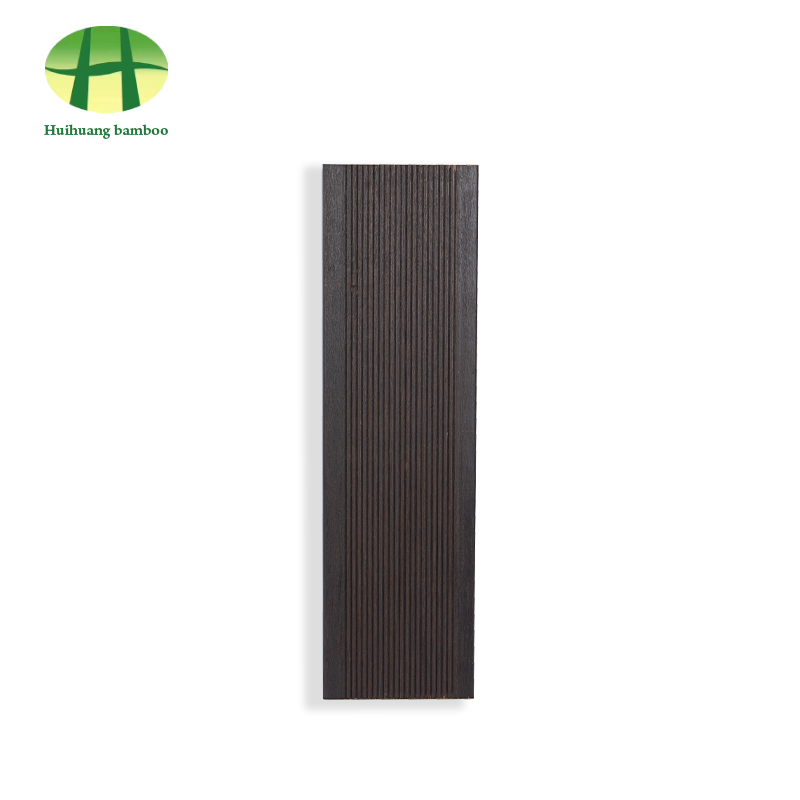 Custom eco friendly Carbonized color bamboo composite flooring Manufacturers, FaNingguo Kuntai Bamboo and Wood Co.,Ltd. Offer Custom eco friendly Carbonized color bamboo composite flooring Manufacturers and Factory In...View Product →
What the Two Materials Cost
Current US retail material prices provide a useful baseline. Strand woven bamboo typically runs $3 to $6 per square foot. Engineered wood runs about $4 to $10 for oak and maple, and above $10 for walnut and exotic species. Installed totals follow the same ratio — roughly $6 to $10 per square foot for bamboo and $8 to $14 for engineered wood — with labor rates driving most of the difference.
On a 400-square-foot living area, the installed-cost gap between bamboo and a mid-range engineered oak floor is commonly $800 to $1,600. Because bamboo also tends to outlast engineered wood in high-traffic rooms, the cost per year of service leans heavily toward bamboo.
Installation and Maintenance Realities
Both flooring types can be installed as floating click systems, glue-down, or nail-down over plywood. Most manufacturers call for subfloor flatness within 3/16 inch over ten feet. Engineered wood usually needs 48 to 72 hours of acclimation in the room; bamboo also benefits from acclimation, but its lower moisture movement makes it more forgiving if the schedule slips.
Daily maintenance is nearly identical. Sweep or dust regularly, wipe spills promptly, place felt pads under furniture legs, and avoid steam mops entirely — heat and moisture are the two things that damage either floor.
Environmental Impact
Bamboo reaches harvest maturity in five to seven years, while oaks and maples used for engineered wood veneers take 40 to 80 years. A strand woven bamboo floor therefore occupies a smaller forest footprint over a much shorter cycle. Engineered wood does consume less hardwood than solid wood per square foot, but the face veneer still draws on slow-growth trees.
Certifications remove the guesswork. Look for FSC-certified bamboo, low-emission resin systems, and third-party test reports for formaldehyde and VOCs with both types of floor. Cheaper engineered boards often rely on urea-formaldehyde adhesives in the core; premium boards use MDI or phenolic resins. We quantified the difference in a separate study of bamboo flooring versus hardwood carbon footprint comparison.
How to Choose: A Practical Checklist
These checks settle most projects in under a minute:
- Kids and pets in daily use: choose strand woven bamboo.
- Matching existing oak or walnut trim: choose engineered wood in the same species.
- Large kitchen, laundry room, or coastal home: choose strand woven bamboo.
- Period refurbishment blending with old floorboards: choose engineered wood.
- Budget too tight for a premium engineered floor: choose strand woven bamboo.
- Owner wants the option to sand the surface several times: choose engineered wood with a 4 mm or thicker veneer.
For a modern interior that wants a light, uniform surface, a natural color glossy bamboo flooring delivers the calm, low-dent finish that Scandinavian-style rooms favor.
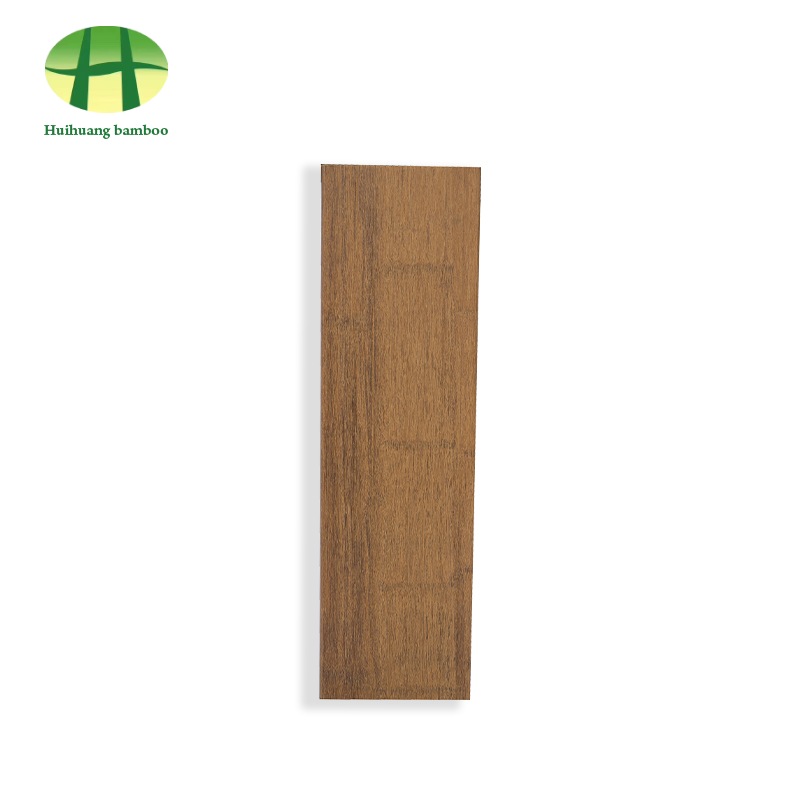 Custom Natural color glossy heavy solid bamboo hardwood flooring Manufacturers, Ningguo Kuntai Bamboo and Wood Co.,Ltd. Offer Custom Natural color glossy heavy solid bamboo hardwood flooring Manufacturers and Factory ...View Product →
If the project also includes an exterior surface — a balcony, terrace, or walkway — remember that no engineered wood floor is rated for outdoor exposure. Strand woven bamboo has a dedicated exterior category that handles sun, rain, and frost: outdoor strand woven bamboo decking is built for exactly those conditions.
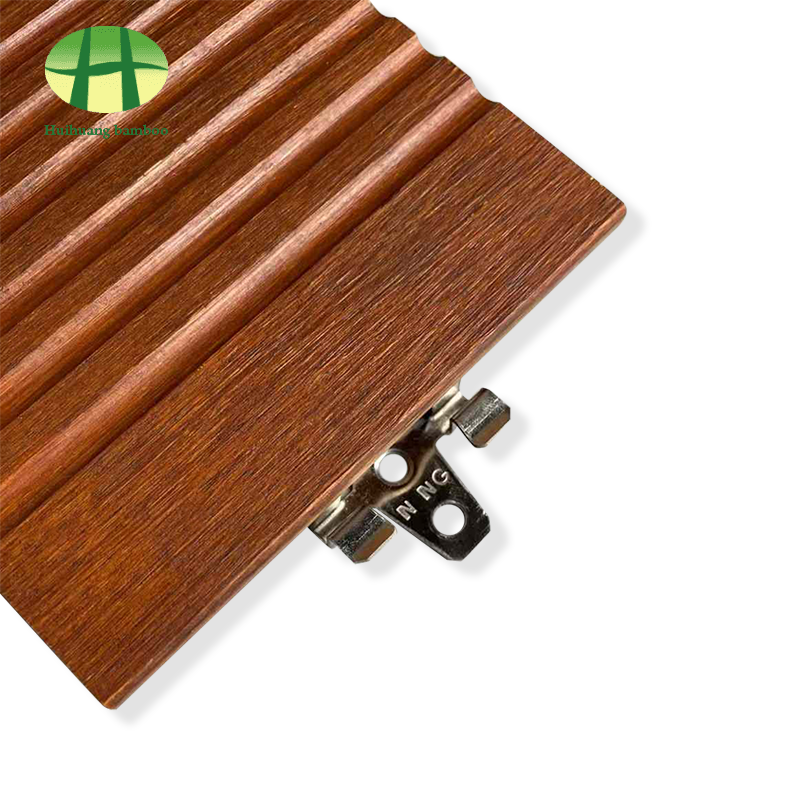 Bamboo Wood Flooring, Bamboo Composite Decking ManufacturersNingguo Kuntai Bamboo And Wood Co.,Ltd. Is China Bamboo Wood Flooring, Bamboo Composite Decking Manufacturers, Factory, We Offer Custom B...View Product →
The bottom line is not that one material is universally better. Strand woven bamboo beats engineered wood on mechanical durability, moisture stability, and cost per year of life; engineered wood is the right call when authentic grain and refinishing flexibility define the project. Specify from the actual room conditions, not from the showroom samples, and the floor will still be in service long after the warranty card is lost.
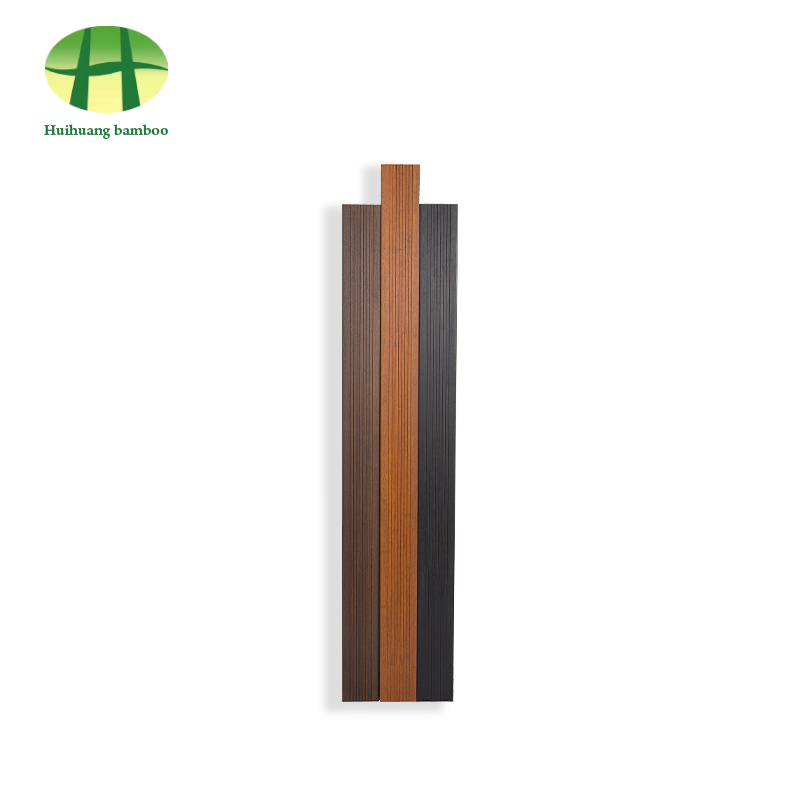
 View More


 +86-572-5215066 5216895
 office@hh-bamboo.com
 East Side of Huanggang RD,Ningdun County, Ningguo ,Xuancheng City,Anhui Province,China.