


 English
 Deutsch
Content
- 1 1. Cellular Composition and Moisture Equilibrium
- 2 2. Coefficient of Linear Thermal Expansion
- 3 3. Installation Engineering and Joint Integrity
- 4 4. Long-Term Maintenance and Surface Integrity
- 5 5. Conclusion: The Engineer's Choice for Outdoor Stability
- 6 Frequently Asked Questions (FAQ)
- 6.1 1. How much does outdoor bamboo flooring expand compared to wood?
- 6.2 2. Is bamboo flooring for outdoor use suitable for poolside installations?
- 6.3 3. What are the essential outdoor bamboo flooring installation tips for stability?
- 6.4 4. Does outdoor strandwoven bamboo decking require oiling like Ipe?
- 6.5 5. Is Kuntai's bamboo really eco friendly outdoor bamboo decking?
- 7 Related Industry References
For architects and engineers designing high-exposure exterior spaces, dimensional stability is the most critical metric for material selection. While Ipe (Brazilian Walnut) has historically been the benchmark for durability, bamboo flooring for outdoor use—specifically high-density strand-woven varieties—presents a technologically superior alternative in terms of hygroscopic movement. Ningguo Kuntai Bamboo and Wood Co.,Ltd., located in the renowned "Bamboo Village" of Anhui Province, has pioneered the engineering of outdoor strandwoven bamboo decking since 2002. With a 30,000-square-meter modern facility and a US patent (No. US11148318) for our outdoor technology, we provide solutions that address the inherent flaws of traditional hardwoods. Understanding the cellular differences between these two materials is essential for preventing warping, cupping, and structural failure in harsh environments.
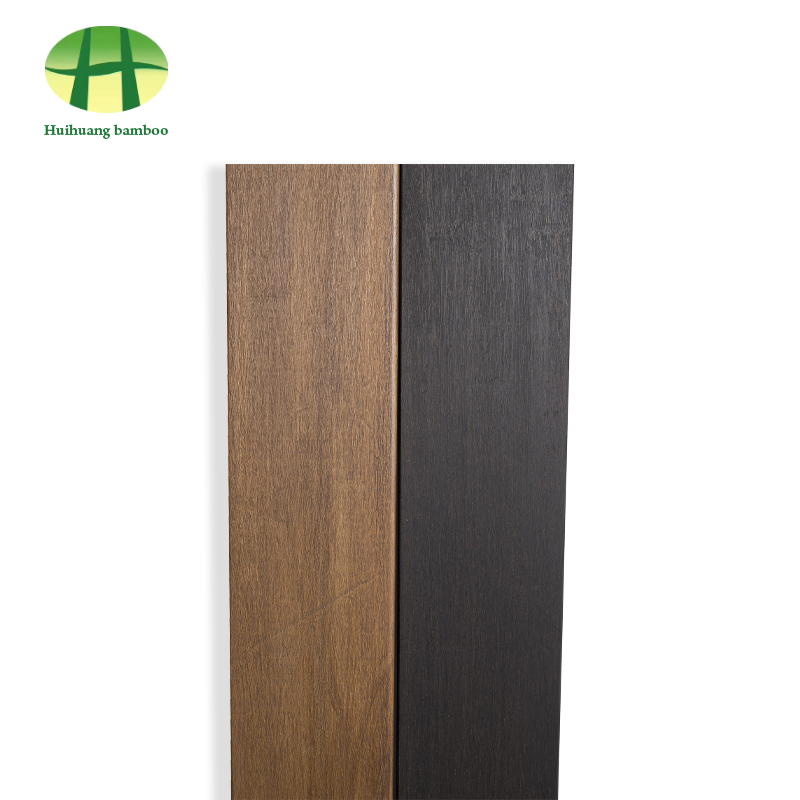
1. Cellular Composition and Moisture Equilibrium
The fundamental difference in expansion rates lies in the biological structure of the materials. Ipe is a dense hardwood with complex vascular systems that retain moisture, leading to significant tangential and radial movement. Conversely, strand woven bamboo decking vs wood performance is defined by the thermo-density process, where bamboo fibers are crushed and infused with phenolic resins under extreme pressure. This process eliminates the natural cavities found in timber, creating a nearly hydrophobic material. While Ipe eventually reaches an equilibrium moisture content, its natural grain remains susceptible to seasonal shifts. Ningguo Kuntai's patented process ensures that our bamboo flooring for outdoor use maintains a consistent density, drastically reducing the internal stress that causes expansion.
Comparison: Material Density and Moisture Absorption
Ipe relies on its natural oils for protection, whereas strand-woven bamboo utilizes a polymer-reinforced fiber matrix to achieve superior resistance to water intake.
| Property | Ipe Hardwood | Strand-Woven Outdoor Bamboo Flooring |
| Density (kg/m3) | Approx. 1050 | Approx. 1150 - 1250 |
| Moisture Absorption Rate | Moderate (8% - 15% seasonally) | Very Low (< 3% after immersion) |
| Structure | Natural Cellular Grain | Resin-Infused Composite Fiber |
2. Coefficient of Linear Thermal Expansion
Thermal expansion occurs when solar radiation increases the surface temperature of the deck. Ipe wood, being a natural product, expands more significantly along its width (tangential) than its length (longitudinal). In contrast, the best bamboo flooring for wet climates is engineered to be isotropic, meaning it expands and contracts uniformly and minimally in all directions. How much does outdoor bamboo flooring expand? Typically, the linear expansion coefficient of Kuntai's strand-woven bamboo is up to 50% lower than that of tropical hardwoods. This allows for tighter gaps and a more seamless aesthetic in large-scale bamboo wall-cladding and siding applications.
Comparison: Dimensional Stability Ratios
Hardwoods like Ipe exhibit "cupping" when the top and bottom surfaces expand at different rates, a phenomenon largely absent in high-density bamboo panels.
| Expansion Type | Ipe Wood Behavior | Strand Woven Bamboo Behavior |
| Tangential Expansion | High (Causes cupping/warping) | Negligible (Stable cross-lamination) |
| Longitudinal Expansion | Low | Near Zero |
| Gap Stability | Variable (Gaps widen in winter) | Consistent (Minimal gap change) |
3. Installation Engineering and Joint Integrity
The stability of bamboo flooring for outdoor use directly affects the longevity of the fastening system. Because Ipe exerts massive pressure during contraction, it can shear stainless steel screws or loosen hidden fasteners over time. KUNTAI's outdoor strandwoven bamboo decking is designed with precise tongue-and-groove or grooved-edge profiles that account for the minimal movement of the material. When following outdoor bamboo flooring installation tips, engineers note that the predictable nature of bamboo allows for the use of fixed clipping systems that remain secure for decades, whereas wood decks often require periodic re-fastening due to the "pull" of seasonal expansion cycles.
4. Long-Term Maintenance and Surface Integrity
Expansion and contraction cycles in Ipe wood eventually lead to "checking" or small surface cracks as the fibers pull apart. Outdoor bamboo flooring maintenance is considerably simpler because the resin-saturated fibers do not separate under UV stress. Our products, certified by FSC, CE, and SGS, utilize eco friendly outdoor bamboo decking technology that protects against both biological decay and mechanical stress. While Ipe must be oiled frequently to prevent surface splintering caused by expansion cycles, KUNTAI bamboo requires only occasional cleaning to maintain its structural and aesthetic finish.
Technical Advantages of Kuntai Bamboo:
- US Patent Protection: Unique manufacturing process (No. US11148318) for peak stability.
- High Hardness: Janka hardness rating exceeding 3500 lbf, far higher than Ipe.
- Fire Resistance: Rated Class A or Bf1-s1, suitable for commercial projects.
- Sustainability: Bamboo reaches maturity in 5 years, compared to 50+ for Ipe.
5. Conclusion: The Engineer's Choice for Outdoor Stability
While Ipe wood remains a traditional luxury material, the technical data proves that bamboo flooring for outdoor use is the more stable and reliable choice for modern construction. By eliminating the cellular weaknesses of natural wood through high-density strand weaving, Ningguo Kuntai Bamboo and Wood Co.,Ltd. offers a product that resists the destructive forces of expansion and contraction. Whether used for bamboo garden furniture or high-traffic bamboo timbers and beams, our engineered solutions ensure a flat, safe, and durable surface that stands the test of time and climate.
Frequently Asked Questions (FAQ)
1. How much does outdoor bamboo flooring expand compared to wood?
Under standard environmental shifts, strand-woven bamboo expands less than 0.1% in length and less than 1% in width, which is significantly more stable than Ipe or other tropical hardwoods that can shift by up to 5-8% in width.
2. Is bamboo flooring for outdoor use suitable for poolside installations?
Yes. Due to its very low moisture absorption rate, it is considered the best bamboo flooring for wet climates. It does not swell or become slippery as easily as traditional wood decking.
3. What are the essential outdoor bamboo flooring installation tips for stability?
Always maintain the manufacturer-recommended gap (typically 3-5mm) between boards and ensure adequate sub-deck ventilation. This allows any residual moisture to dissipate without affecting the boards.
4. Does outdoor strandwoven bamboo decking require oiling like Ipe?
While it is much more stable, we recommend a light coat of outdoor maintenance oil once a year to preserve the color against UV fading, although the structural integrity will remain intact even without it.
5. Is Kuntai's bamboo really eco friendly outdoor bamboo decking?
Absolutely. Our bamboo is FSC-certified, meaning it is sourced from responsibly managed forests. Since bamboo is a grass that regrows rapidly, it has a much lower carbon footprint than slow-growing hardwoods like Ipe.
Related Industry References
- ISO 9001:2015 - Quality Management Systems in Bamboo Manufacturing.
- ASTM D1037 - Standard Test Methods for Evaluating Properties of Wood-Base Fiber and Particle Panel Materials.
- US Patent No. US11148318 - Method for Manufacturing Outdoor Bamboo Decking.
- FSC Standard for Forest Management - Principles of Sustainable Bamboo Harvesting.
 View More

 +86-572-5215066 5216895
 office@hh-bamboo.com
 East Side of Huanggang RD,Ningdun County, Ningguo ,Xuancheng City,Anhui Province,China.