


 English
 Deutsch
Content
In the selection of high-performance architectural materials for exterior spaces, safety specifications—specifically fire propagation and slip dynamics—are as critical as aesthetic appeal. As urbanization increases the demand for sustainable building materials, outdoor bamboo flooring has emerged as a scientifically superior alternative to traditional timber and synthetic composites. Ningguo Kuntai Bamboo and Wood Co., Ltd., located in the "Bamboo Village" of Anhui, has been at the forefront of this innovation since 2002. Operating a 30,000-square-meter modern factory and holding the US patent (No. US11148318) for outdoor bamboo decking, KUNTAI integrates ISO9001 and ISO14001 standards to produce professional manufacturer of outdoor strandwoven bamboo decking solutions that challenge the limitations of composite materials.
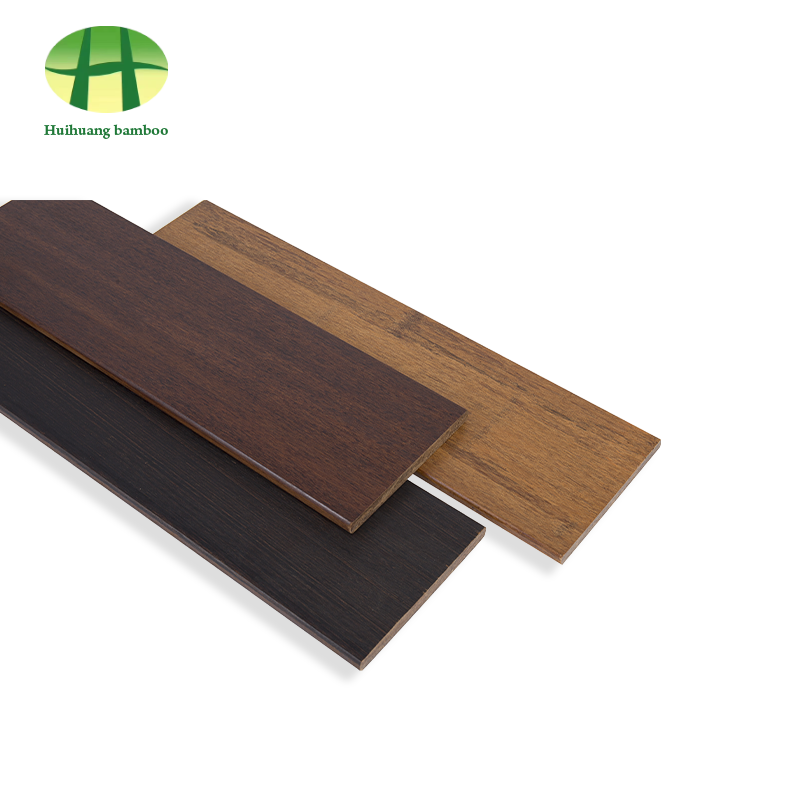
1. Fire Rating Analysis: Flame Spread and Ignition Resistance
A primary concern for commercial and residential developments is: what is the fire rating of outdoor bamboo flooring? Unlike standard timber or wood-plastic composites (WPC) that contain flammable polymers, high-density outdoor bamboo flooring utilizes a strand-woven process. During manufacturing, bamboo fibers are compressed under extreme pressure with phenolic resins, resulting in a material with a high ignition threshold. Most high-quality bamboo decking achieves a Class A fire rating (ASTM E84), whereas many standard composite decking products only reach Class B or C unless treated with expensive chemical retardants.
While composite decking often contains plastic elements that can melt or release toxic fumes during combustion, outdoor bamboo flooring maintains structural integrity longer under thermal stress due to its high carbonization density.
| Technical Metric | Strand-Woven Outdoor Bamboo | Standard Composite Decking (WPC) |
| Fire Rating (ASTM E84) | Class A (Flame Spread < 25) | Typically Class B or C |
| Combustion Behavior | Charring (Protective layer) | Melting and Potential Drip |
| Smoke Development | Low density | Varies (Can be high due to plastics) |
2. Slip Resistance in Wet Conditions: Coefficient of Friction (CoF)
For pool decks and public walkways, the mechanical grip of the surface is vital. Professionals frequently ask: is outdoor bamboo flooring slippery when wet? The slip resistance is measured by the Pendulum Test Value (PTV) or the Static Coefficient of Friction (SCOF). Outdoor bamboo flooring often features a micro-textured or grooved surface that provides superior grip. In engineering terms, strand-woven bamboo provides a more consistent "bite" for footwear compared to the often "waxy" surface of composite decking, which can become dangerously slick as the plastic content surfaces over time.
The natural fiber orientation of bamboo allows for higher surface friction levels even when fully saturated, whereas composites rely heavily on artificial embossing that can wear down with foot traffic.
| Condition | Outdoor Bamboo Flooring (Grooved) | Embossed Composite Decking |
| Dry Slip Resistance | Excellent (PTV > 60) | Excellent |
| Wet Slip Resistance | High (Safe for commercial use) | Moderate (Can be slippery) |
| Surface Degradation | Maintains texture through density | Embossing wears down over 5-7 years |
3. Material Density and Impact on Long-Term Safety
The durability of safety features is directly tied to material density. One might wonder, how long does outdoor bamboo flooring last compared to synthetic options? KUNTAI's strand-woven technology creates a product with a density exceeding 1.1g/cm³, making it harder than most tropical hardwoods. This density prevents the "softening" or warping common in composite decking vs bamboo decking comparison discussions. Because outdoor bamboo flooring is so dense, it does not easily splinter, ensuring that the slip-resistant surface remains intact without creating barefoot hazards.
- Structural Integrity: Bamboo's tensile strength surpasses many steel alloys, providing a stable platform.
- Certifications: KUNTAI products are FSC, CE, and SGS certified, ensuring rigorous third-party safety validation.
- Versatility: Suitable for bamboo wall-cladding and siding as well as heavy-duty decking.
4. Environmental Stability and Thermal Conductivity
Extreme weather impacts the safety and comfort of outdoor surfaces. A frequent technical query is: does outdoor bamboo flooring get hot in the sun? Composite decking, due to its high plastic content, has a high thermal mass and can reach temperatures that cause skin burns. In contrast, outdoor bamboo flooring has lower thermal conductivity. This means it stays cooler under direct UV exposure, reducing the risk of thermal discomfort while maintaining its fire rated bamboo decking properties without off-gassing.
While composites expand and contract significantly with temperature swings—leading to loosened fasteners—strand-woven bamboo remains dimensionally stable, reducing trip hazards caused by warped boards.
Frequently Asked Questions (FAQ)
1. Does outdoor bamboo flooring require a lot of maintenance?
While no exterior material is "zero" maintenance, outdoor bamboo flooring simply requires an annual oiling to maintain its UV resistance and rich color. It does not rot or host termites like traditional wood.
2. How does the US patent affect KUNTAI's products?
As a holder of a US patent for outdoor bamboo decking (No. US11148318), KUNTAI is authorized as a leading manufacturer and exporter, ensuring our clients receive authentic, legally protected, and technologically advanced strand-woven products.
3. Can bamboo flooring be used near salt water?
Yes. The phenolic resin used in our strand-woven process makes our outdoor bamboo flooring highly resistant to moisture and salt, making it ideal for coastal boardwalks and resorts.
4. Is bamboo more eco-friendly than composite?
Absolutely. Bamboo is a rapidly renewable grass that reaches maturity in 5 years, whereas composites rely on petroleum-based plastics. KUNTAI's FSC-certified bamboo ensures sustainable forest management.
5. Is the installation of bamboo flooring different from wood?
The installation is very similar to hardwood; however, because of the material's extreme density, pre-drilling or the use of high-quality hidden fastener systems is recommended for a seamless look.
Industry References
- ASTM E84: Standard Test Method for Surface Burning Characteristics of Building Materials.
- EN 13501-1: Fire classification of construction products and building elements.
- ISO 9001:2015 / ISO 14001:2015: Quality and Environmental Management Systems.
- Technical Archive: Ningguo Kuntai Bamboo and Wood Co., Ltd. (2026 Production Standards).
 View More

 +86-572-5215066 5216895
 office@hh-bamboo.com
 East Side of Huanggang RD,Ningdun County, Ningguo ,Xuancheng City,Anhui Province,China.