


 English
 Deutsch
Content
- 1 1. Biological Sequestration: Bamboo's Rapid Growth Advantage
- 2 2. Manufacturing Energy and Life Cycle Assessment (LCA)
- 3 3. Durability and "Carbon Lock-In" Performance
- 4 4. Technical Advantages of KUNTAI Outdoor Bamboo
- 5 5. Frequently Asked Questions (FAQ)
- 5.1 1. Is bamboo flooring outdoor decking really carbon negative?
- 5.2 2. How does eco friendly bamboo decking carbon footprint compare to WPC?
- 5.3 3. Does the resin used in strand woven bamboo decking affect its safety?
- 5.4 4. What is the maintenance of bamboo decking vs tropical timber?
- 5.5 5. Why is Kuntai a leader in bamboo timbers and beams?
- 6 Industry References
As global construction shifts toward sustainable building materials, the environmental impact of architectural surfaces has become a primary metric for developers. Bamboo flooring outdoor decking has emerged as a carbon-negative alternative to traditional tropical hardwoods like Ipe or Teak. Ningguo Kuntai Bamboo and Wood Co., Ltd., located in the "Bamboo Village" of Anhui Province, operates a 30,000-square-meter modern facility dedicated to advanced strand-woven technology. With certifications from FSC, CE, and ISO14001, and as a US patent holder (No. US11148318) for outdoor decking, KUNTAI provides a technical perspective on the life-cycle assessment (LCA) of bamboo. For engineers and architects, understanding the eco friendly bamboo decking carbon footprint involves analyzing carbon sequestration rates, manufacturing energy intensity, and the durability of the final product.
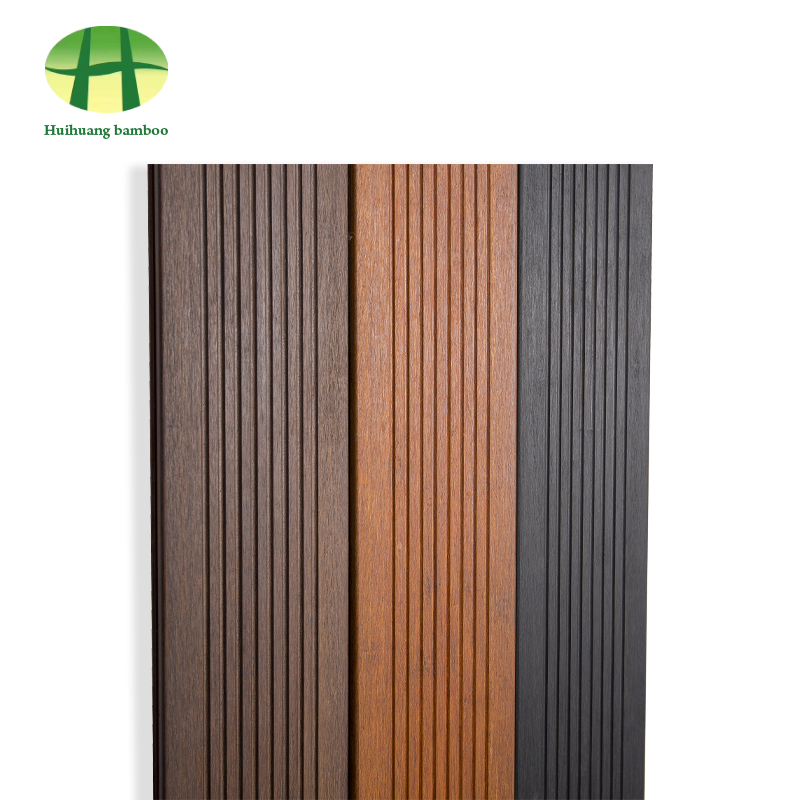
1. Biological Sequestration: Bamboo's Rapid Growth Advantage
The primary factor in the low carbon footprint of bamboo flooring outdoor decking is the plant's growth rate. Moso bamboo reaches structural maturity in just 4 to 6 years, whereas tropical hardwoods require 60 to 100 years to reach harvestable size. This rapid regeneration allows bamboo forests to sequester carbon up to four times faster than traditional forests. When comparing bamboo decking vs tropical hardwood sustainability, the high yield per hectare of bamboo significantly reduces the land use footprint. While tropical timber extraction often leads to deforestation and the release of stored soil carbon, bamboo harvesting promotes healthy rhizome growth, ensuring continuous carbon capture without destroying the ecosystem.
Comparison: Biomass Regeneration and Carbon Sequestration
Bamboo acts as a high-speed carbon sink, outperforming tropical timbers in CO2 absorption per unit of time and land area.
| Metric | Tropical Timber (e.g., Ipe/Teak) | Strand Woven Bamboo Decking |
| Maturity Cycle | 60 - 100 Years | 4 - 6 Years |
| Carbon Sequestration Rate | Low to Moderate | Extreme (Rapid biomass accumulation) |
| Harvesting Impact | Clear-cutting risk / High disturbance | Selective harvesting / No replanting needed |
2. Manufacturing Energy and Life Cycle Assessment (LCA)
A common engineering concern is the energy required to convert raw bamboo into a durable bamboo flooring outdoor decking board. This process, known as strand-weaving, involves carbonization and high-pressure resin bonding. Despite the industrial processing required, the total "cradle-to-gate" CO2 emissions are often offset by the biogenic carbon stored within the material. In contrast, the carbon footprint of tropical timber is heavily weighted by the energy-intensive logistics of transporting heavy logs from remote rainforests. When evaluating bamboo decking environmental impact vs plastic composite, bamboo remains superior as it is bio-based, whereas WPC relies on petroleum-derived polymers with high embodied energy.
Comparison: Embodied Energy and Transportation CO2
While tropical timbers have lower processing energy, their transport and land-use change emissions often exceed the total footprint of locally managed and processed bamboo.
| Source of Emissions | Tropical Timber Products | High Density Bamboo Decking |
| Processing Energy | Low (Milling/Drying) | Moderate (Carbonization/Compression) |
| Transportation Logistics | High (Global shipping of raw logs) | Moderate (Finished goods export) |
| Net Carbon Balance | Varies (Often Carbon Positive) | Typically Carbon Neutral or Negative |
3. Durability and "Carbon Lock-In" Performance
The service life of a material determines how long the sequestered carbon is "locked" in place. Outdoor strandwoven bamboo decking produced by KUNTAI is engineered to resist rot, termites, and fungal decay through a thermal modification process. This longevity is comparable to Class 1 durability tropical hardwoods. If a deck lasts 25+ years, it effectively stores carbon for three generations of bamboo growth cycles. The strand woven bamboo vs ipe decking debate often highlights that while Ipe is naturally durable, the localized manufacturing of bamboo in places like Anhui ensures a strictly controlled quality management system (ISO9001), resulting in fewer product failures and less waste compared to the variable quality of wild-harvested timber.
4. Technical Advantages of KUNTAI Outdoor Bamboo
At Ningguo Kuntai Bamboo and Wood Co., Ltd., our process maximizes the utility of the "Bamboo Village" resources. By utilizing a patented outdoor strand-woven process, we create boards with a density exceeding 1200kg/m3. This high density is not only a marker of strength but also a physical measurement of high carbon concentration per cubic meter. For projects requiring bamboo decking fsc certified options, our supply chain ensures that every board contributes to responsible forest management, further lowering the "indirect" carbon footprint associated with illegal logging in tropical regions.
Engineering Features of Kuntai Bamboo:
- Patented Technology: Holder of US Patent No. US11148318 for superior outdoor stability.
- Extreme Density: High density provides superior fire resistance and mechanical load-bearing capacity.
- Climate Resistance: Optimized for diverse weather through proprietary carbonization cycles.
- Full Suite Solutions: Beyond decking, we offer bamboo wall-cladding and siding for holistic green building.
5. Frequently Asked Questions (FAQ)
1. Is bamboo flooring outdoor decking really carbon negative?
Yes, in many lifecycle assessments. The amount of CO2 sequestered by the bamboo during its rapid growth phase often exceeds the CO2 emitted during manufacturing and shipping, resulting in a net-negative carbon footprint.
2. How does eco friendly bamboo decking carbon footprint compare to WPC?
WPC (Wood Plastic Composite) uses plastic resins which have high embodied energy. Bamboo is a renewable plant fiber, making its total environmental impact much lower than petroleum-based composites.
3. Does the resin used in strand woven bamboo decking affect its safety?
Quality manufacturers like KUNTAI use low-emission resins that comply with E1 or E0 standards. Our ISO14001 certification ensures that our production processes minimize environmental and health risks.
4. What is the maintenance of bamboo decking vs tropical timber?
Both require periodic cleaning and oiling to maintain color. However, bamboo's uniform structure means it is less prone to the splinters and "checking" often seen in lower-grade tropical hardwoods.
5. Why is Kuntai a leader in bamboo timbers and beams?
With 20 years of experience (since 2002) and a 30,000-square-meter facility, we integrate professional R&D with large-scale manufacturing to provide high-stability bamboo solutions for global architecture.
Industry References
- ISO 14040/14044: Environmental management — Life cycle assessment — Principles and framework.
- ASTM D7032: Standard Specification for Establishing Performance Ratings for Wood-Plastic Composite Decking.
- "Life Cycle Assessment of Bamboo Products," International Network for Bamboo and Rattan (INBAR) 2025 Report.
- Kuntai Technical Whitepaper: Carbon Sequestration and Durability of Strand-Woven Moso Bamboo (2026).
 View More

 +86-572-5215066 5216895
 office@hh-bamboo.com
 East Side of Huanggang RD,Ningdun County, Ningguo ,Xuancheng City,Anhui Province,China.