


 English
 Deutsch
Content
- 1 Why the manufacturing process changes the material
- 2 Dimensional stability: the property that decides outdoor projects
- 3 Slip resistance and the safety side of the specification
- 4 Sustainability claims that survive procurement review
- 5 Design flexibility: from deep brown to custom sizes
- 6 A checklist for the specification stage
- 7 The specification that defends itself
When a hotel terrace, a coastal boardwalk, or a school courtyard reaches the material selection stage, the conversation usually stops at the same point: which flooring can handle moisture, UV, and heavy foot traffic without turning into a permanent maintenance problem? For many architects, the answer is strand woven bamboo flooring. They choose it not because it is fashionable, but because its hardness, dimensional stability, and traceable sourcing add up to a specification they can defend in front of a client, a contractor, and an environmental reviewer.
The reasoning is straightforward. A board that is more than twice as hard as red oak, moves less than solid timber in wet conditions, offers documented slip resistance, and carries FSC certification answers the three questions every exterior project asks: Will it stay stable? Will it stay safe? Can the sustainability claim be proven? This article explains why architects keep returning to strand woven bamboo and what they verify before it goes into the project documentation.
Why the manufacturing process changes the material
Strand woven bamboo is not bamboo in the familiar laminated form. The process begins by crushing mature bamboo culms into fine fibers. Those fibers are mixed with an exterior-grade resin, then compressed under high pressure and heat until they fuse into a dense, solid board.
From bamboo stem to compressed board
Because the fibers are packed rather than simply glued on top of each other, panel density usually reaches about 1,000 kg/m³ or higher. That density drives the material's hardness, edge retention, and resistance to rolling loads. It also explains why outdoor strand woven board behaves differently from conventional bamboo flooring when exposed to rain, direct sunlight, and cleaning equipment.
Hardness and density in real numbers
| Material | Typical Janka hardness (lbf) | Common outdoor use |
|---|---|---|
| Red oak | 1,290 | Interior timber reference |
| Teak | 1,000 to 1,155 | Exterior decking, outdoor furniture |
| Ipe | 3,500 or higher | High-end exterior decking |
| Strand woven bamboo | About 3,000 (published values commonly range from 2,800 to 3,500) | Outdoor decking, wall cladding |
These numbers explain the preference. Red oak is the usual interior reference, teak has a long tradition in exterior decks, and ipe belongs to the hardest tropical hardwoods available. Strand woven bamboo sits in the same range as the hardest tropical timbers, which means it accepts commercial foot traffic, furniture loads, and maintenance trolleys without showing the compression marks that softer woods develop after a few seasons.
Dimensional stability: the property that decides outdoor projects
Outdoor decking fails more often from movement than from breakage. Boards that cup, twist, or swell after rain create trip hazards, open joints, and surface cracking. Solid bamboo and many fast-grown timbers move noticeably with humidity, making long runs risky without careful expansion planning.
Why strand woven bamboo moves less
The compressed fiber matrix and the resin system limit how much water can enter the board. Moisture-related movement in bamboo mostly originates in the less dense vertical grain zones; strand woven board removes much of that structure and replaces it with a homogeneous, resin-bound material. The practical effect is boards that stay flatter in wet climates and tolerate the temperature swings of a rooftop deck or an exposed waterfront.
Reading the swelling test correctly
Architects do not need to become laboratory specialists, but they should know which numbers matter. The EN 317 test measures thickness swelling after a 24-hour water immersion and is widely used in Europe to compare wood-based panels. Lower values mean the board will behave better when standing water sits on the surface between drain runs. More detail on this appears in our notes on EN 317 stability limits for outdoor bamboo flooring.
For projects where the entire deck area must meet one performance standard, outdoor strandwoven bamboo decking can be delivered with a consistent set of test data across the whole batch, which is exactly what a specification table needs.
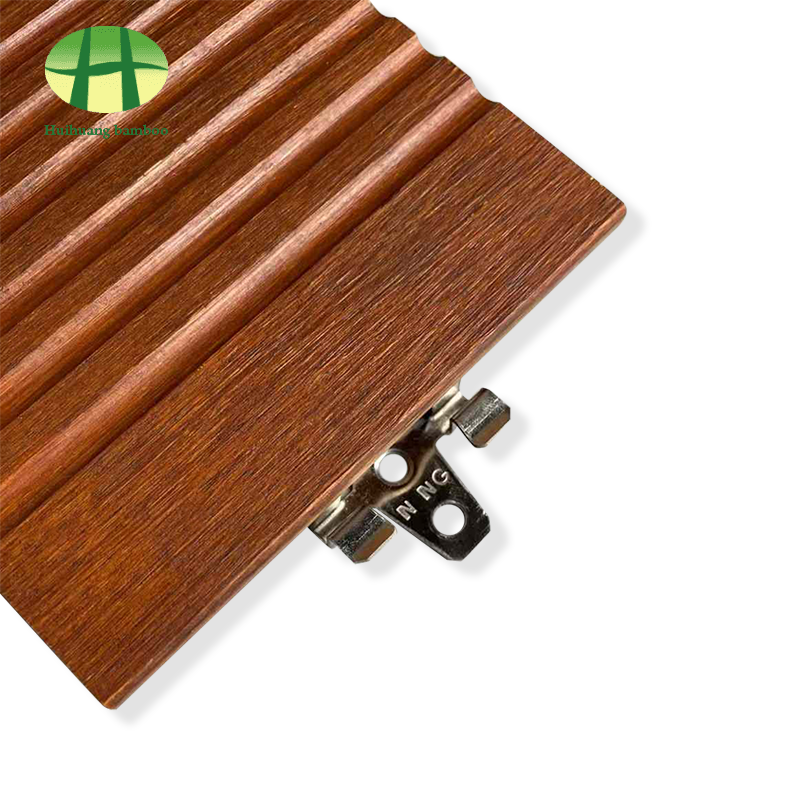 Bamboo Wood Flooring, Bamboo Composite Decking ManufacturersNingguo Kuntai Bamboo And Wood Co.,Ltd. Is China Bamboo Wood Flooring, Bamboo Composite Decking Manufacturers, Factory, We Offer Custom B...View Product →
Slip resistance and the safety side of the specification
Hotels, public buildings, and residential projects all share one obligation: a wet deck must not become a liability. Smooth boards look elegant in brochures, but texture is what separates a safe pool surround from a future insurance claim.
Surface profiles designed for wet conditions
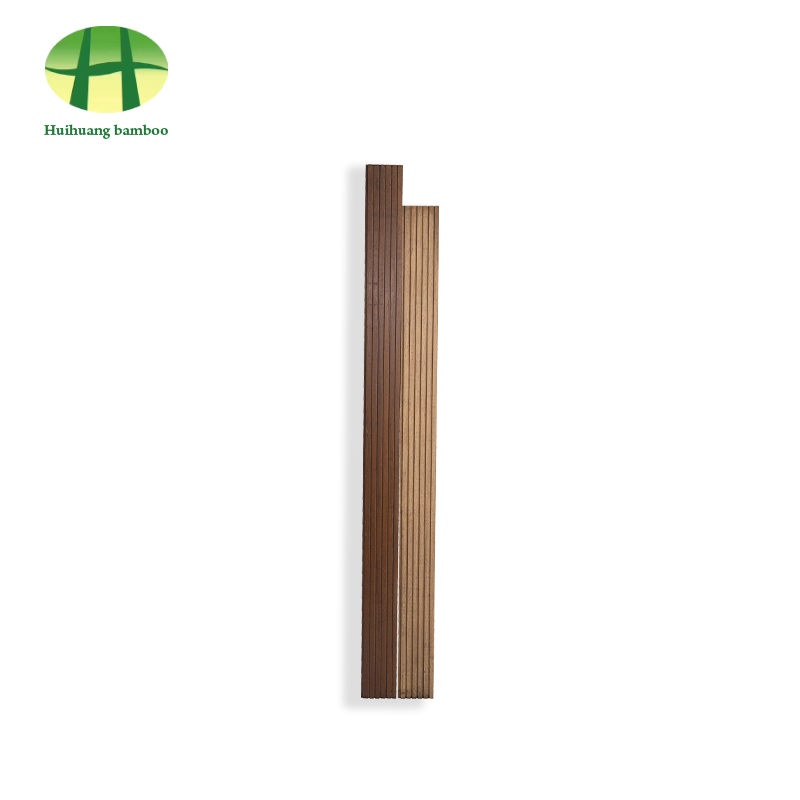
Grooved and wave-shaped surfaces provide mechanical grip that does not disappear when a surface coating wears down. Small groove, large groove, small wave, and double stripe profiles each produce a different tread pattern, so the designer can balance grip with comfort underfoot and ease of cleaning. A frequently used option is small-wave anti-slip bamboo decking, where the repeating wave profile adds friction without the aggressive feel of a deeply grooved board.
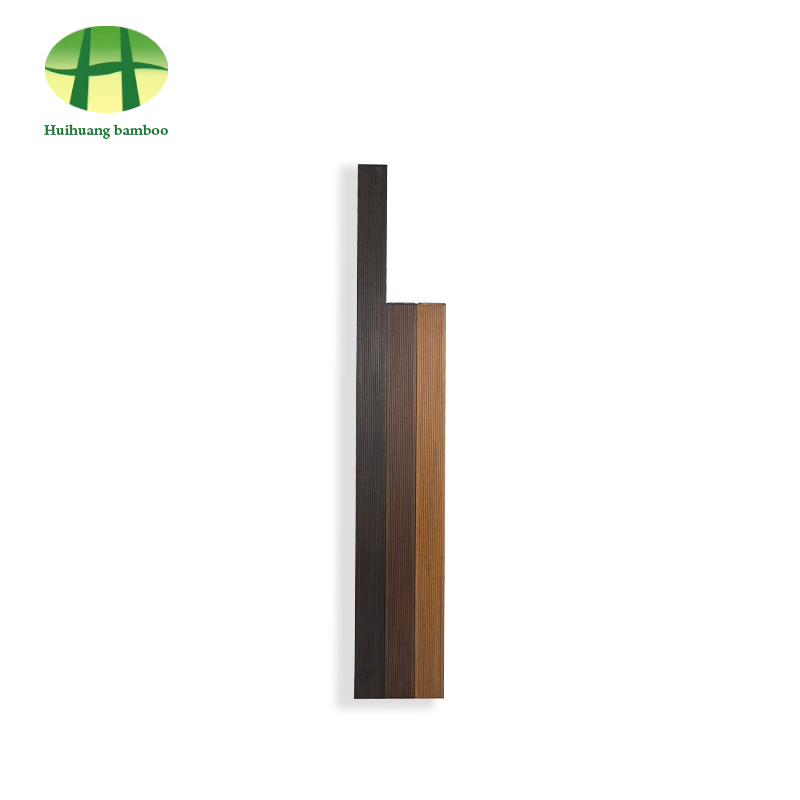 Custom Vertical Fine Small Wave Groove Bamboo Deck Good Slip Resistance For Wet Ningguo Kuntai Bamboo and Wood Co.,Ltd. Offer Custom Vertical Fine Small Wave Groove Bamboo Deck Good Slip Resistance For Wet Poolside Co...View Product →
Rated performance for commercial projects
Where the project must meet slip and fire classifications, the supplier should provide test values instead of general promises. Notes on outdoor bamboo deck slip resistance and safety describe the methods architects can request, including pendulum and inclined-plane tests used to classify wet surfaces.
Sustainability claims that survive procurement review
The environmental case for bamboo is strong, but it has to be verified. Specifications are increasingly challenged by clients and certification bodies, so vague claims will not survive a review. Strand woven bamboo has an advantage here: its lifecycle story can be documented from the growing area to the finished board.
FSC certification and traceable sourcing
FSC-certified bamboo comes from plantations managed under specific environmental and social standards, and the chain of custody can be traced from harvest to delivery. For an architect, this shortens the paperwork trail during tendering. A practical overview of FSC-certified bamboo flooring benefits, installation, and maintenance lists the documents a prudent firm should request.
An honest look at the resin question
No strand woven bamboo product is a single-ingredient material. The board contains a resin system, usually a phenolic or other exterior-grade adhesive, that binds the fibers together. Architects should ask what binder is used, whether it meets the formaldehyde emission limits of the installation country, and whether the FSC chain of custody covers the bamboo component. Mature bamboo can be harvested every four to six years from the same root system, which keeps raw material supply close to the mill; factories in bamboo-growing regions such as Ningguo in Anhui province can store harvested stems, shorten transport distances, and document origin more easily.
Design flexibility: from deep brown to custom sizes
Performance brings a material into a project; appearance makes the selection stick. Strand woven bamboo gives designers more controlled color and texture options than many natural timbers because color is added to the fibers before pressing, not as a surface stain afterwards.
Color that runs through the full board
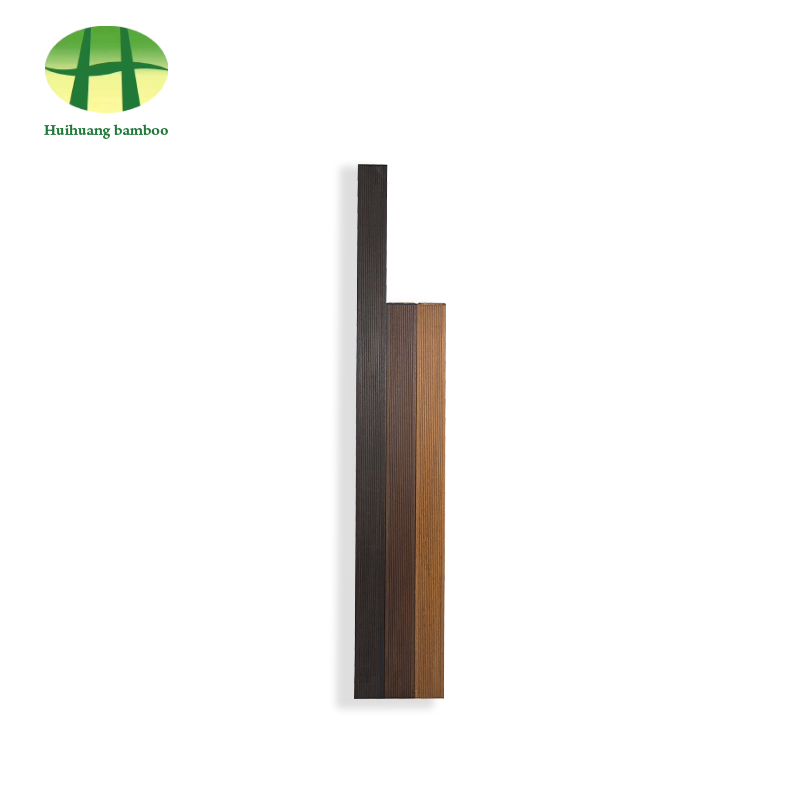
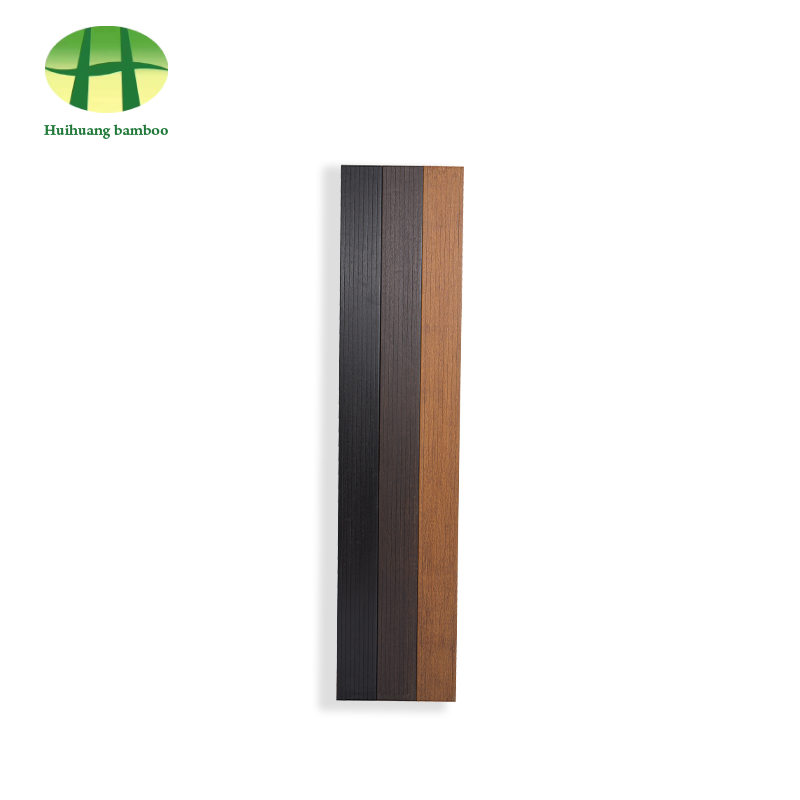
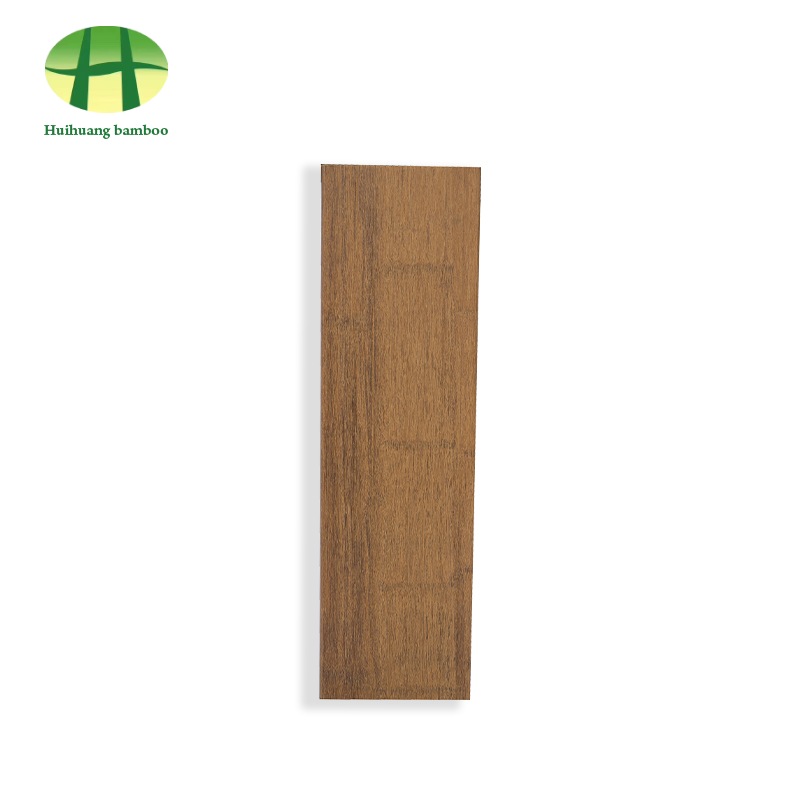
Carbonized board is heat-treated to produce a deep brown throughout its thickness, so scratches and edge chips do not reveal a lighter color underneath. Natural board keeps a warm bamboo tone, while coffee and pineapple shades add contrast for architectural accents. Where a whole floor or facade must maintain a uniform dark finish, carbonized strand woven bamboo flooring provides a repeatable color reference across production runs.
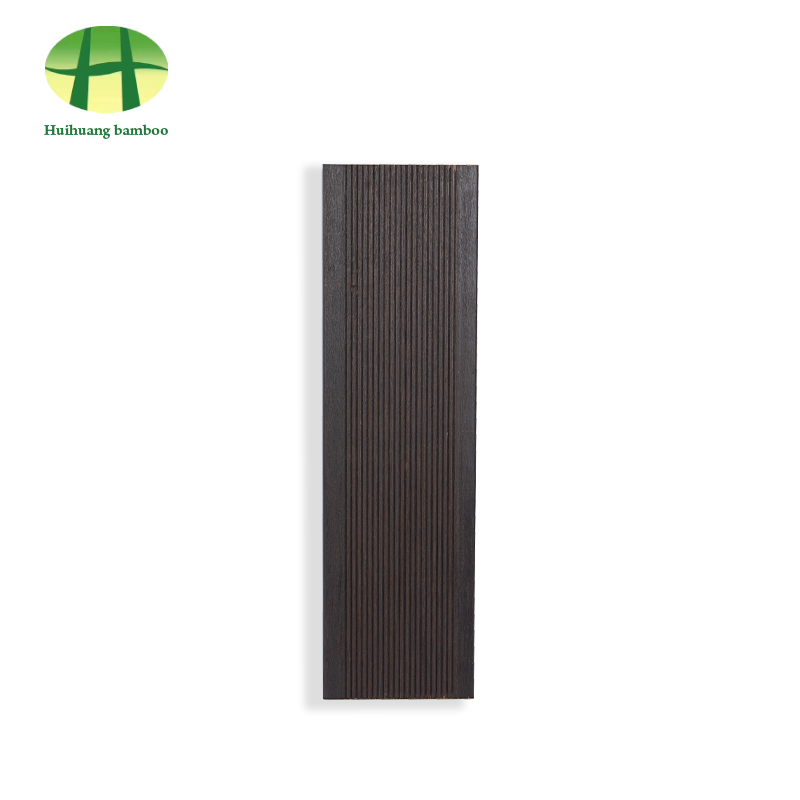 Custom eco friendly Carbonized color bamboo composite flooring Manufacturers, FaNingguo Kuntai Bamboo and Wood Co.,Ltd. Offer Custom eco friendly Carbonized color bamboo composite flooring Manufacturers and Factory In...View Product →
Profiles and sizes that solve detailing problems
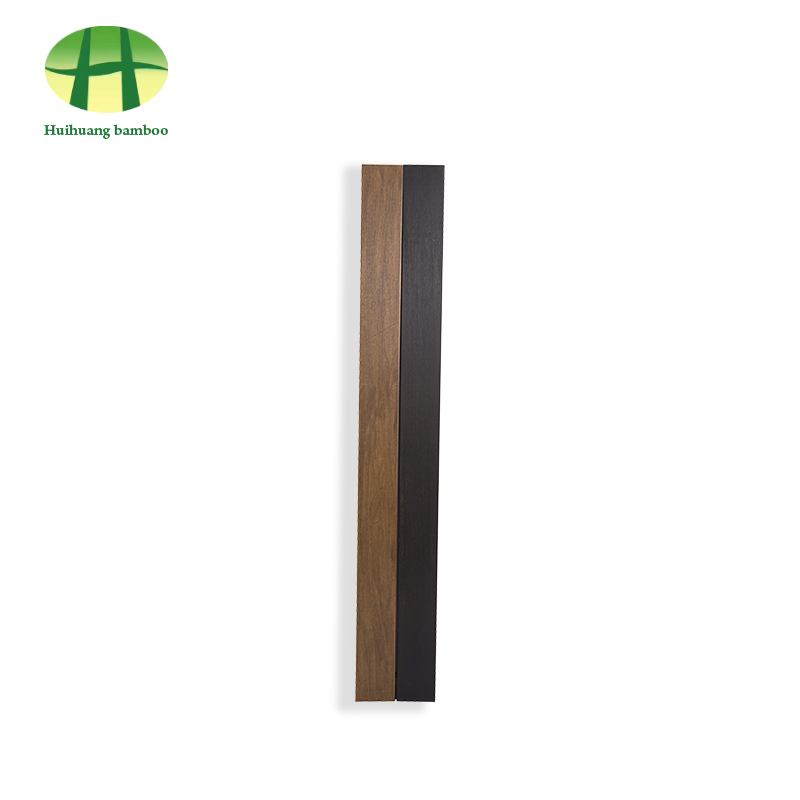
Strand woven board is available in flat, grooved, wave, and spliced formats, with both standard and custom dimensions. This allows the design team to match the deck surface to the wall cladding or the pergola above it, keeping the outdoor space visually coherent. The same material family extends to exterior wall panels, fences, horse stable panels, planter boxes, and pergolas, so the palette of an outdoor project can stay consistent without mixing unrelated products.
A checklist for the specification stage
Before a strand woven bamboo board is approved, the following items should be on the table. They turn a nice material into a defensible specification.
| What to verify | Why it matters | What to request |
|---|---|---|
| Panel density and resin type | Determines real hardness and moisture resistance | Density of about 1,000 kg/m³ or higher; exterior-grade phenolic resin declaration |
| Moisture and swelling data | Predicts board movement in wet climates | EN 317 thickness swelling value included in the supplier datasheet |
| Slip performance | Public project safety compliance | Surface profile details and slip rating from pendulum or inclined-plane testing |
| Certifications | Evidence for sustainability claims and market access | FSC, CE, ISO 9001, and ISO 14001 certificates with scope and validity dates |
| Manufacturing evidence | Confirms production maturity and technical control | Patent documentation such as the U.S. patent US11148318 for outdoor bamboo flooring, plus factory audit records |
| Dimensional tolerance | Affects installation flatness and joint tightness | Consistent width and thickness tolerance; inspection of production samples before shipment |
Certification and manufacturing evidence matter because they separate reliable production lines from one-off samples. A supplier with a dedicated factory floor, documented patents, and audit-visible environmental management is much easier to support when the contractor asks why a particular board was selected.
The specification that defends itself
Architects choose strand woven bamboo flooring because the material answers the three questions every exterior project asks in writing. The board is hard enough to survive commercial traffic, stable enough to keep joints tight in wet climates, and documented well enough to survive a sustainability audit. When the test data, the FSC certificate, the resin declaration, and the manufacturing records are all available before the first board is ordered, the decision stops being a gamble. That is the level of certainty architects look for, and it is the reason strand woven bamboo keeps appearing in their specifications.
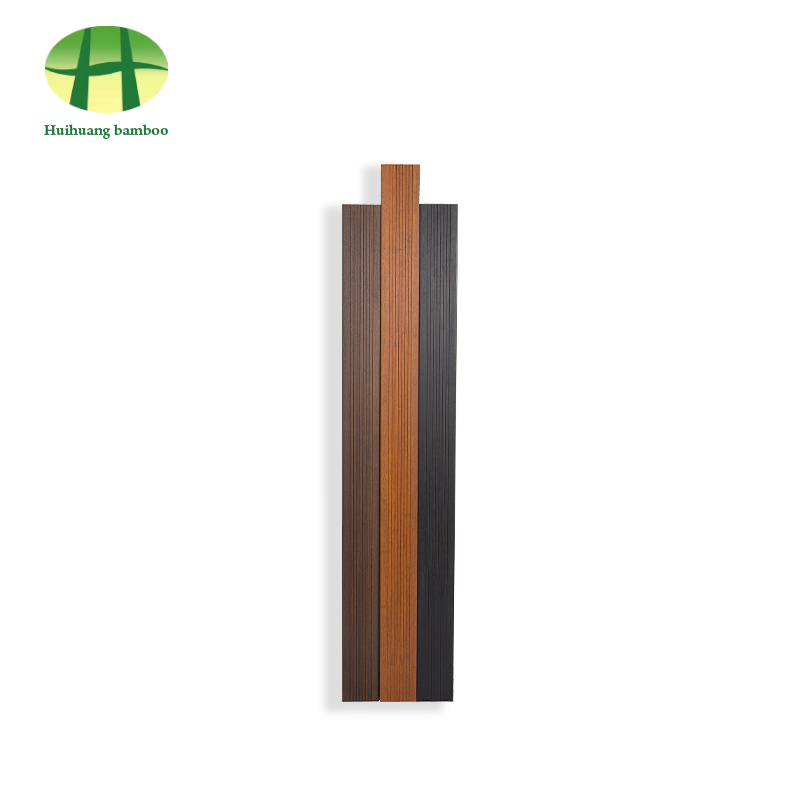
 View More

 +86-572-5215066 5216895
 office@hh-bamboo.com
 East Side of Huanggang RD,Ningdun County, Ningguo ,Xuancheng City,Anhui Province,China.