


 English
 Deutsch
Content
- 1 What Export Requirements Actually Cover
- 2 Performance Standards That Define the Shipment
- 3 Certifications That Move Goods Through Borders
- 4 The Seven-Document Export File
- 5 Packaging and Container Loading Rules
- 6 HS Classification and Duty Treatment
- 7 Pre-Shipment Quality Control
- 8 Choosing an Export-Ready Supplier
- 9 Export Compliance Questions Buyers Ask
An import manager in Rotterdam opens a quote from a bamboo flooring mill in Anhui and sees FOB Shanghai, EN 317, Janka hardness, FSC chain of custody, a fumigation certificate, and a 40-foot container loading plan in the same email. Sorting those terms correctly decides whether the shipment clears customs in three days or waits in a bonded warehouse for three weeks. Strand woven bamboo flooring export requirements are not a single document; they are a coordinated set of material standards, certifications, paperwork, and packaging decisions that supplier and buyer must align before production starts.
What Export Requirements Actually Cover
Export requirements for strand woven bamboo flooring cover five areas: material performance testing, certification, commercial documentation, customs classification, and moisture-safe packaging for sea freight.
Buyers usually discover this only when a container is held at the border. Bamboo flooring is a wood-based construction product, so most markets treat it differently from furniture or decorative boards. The importer, the manufacturer, and the freight forwarder each own part of the compliance chain, and that division of responsibility must be agreed in the order confirmation, not after the goods arrive.
- Material performance: density, Janka hardness, EN 317 thickness swelling, moisture content, slip and fire ratings
- Certification: FSC, CE, ISO 9001, ISO 14001, and third-party batch inspection
- Documentation: commercial invoice, packing list, certificate of origin, bill of lading, phytosanitary or fumigation certificate
- Customs classification: HS code selection that determines duty treatment in the destination market
- Packaging: moisture barriers, desiccants, palletizing, and container stuffing rules
Strand woven bamboo is a densified composite board made by crushing bamboo culms into fiber strands, saturating them with adhesive, and pressing the billet under extreme pressure before it is milled into flooring planks.
A single moisture-content failure at destination can start edge swelling within days; a missing phytosanitary certificate can hold an entire container at the port. The cost of compliance is small compared with the cost of a rejected shipment.
Performance Standards That Define the Shipment
Conformance to measurable physical standards anchors every strand woven bamboo flooring export shipment, because customs inspectors, specifiers, and project insurers rely on numbers rather than on product names.
A mill test report is the proof. It should list the batch number, production date, board thickness, density, hardness, EN 317 results, and moisture readings measured at the time of packing. The report is part of the import file and is often requested by customs authorities for wood-based panels.
Reading the Mill Test Report
| Parameter | Typical range | Why it matters |
| Janka hardness | 3,000-4,200 lbf | Indentation, abrasion, and fastener hold on project walkways |
| Density | 1,100-1,200 kg/m3 | Dimensional stability and resistance to denting during transit |
| EN 317 thickness swell (24 h immersion) | 6-8% max | Predicts edge swelling in humid climates |
| Moisture content at packing | 8-12% | Controls cupping, warping, and gap formation after installation |
| Slip resistance | Surface dependent | Pedestrian safety on wet decks and pool surrounds |
| Fire rating (EN 13501-1) | B-s1,d0 or C-s1,d0 typical | Building code acceptance in the EU market |
The two values that cause the most claim disputes are EN 317 thickness swelling limits and slip resistance; both are production-dependent and must be confirmed on the exact batch, not on a brochure.
Janka Hardness in Export Specifications
Typical Janka hardness values used in bamboo flooring export specifications; strand woven bamboo is commonly specified above 3,000 lbf.
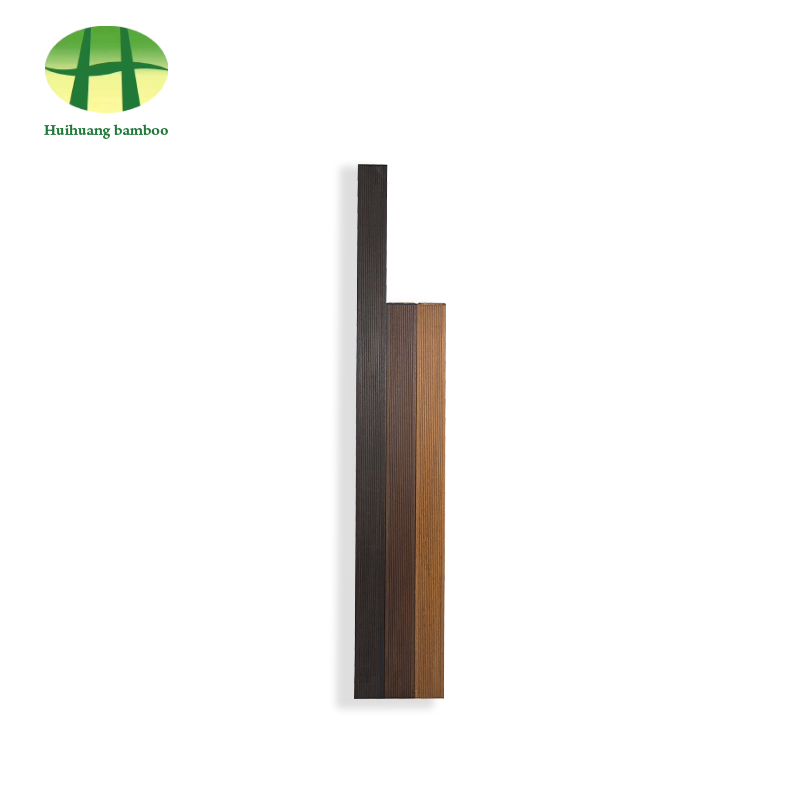
For projects where a deep, uniform dark tone must be maintained across thousands of square meters, carbonized strand woven bamboo flooring has been the most requested finish in European and Australian export orders because the carbonization cycle darkens the board from surface to core.
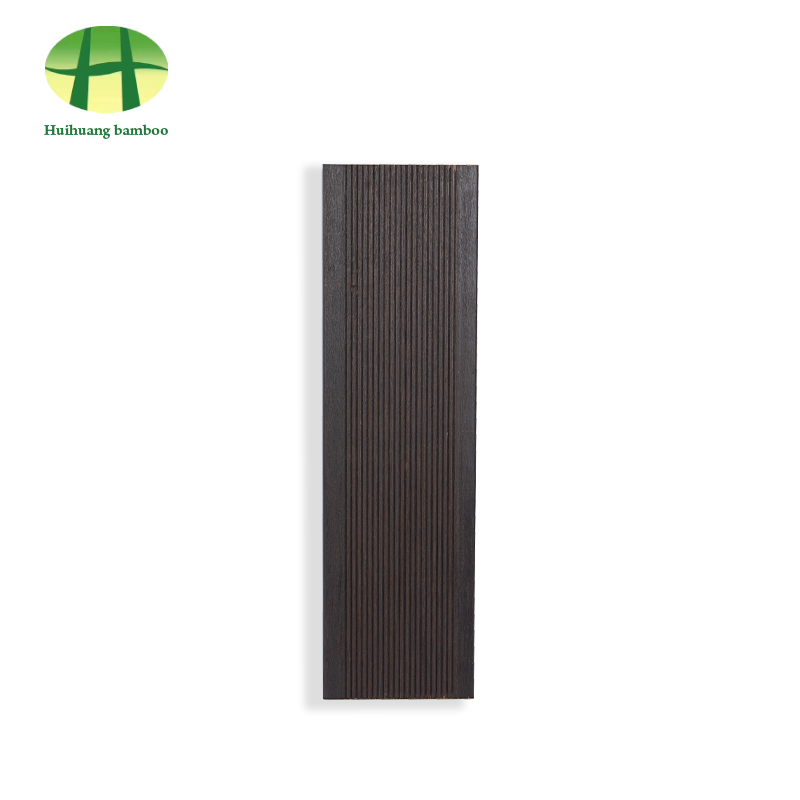 Custom eco friendly Carbonized color bamboo composite flooring Manufacturers, FaNingguo Kuntai Bamboo and Wood Co.,Ltd. Offer Custom eco friendly Carbonized color bamboo composite flooring Manufacturers and Factory In...View Product →
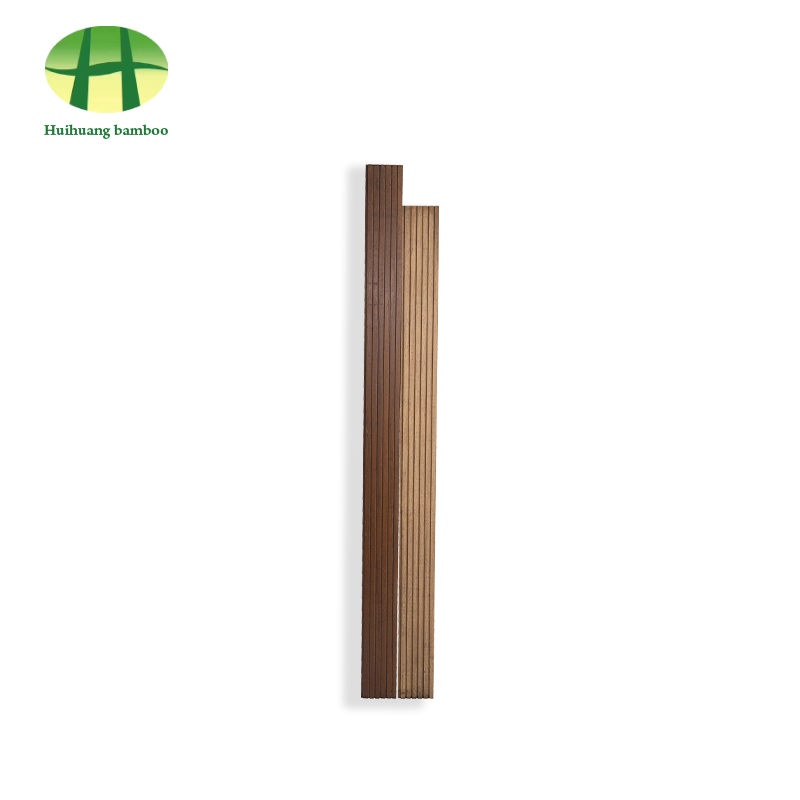
Wet decks push specifiers toward milled anti-slip surfaces. Small-wave strand woven bamboo flooring uses curved grooves that shed rainwater while keeping a comfortable barefoot feel, which is why this surface appears in most pool-adjacent specifications.
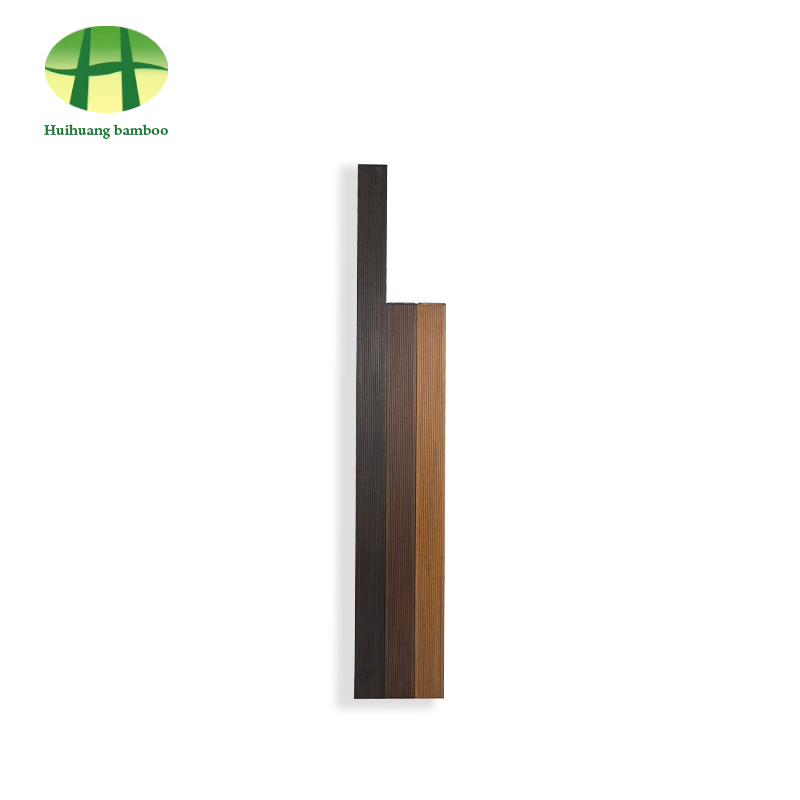 Custom Vertical Fine Small Wave Groove Bamboo Deck Good Slip Resistance For Wet Ningguo Kuntai Bamboo and Wood Co.,Ltd. Offer Custom Vertical Fine Small Wave Groove Bamboo Deck Good Slip Resistance For Wet Poolside Co...View Product →
Flooring that leaves the factory at 12% moisture and travels through a monsoon-season port call can arrive above 15% by the time the container is opened. That 3-percentage-point shift is the most common cause of claim rejections on bamboo flooring shipments.
Certifications That Move Goods Through Borders
The certificates a buyer should demand are FSC for raw material legality, CE for European construction product rules, ISO 9001 and ISO 14001 for factory control systems, and an independent batch inspection report from a laboratory such as SGS.
Certificate-by-certificate checklist
- FSC chain of custody: proves the bamboo raw material entered the factory through a verified legal and sustainable supply chain
- CE marking: required in the EU when bamboo flooring is supplied as a construction product; supported by test reports under EN standards and factory production control documentation
- ISO 9001: certifies quality management across the production line and reduces batch-to-batch variation
- ISO 14001: certifies environmental management, increasingly checked by green procurement programs
- SGS or equivalent third-party inspection: verifies quantity, packaging, and visual condition against the packing list before the container closes
Hardness and durability data support most of these certificates, and buyers comparing materials should review how strand woven bamboo flooring hardness and durability are measured and reported before accepting a specification.
For outdoor projects, building code acceptance often depends on fire and slip rating comparisons across outdoor decking materials, so those values belong in the tender specification, not only in the certificate file.
Huihuang Bamboo, the export brand of Ningguo Kuntai Bamboo and Wood Co., Ltd., holds FSC, CE, SGS, ISO 9001, and ISO 14001 credentials and a US patent, number US11148318, for outdoor bamboo flooring. A certificate page on a website proves little by itself; the test report attached to your batch is what customs and insurers actually read.
The Seven-Document Export File
A complete export file contains at least seven documents: commercial invoice, packing list, bill of lading, certificate of origin, legal timber or FSC evidence, phytosanitary or fumigation certificate, and the mill test report.
The sequence below reflects how a manufacturer documents a standard container shipment from China to Europe or North America. Exact names and formats shift by destination, but the logic stays the same: prove what the goods are, where they came from, and how they were packed.
Customs reads the value, weight, board count, and container number from these two documents; a mismatch is the fastest way to trigger an inspection.
Establishes China as the country of origin and supports duty claims under trade agreements or preference schemes where applicable.
Required for wooden packaging in most markets through ISPM 15, and for bamboo material itself in some destinations.
Confirms the port pair, shipment date, container number, and consignee details; any discrepancy with the invoice delays release.
The test report must match the batch numbers on the packing list; without that match, a customs officer cannot verify the declaration.
Missing one document usually does not stop production; it stops the truck at the border. Forwarders quote lead times assuming the file is complete when the goods arrive at port, and most buyers do not see the cost of that delay until they pay demurrage.
Packaging and Container Loading Rules
Moisture control inside the container decides more about the final board condition than any other packaging decision.
Strand woven bamboo is stable in service, but the resin matrix and bamboo fibers still absorb water when exposed to condensation, rain, or high humidity during a 30-day ocean crossing.
- Wrap every bundle in PE film backed by an aluminum foil layer to stop vapor transmission
- Place desiccant packs at a rate of at least 200 g per cubic meter inside the sealed bundle area
- Use kiln-dried, ISPM 15-compliant pallets so the fumigation requirement applies to the load, not the packaging
- Load the container in dry weather with the interior dry and clean, and record container condition before loading
- Stow bundles evenly and strap them so partial pallets cannot shift during rolling and braking at sea
Keep moisture content below 10% at the moment of wrapping, seal the bundle within 48 hours after pressing, and do not put rain-exposed boards into an export bundle for any reason.
HS Classification and Duty Treatment
HS classification for strand woven bamboo flooring usually sits in heading 4412 for bamboo plywood products or in heading 4418 for assembled flooring panels, and the choice changes duty rates in the destination country.
A solid bamboo board milled from a single pressed billet is normally declared differently from a tongue-and-groove panel assembled for installation. The importer's customs broker should confirm the exact code before you quote CIF prices, because duty rates and anti-dumping treatment can differ between the two classifications.
The commodity description on the commercial invoice must mirror the mill test report. If the invoice says solid bamboo decking and the test report shows an assembled panel, customs has grounds to reclassify the shipment and apply back duties.
Pre-Shipment Quality Control
Pre-shipment inspection should verify moisture, geometry, color, surface condition, and packaging before the container leaves the factory.
- Moisture meter readings across at least five bundles per lot, targeting below 10%
- Dimension checks: thickness 18, 20, or 25 mm as ordered, width tolerance within plus or minus 0.3 mm, and square-cut ends
- Color consistency across batches, especially for carbonized finishes where tone can drift between production runs
- Surface inspection for cracks, delamination, resin pockets, and machining marks
- Packaging verification: pallet count, strapping tension, edge protection, and shipping marks matching the packing list
A third-party inspection on the factory floor typically costs far less than the port-side claim on a rejected lot, which is why SGS inspection before loading is standard practice for strand woven bamboo flooring exporters.
Choosing an Export-Ready Supplier
An export-ready supplier can produce the document package, hold current certificates, and commit to packing specifications in writing.
- Owns the production line and can show process control records
- Issues a mill test report for each batch number
- Holds valid FSC, CE, ISO, and SGS credentials
- Publishes container loading data and packing specs in the quotation
- Offers low price but no batch traceability
- Provides generic certificates copied from other suppliers
- Cannot verify moisture or EN 317 data on demand
- Pushes responsibility for packing onto the buyer
Huihuang Bamboo, the export brand of Ningguo Kuntai Bamboo and Wood Co., Ltd., has operated a 30,000-square-meter factory in Anhui since 2002, with more than 100 employees and a product range that includes outdoor strand woven flooring, wall panels, fences, stable boards, planter boxes, and pergolas. The company holds FSC, CE, SGS, ISO 9001, and ISO 14001 certification, and its US patent for outdoor bamboo flooring is number US11148318. Factory visits are open to clients before order confirmation, which remains the most direct way to test whether an exporter actually controls the conditions described in this article.
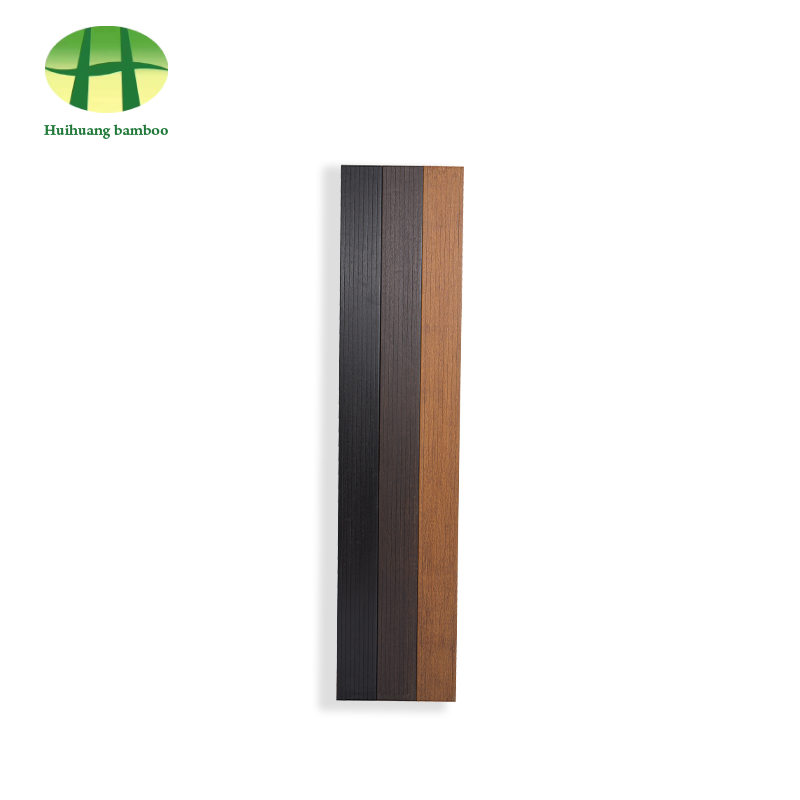
When a project needs non-standard widths or lengths, custom-size glossy strand woven bamboo flooring avoids the compromise between design dimensions and mill stock and is quoted with the same certification and inspection package as standard boards.
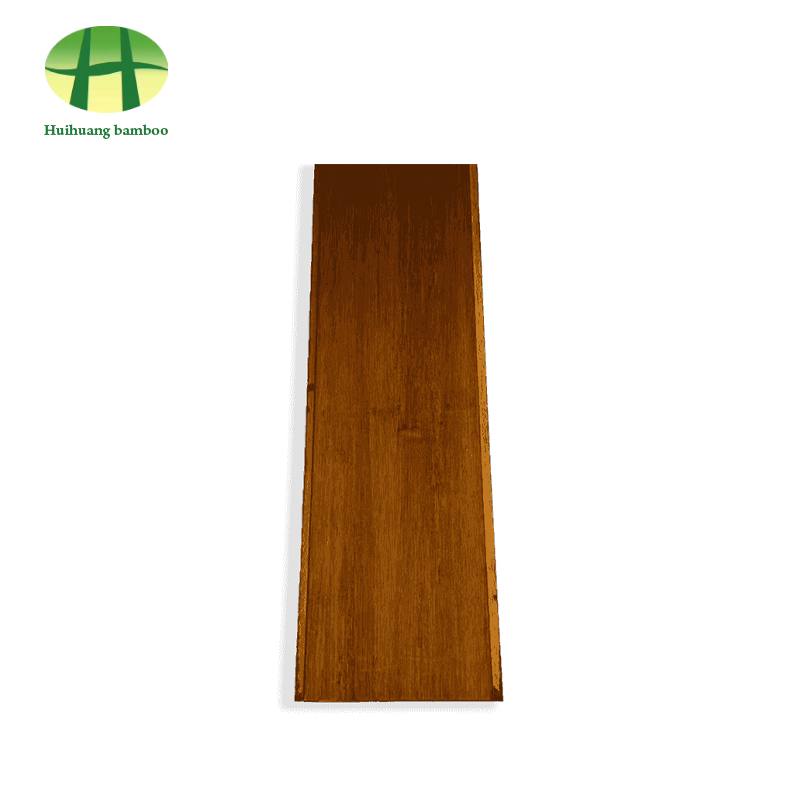 Custom Custom Sized Glossy Heavy Bamboo Decking Heavy Duty Weatherproof Durable Ningguo Kuntai Bamboo and Wood Co.,Ltd. Offer Custom Custom Sized Glossy Heavy Bamboo Decking Heavy Duty Weatherproof Durable Outdoor Dec...View Product →
Export Compliance Questions Buyers Ask
Do I need a fumigation certificate for strand woven bamboo flooring?
Usually yes. Wooden pallets and crates must meet ISPM 15, which means fumigation or heat treatment, before entering most markets. Bamboo itself may require a phytosanitary certificate or an additional declaration depending on the destination; confirm with the buyer's customs broker before production.
What moisture content should I specify?
Specify 8-12% at packing time with 10% as a practical target. The EN 317 thickness-swelling test measures wet behavior, and buyers should insist on a test report from the same production batch rather than a generic certificate.
Are FSC and CE both mandatory?
CE is required for strand woven bamboo flooring when it is placed on the EU market as a construction product. FSC is voluntary but is commonly required by LEED, BREEAM, or government green procurement projects, so many export orders demand both in practice.
How do I verify that the delivered batch matches the test certificate?
Compare the mill test report against your specification, then arrange a third-party inspection such as SGS before shipment. The inspector should re-measure moisture, dimensions, and packaging against the packing list and test certificate while the container is still at the factory.
 View More

 +86-572-5215066 5216895
 office@hh-bamboo.com
 East Side of Huanggang RD,Ningdun County, Ningguo ,Xuancheng City,Anhui Province,China.