


 English
 Deutsch
Content
- 1 Why Strand Woven Bamboo Resists Wear Better Than Most Hardwoods
- 2 Six Factors That Control Wear Resistance and Service Life
- 3 How to Verify Wear Resistance Before You Specify or Buy
- 4 Installation and Maintenance Practices That Prolong Service Life
- 5 Real-World Service Life Expectations
- 6 Frequently Asked Questions
Two strand woven bamboo decks can look identical in a showroom yet age completely differently on a real site. After six years of daily foot traffic, one still shows crisp grain and uniform color, while the other develops fuzzy fibers, exposed chips, and worn hollows near doorways. That gap is not cosmetic luck. It is the measurable result of specific wear-resistance factors that can be checked before a single board is ordered.
Strand woven bamboo flooring is a dense engineered plank made by crushing raw bamboo into fine fibers, saturating them with phenolic resin, and compressing them under high heat and pressure into a solid board. Depending on the manufacturer's process, the finished product reaches a Janka hardness of roughly 1,600 to 1,900 lbf — about 25 to 45 percent harder than red oak at 1,290 lbf and well above the 600-to-900 lbf range of most wood-plastic composite decking.
This article explains which factors control strand woven bamboo wear resistance, how to verify them with test data, and what they mean for the service life of your floor.
Why Strand Woven Bamboo Resists Wear Better Than Most Hardwoods
Strand woven bamboo resists wear because its hardness is built into the material structure itself, not applied as a top coat that can be worn away.
The manufacturing route explains the advantage. Bamboo culms are split, crushed into coarse fibers, dried, and saturated with phenolic resin. The resin-coated fibers are loaded into molds and compressed under high temperature and pressure into boards with a density of roughly 1,100 to 1,250 kg/m³ — about 50 percent denser than red oak. Because that density extends through the full thickness, concentrated loads and years of foot traffic wear the surface far more slowly than they would a soft core or thin veneer.
Phenolic resin does the second job. By binding the fibers into a moisture-resistant matrix at 5 to 15 percent resin content by weight, it reduces water absorption and prevents the swelling, delamination, and surface fiber decomposition that accelerate physical wear outdoors.
For a deeper look at how manufacturing variables translate into mechanical performance, read our strand woven bamboo hardness and durability guide.
Six Factors That Control Wear Resistance and Service Life
Six controllable factors — fiber density, resin content, surface finish, carbonization, surface texture, and moisture stability — determine how long a strand woven bamboo floor keeps its looks and structure.
The list below ranks them by practical impact. A failure in any one factor shortens service life even when the other five are excellent.
The table below summarizes the six factors, what they control, and the performance target a specifier should write into the project requirement.
| Factor | Controls | Performance target |
| Fiber density | Surface hardness and dent resistance | 1,100–1,250 kg/m³ |
| Resin content | Water absorption and layer bonding | 5–15% by weight |
| Surface coating | Scratch and abrasion resistance | AC4–AC5 class |
| Carbonization | Hardness vs. color stability | 10–20% hardness trade-off |
| Surface profile | Visibility of wear | Groove or wave pattern |
| Moisture stability | Dimensional movement | EN 317 swelling below 8% |
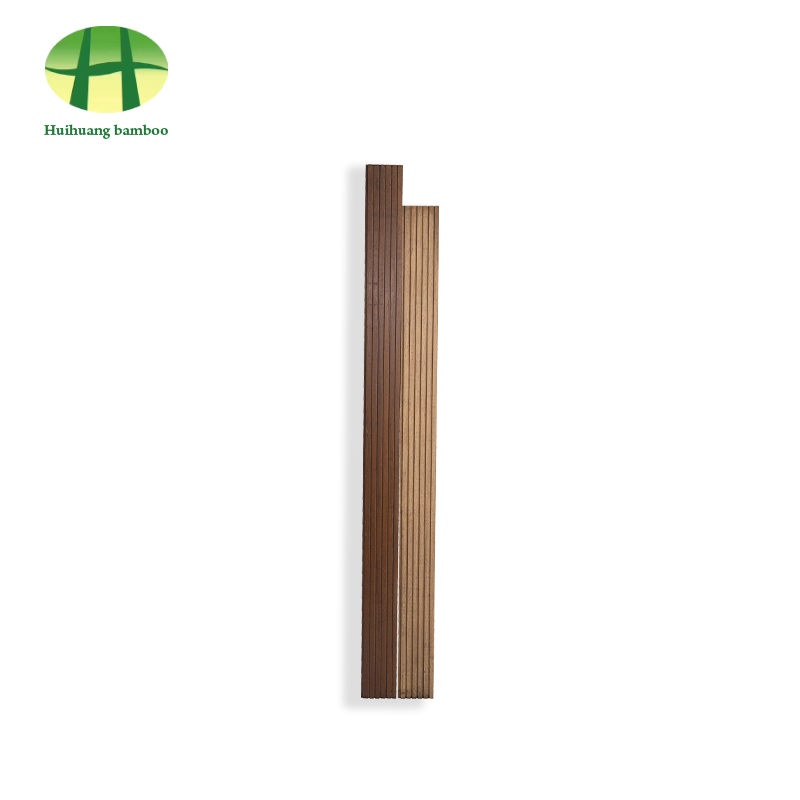
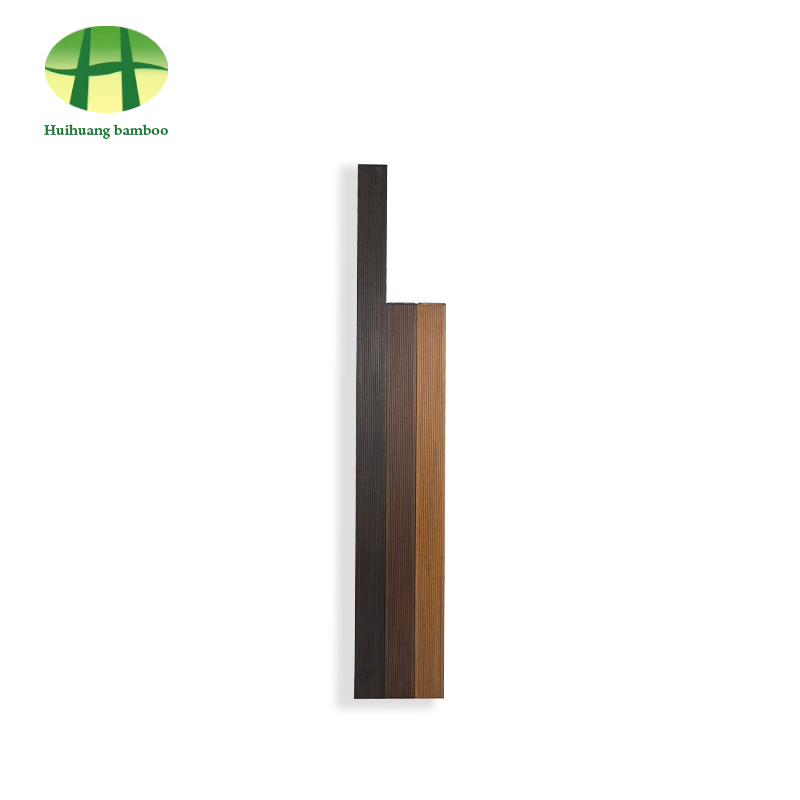 Fine Wave Groove Strand Woven Bamboo Deck with Anti-Slip SurfaceThis decking features a small wave groove texture designed for slip resistance, making it suitable for wet areas like poolside and courtyard exteriors.View Product →
How to Verify Wear Resistance Before You Specify or Buy
Verify wear resistance with three numbers — the Janka hardness rating, the EN 13329 abrasion class, and the EN 317 moisture-swelling figure — then ask for the actual test report instead of a brochure claim.
Huihuang Bamboo, the export brand of Ningguo Kuntai Bamboo and Wood Co., Ltd., manufactures strand woven bamboo decking under US patent US11148318 and documents quality through FSC, CE, SGS, ISO 9001, and ISO 14001 certifications. Mature suppliers provide test-supported specification sheets to international buyers rather than relying on unverified marketing claims.
Use the following five-point checklist when evaluating a supplier:
- Request the EN 13329 or ISO abrasion report and look for an AC4 or AC5 class if the floor will serve outdoor or commercial traffic.
- Confirm the Janka hardness figure in lbf or N from an accredited laboratory, not from the marketing page.
- Check the EN 317 thickness-swelling result — below 8 percent indicates a resin matrix that will hold its shape through wet seasons.
- Inspect the coating specification: polyurethane or ceramic layers with documented Taber cycles protect the bamboo face for years.
- Ask for a density certificate — a value at or above 1,100 kg/m³ confirms true strand woven board rather than a low-cost alternative.
For projects where a smooth face is required, coating quality becomes the primary wear defense. Huihuang Bamboo's smooth heavy bamboo flooring line applies the same high-density strand woven base and protective finish used in its textured boards.
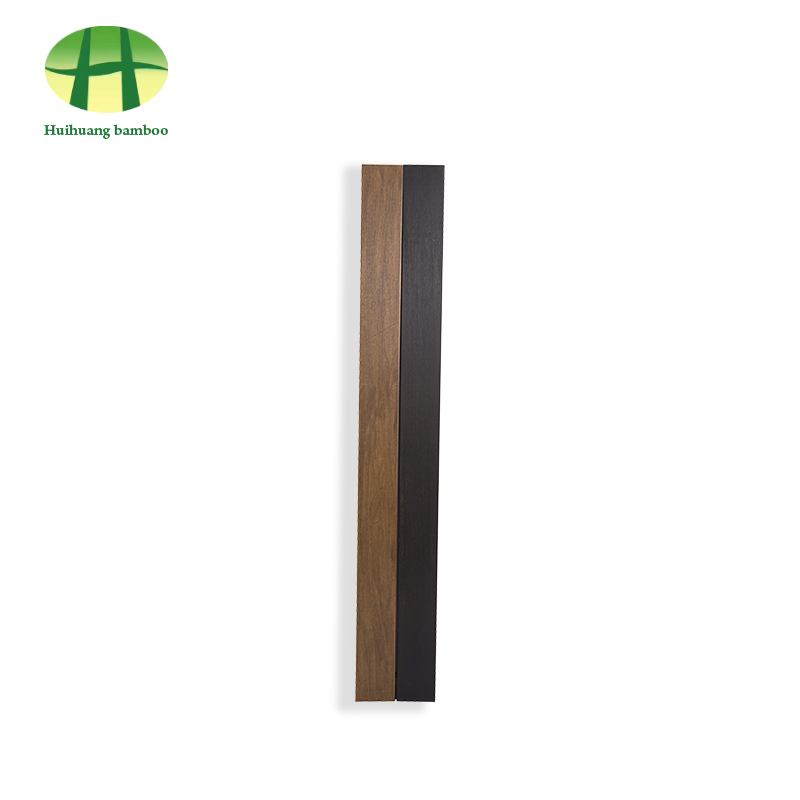
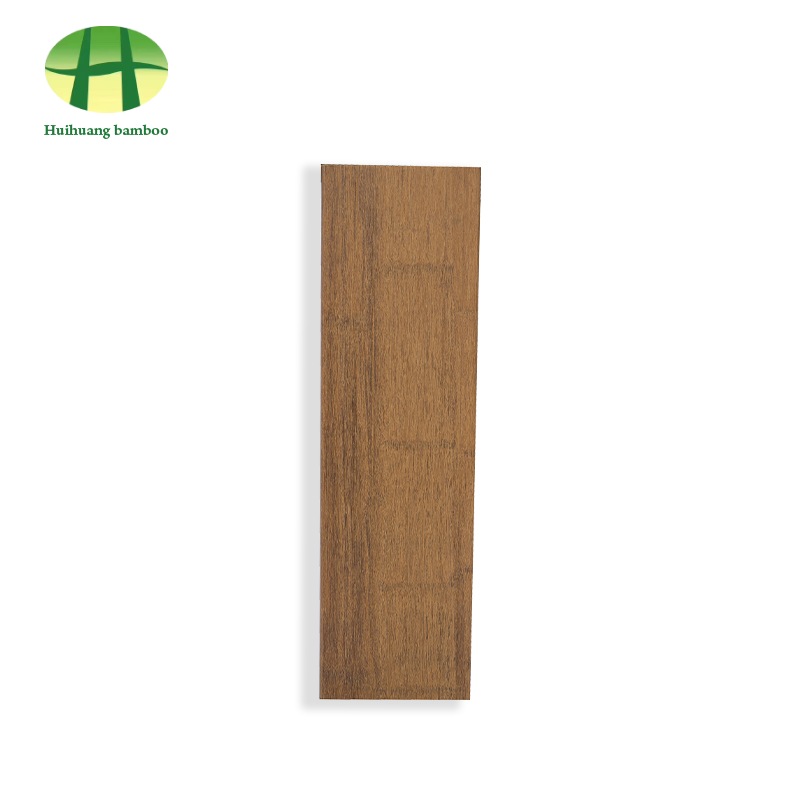 Natural Color Glossy Strand Woven Bamboo Hardwood FlooringRetaining bamboo's natural light tones, this heavy solid flooring offers a glossy finish while built on the same durable strand woven base.View Product →
Installation and Maintenance Practices That Prolong Service Life
Even the hardest bamboo plank fails early if it is installed without ventilation, exposed to standing water, or cleaned with abrasive methods.
Wear resistance describes the material; service life describes the system. A correctly built substructure and a simple cleaning routine protect the surface far more than choosing a marginally harder board.
- Maintain an 8–10 mm expansion gap at perimeters and between fixed elements to prevent edge pressure cracks.
- Install over a ventilated substructure with joist spacing of 400–600 mm so air moves under the deck and moisture never pools.
- Seal all cut ends and drill holes with a matching sealer; exposed end grain is the fastest moisture entry point.
- Clean with a soft-bristle brush or mop and remove sand, grit, and leaf debris promptly — abrasive particles cause most micro-scratching.
- Re-oil or re-seal outdoor surfaces every 12 to 18 months to renew the UV and water barrier.
- Use entrance mats and furniture pads in high-traffic areas so concentrated loads do not grind sharp particles into the surface.
- Redirect downspouts and grade the area around the deck so water drains away instead of standing against the boards.
For a complete seasonal maintenance schedule, see our outdoor bamboo flooring lifespan and maintenance guide.
Real-World Service Life Expectations
With correct specification and routine maintenance, strand woven bamboo flooring delivers 15 to 25 years of outdoor service life and 25 to 30 years indoors.
Service life varies with application, traffic intensity, climate, and the six factors described above. The cards below summarize the values a specifier can enter into a project brief.
Application-level expectations are more useful than a single lifetime number. The table below lists wear risks and realistic service life for common strand woven bamboo installations.
| Application | Primary wear risk | Realistic service life |
| Residential patio deck | Foot traffic, UV exposure | 20–25 years |
| Commercial terrace | Heavy traffic, furniture drag | 15–20 years |
| Pool surround | Standing water, slip wear | 15–20 years with anti-slip pattern |
| Stable and barn flooring | Hooves, point loads, urine | 15–25 years |
| Boardwalk and walkway | Pedestrian volume, weather | 20–25 years |
For outdoor installations where color stability matters as much as abrasion resistance, carbonized boards are a common choice because the dark base tone keeps scratches from showing. Huihuang Bamboo produces carbonized strand woven flooring in its natural-carbonized color series.
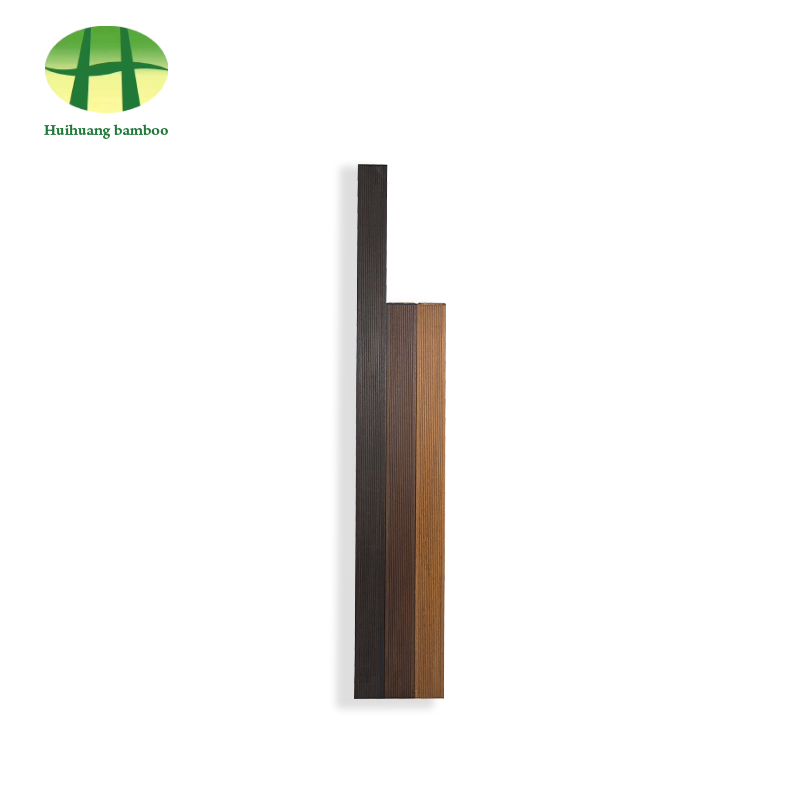
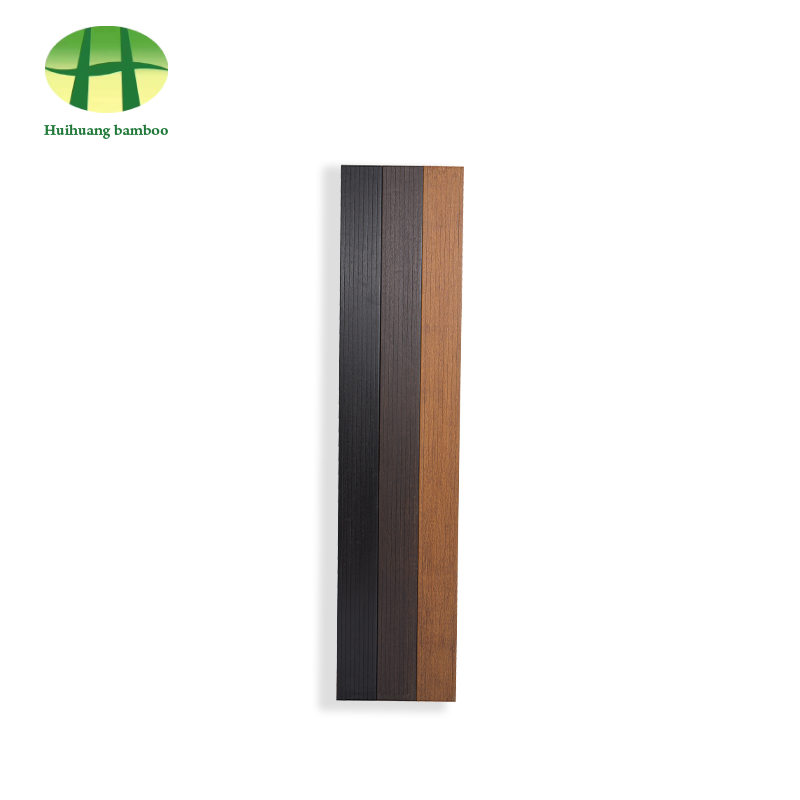
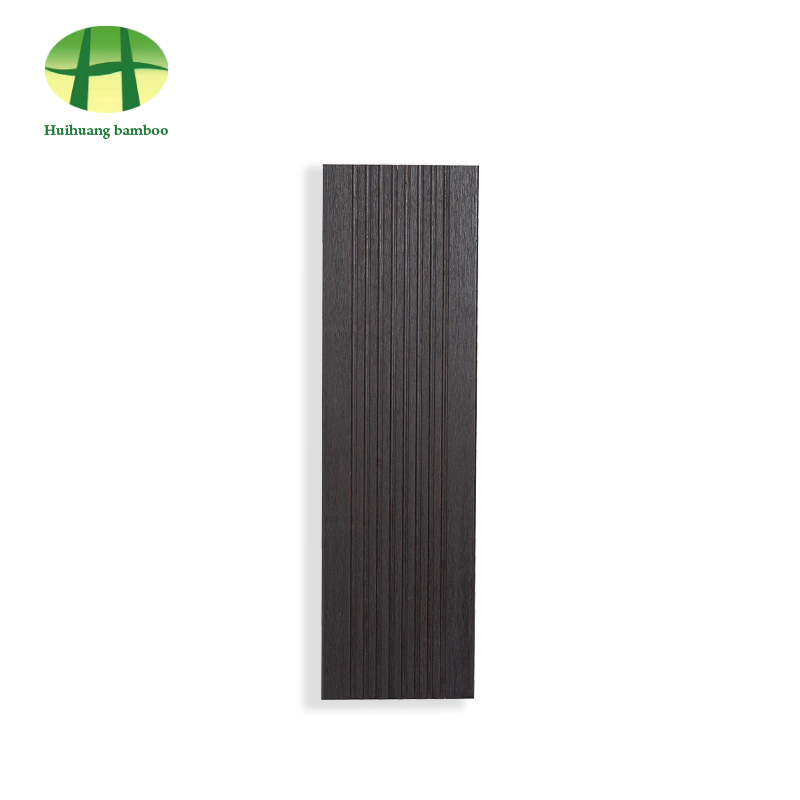 Carbonized Color Strand Woven Bamboo Flooring for Outdoor SpacesThe dark carbonized tones hide scratches and suit industrial or modern interiors, offering a durable outdoor flooring option with a simple texture.View Product →
If you are specifying for a residential, commercial, or public project, explore the complete range of outdoor strand woven bamboo decking from Huihuang Bamboo.
Frequently Asked Questions
Does strand woven bamboo flooring scratch easily?
No. At 1,600 to 1,900 lbf Janka hardness, strand woven bamboo resists scratching better than red oak and most composite boards. Micro-scratches usually come from sand and grit tracked onto the surface, not from the material itself. Entrance mats and regular sweeping eliminate most visible scratch formation.
Is carbonized strand woven bamboo less wear resistant than natural color?
Carbonization reduces hardness by roughly 10 to 20 percent because the heat treatment slightly changes the fiber structure. The carbonized board remains significantly harder than oak and serves well outdoors. The trade-off is acceptable when you need a stable dark tone that hides scuffs and UV graying.
What is the Janka hardness of strand woven bamboo flooring?
Most verified strand woven bamboo products test between 1,600 and 1,900 lbf, with some premium boards exceeding 3,000 lbf. Because results vary by density, resin content, and process, always request the laboratory report for the specific product lot rather than relying on an average figure.
How can I make my strand woven bamboo deck last longer?
Install with 8–10 mm expansion gaps on a ventilated substructure, seal cut ends, clean grit promptly, and re-oil every 12 to 18 months. These practices protect the surface coating and edge joints, allowing a verified board to reach its full 20 to 25 year outdoor service life.
 View More


 +86-572-5215066 5216895
 office@hh-bamboo.com
 East Side of Huanggang RD,Ningdun County, Ningguo ,Xuancheng City,Anhui Province,China.