

 English
 Deutsch
Content
- 1 Why Strand Woven Bamboo Belongs in Interior Design Now
- 2 The 2026 Color Trends: Three Families Keep Reappearing
- 3 Surface Texture and Plank Proportions Are Shifting
- 4 One Material, Continuous Interiors
- 5 Sustainability Has Become a Procurement Document
- 6 What Interior Projects Demand From a Strand Woven Floor
- 7 The Direction Is Clear
In interior design, the most convincing material trends usually arrive with a practical benefit attached. So it is with strand woven bamboo flooring: it is specified more often in 2026 not because it is a novelty, but because it solves two problems that interiors present at the same time. The first is visual — the warm, wood-like surface that reads naturally in residential and commercial rooms. The second is structural — a board density that resists dents, scratches and humidity movement better than most solid hardwoods.
The following sections break down the directions that define the current strand woven bamboo flooring trends in interior design, explain who each direction suits, and list what to verify before the floor is ordered.
Why Strand Woven Bamboo Belongs in Interior Design Now
Strand woven bamboo is produced by shredding bamboo culms into fibers, mixing them with a resin system, and compressing the mass under high pressure into dense billets. The result is a board with a Janka hardness that typically sits in the 3,000 to 4,000 lbf range, compared with roughly 1,290 lbf for red oak. That gap explains the first reason architects and interior designers keep returning to the material: it resists dents, scratches and concentrated loads in a way that lighter-density floors cannot.
The second reason is stability. Because the fibers are compressed and oriented in a dense matrix, strand woven bamboo moves less with changes in humidity and temperature than solid hardwood. In an interior with underfloor heating, large glazing or seasonal humidity swings, that means fewer gaps, less cupping and a quieter floor assembly. For a specifier, the practical benefit is straightforward: fewer callbacks and a longer service life.
Until recently this performance discussion was dominated by outdoor applications, where the same material is used for decking, walls and heavy structures. The current shift is the deliberate move indoors, with designers choosing strand woven bamboo for rooms and choosing it for the right reasons. The strand woven bamboo hardness and durability guide provides the technical reference data if you need it for a project file.
The 2026 Color Trends: Three Families Keep Reappearing
The fastest way to read a flooring trend is color. Across the interior projects of the past two seasons, strand woven bamboo keeps appearing in three color families: light natural finishes, deeply carbonized browns, and warm honey or amber mid-tones. Each direction supports a different interior style, and each has different practical consequences for maintenance and wear visibility.
Natural and Light Finishes for Airy, Japandi-Inspired Rooms
The light end of the palette is the closest to untreated bamboo, a pale straw color with a delicate grain pattern. It supports the Japandi, Scandinavian and minimalist interiors that favor light, diffuse daylight and furniture in pale oak or linen. A light floor reflects daylight, makes a compact room feel larger, and quietly reads as a neutral rather than a statement. For busy households, a natural finish shows dust less dramatically than a high-gloss dark floor, although surface marking depends on how the board is finished.
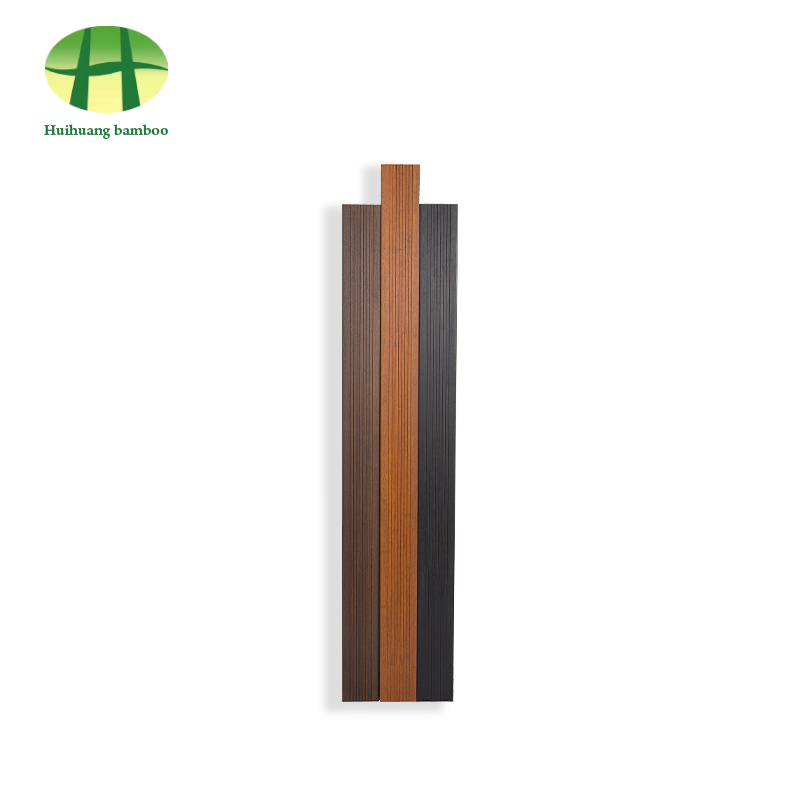
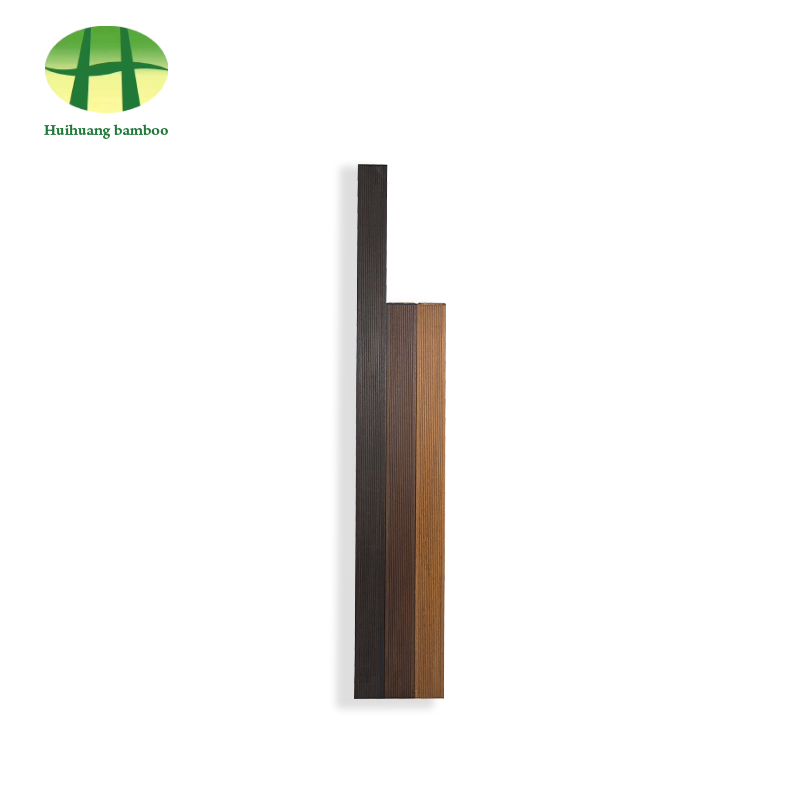
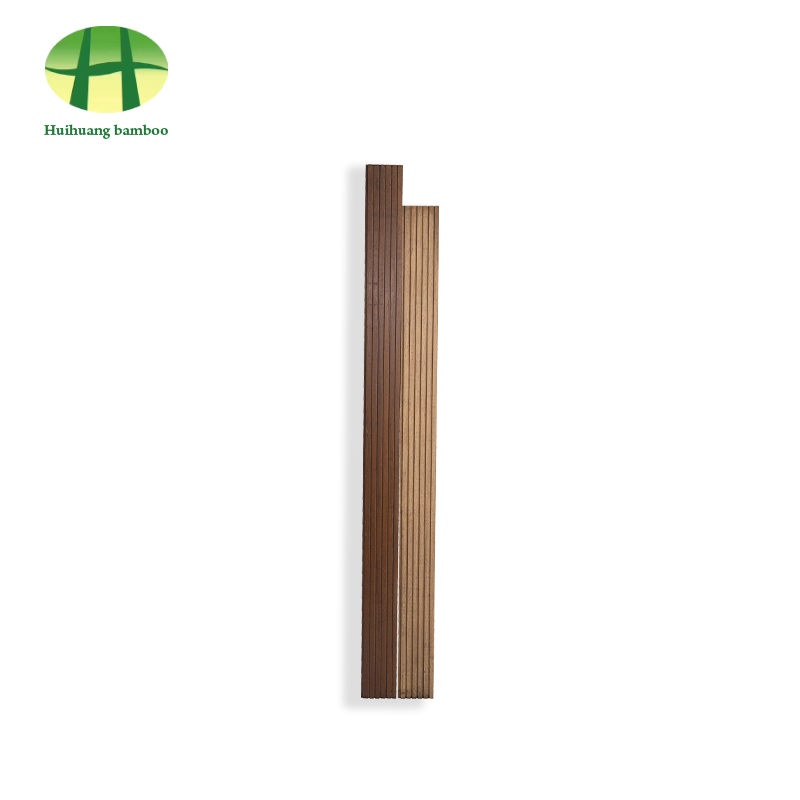
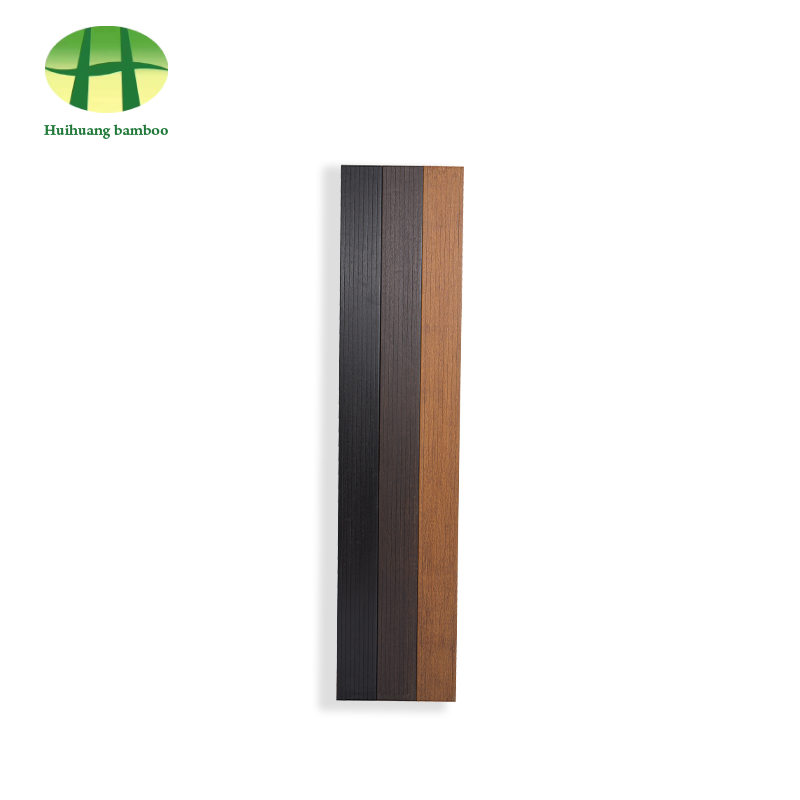
Huihuang's natural-color glossy strand woven bamboo flooring is a good starting point for this look, with a closed, smooth surface that keeps cleaning straightforward.
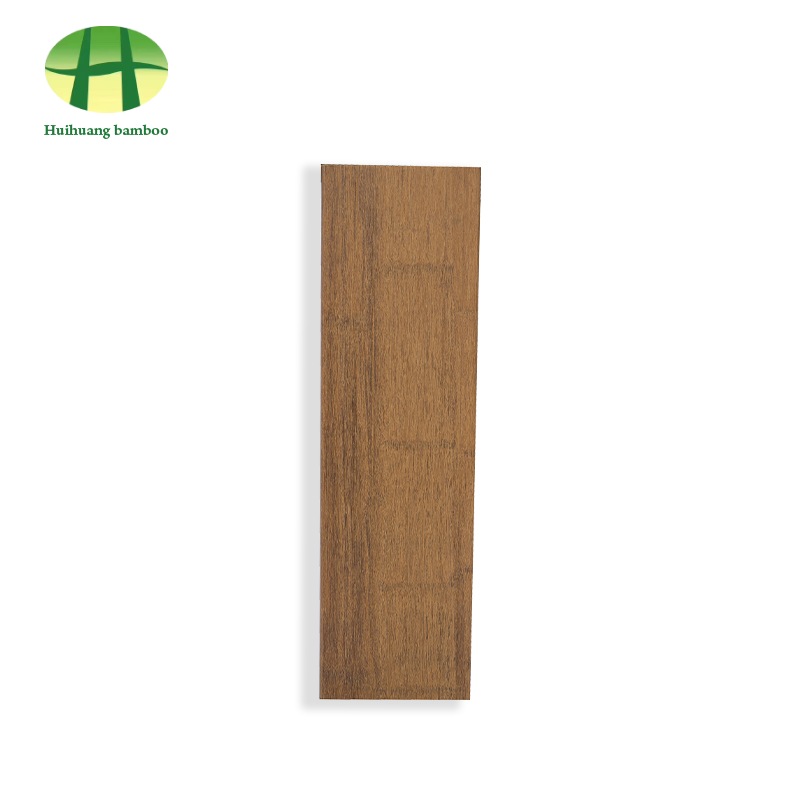 Custom Natural color glossy heavy solid bamboo hardwood flooring Manufacturers, Ningguo Kuntai Bamboo and Wood Co.,Ltd. Offer Custom Natural color glossy heavy solid bamboo hardwood flooring Manufacturers and Factory ...View Product →
Carbonized Tones for Depth and Quiet Drama
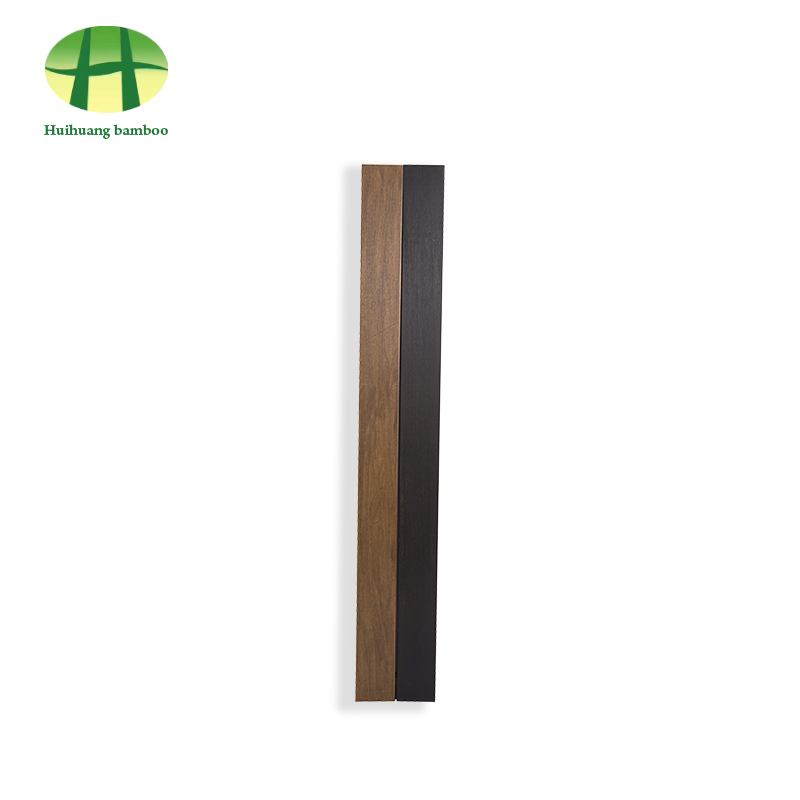
At the opposite end of the spectrum, carbonized strand woven bamboo is heat-darkened to produce a rich coffee or espresso brown that holds its color through the full thickness of the board. Carbonized tones work in interiors that need a grounding element: a darker floor with limewash walls, black steel details or unlacquered brass fixtures creates a calm, architectural feel without relying on pattern. Because the color runs through the whole board, light scratches do not expose a paler layer underneath, which is an advantage carbonized bamboo has over stained wood.
For this direction, the carbonized-color glossy strand woven bamboo flooring provides the darker brown palette in the same smooth, dense construction.
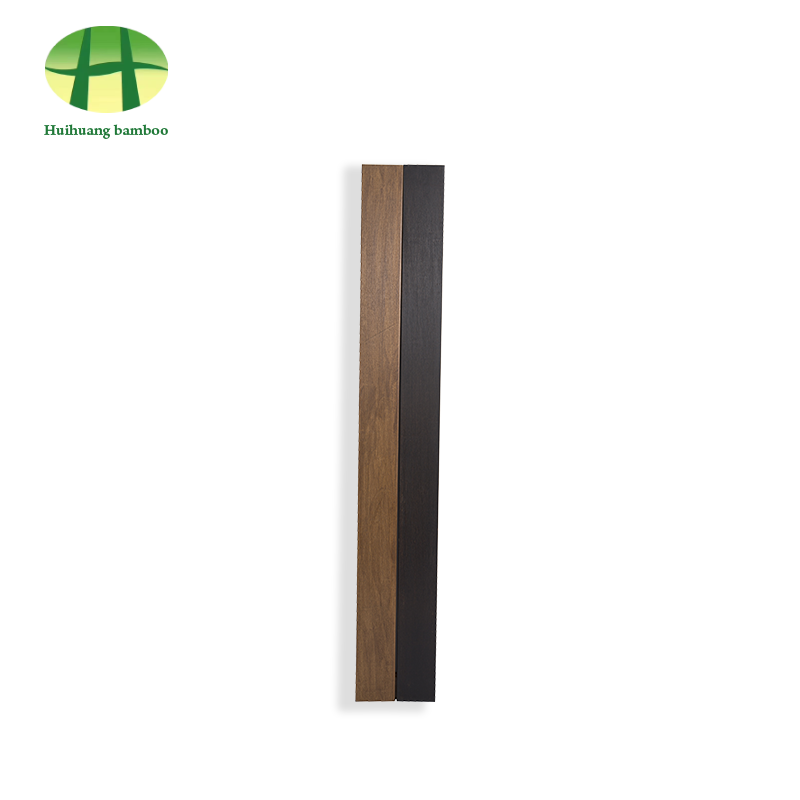 Custom Carbonized Color Glossy Heavy Bamboo Decking Durable Outdoor Flooring ManNingguo Kuntai Bamboo and Wood Co.,Ltd. Offer Custom Carbonized Color Glossy Heavy Bamboo Decking Durable Outdoor Flooring Manufacturers ...View Product →
Warm Mid-Tones with Honey and Amber Undertones
Between the two extremes, warm amber and honey tones are steadily replacing the gray and white oak floors that dominated the previous decade. A mid-tone floor with golden undertones works with traditional furniture lines and contemporary styling. It warms a north-facing room, complements walnut and rattan accessories, and hides spot wear better than a pale, uniform finish. This is the direction many designers choose when they want a floor that reads as natural material rather than as a deliberate color statement.
The pineapple-color strand woven bamboo flooring sits in this middle band, balancing lightness with a recognizable honey warmth.
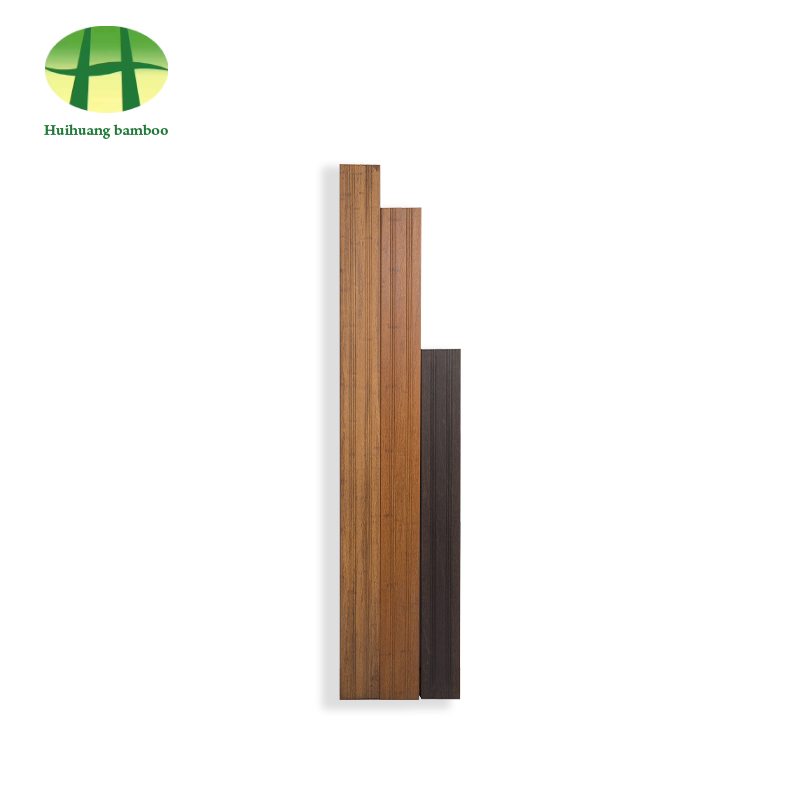 Custom Pineapple Color Weather Resistant Outdoor Carbonized Anti-Slip Bamboo DecNingguo Kuntai Bamboo and Wood Co.,Ltd. Offer Custom Pineapple Color Weather Resistant Outdoor Carbonized Anti-Slip Bamboo Decking Floori...View Product →
| Tone | Typical interior pairing | Effect on a room | Scratch visibility |
|---|---|---|---|
| Natural light | Japandi, Scandinavian, minimalist | Reflects light, makes rooms feel larger | Moderate |
| Carbonized dark | Architectural, industrial-luxe | Grounds the space, adds depth | Low, due to through-color construction |
| Pineapple mid-tone | Transitional, contemporary | Warms the room, bridges styles | Low to moderate |
Surface Texture and Plank Proportions Are Shifting
Color dominates the photos, but the two specifications that decide whether a floor feels right are surface texture and board format.
Smooth, Closed Surfaces Are Replacing Heavy Texture
The previous wave of bamboo flooring leaned on pronounced grain and hand-scraped or brushed textures to suggest rustic character. The current interiors market has moved in the opposite direction: smooth, closed surfaces with a satin or matte sheen now carry most residential projects. A smooth strand woven board has a denser, less porous surface, which makes it easier to wipe clean and less likely to trap fine dust in texture grooves. Grooved and anti-slip surfaces still have a clear role, especially at entry points and in kitchens bordering a terrace. The principle is to put texture where function demands it and keep the rest of the interior floor calm.
Longer Boards and Wider Planks Change the Visual Rhythm
Larger format planks are another visible trend. Longer boards create fewer end joints, which produces a more continuous grain flow across an open-plan floor. Wider planks reduce visual busyness, allowing furniture and walls to take the lead. The board width and length should relate to room size: very wide planks in a small bathroom can overwhelm the space, while a generous living room benefits from boards that match its scale. Manufacturers that offer custom sizes make it easier to match plank proportions to a specific interior layout.
One Material, Continuous Interiors
Another direction gaining traction is the use of a single bamboo family across floors, interior feature walls and exterior decking. When the same finish family appears on an interior floor, a living-room wall panel and the terrace just outside the sliding door, the visual connection makes a compact home feel larger and a large home feel more composed. Strand woven bamboo suits this approach because the color palettes used for exterior decking, such as natural, carbonized and coffee, match the boards specified indoors.
The practical point is to choose a manufacturer whose product line spans both conditions rather than trying to match two suppliers by eye. For residential projects, the eco-friendly strand woven bamboo flooring options for durable interiors cover the material and finish decisions that keep this visual connection consistent.
Sustainability Has Become a Procurement Document
The sustainability argument for bamboo is no longer expressed in slogans. Designers are being asked to document what they specify, and strand woven bamboo performs well when the numbers are on the table. Bamboo is a fast-growing grass; it reaches maturity in approximately four to six years, yields more fiber per hectare than most timber species, and every culm can be used in strand production, which keeps process waste low. Because the boards are dense and long-lasting, the replacement cycle stretches, which reduces the lifecycle impact of a floor.
What a design team should verify is the manufacturer's supporting evidence. Look for FSC certification on the raw material, environmental management certification on the production side, and consistent quality control records. Huihuang Bamboo operates a 30,000-square-meter production base in Ningguo, Anhui, and holds FSC, CE, SGS, ISO9001 and ISO14001 certifications. The company also owns the US patent US11148318 for outdoor bamboo flooring, an indicator of engineering depth that goes beyond simple board production.
What Interior Projects Demand From a Strand Woven Floor
A durable board still needs a responsible specification. Before the floor is ordered, a project team should settle four points:
- Acclimation: strand woven bamboo boards should arrive and rest in the finished room environment before installation, following the manufacturer's recommended window, so that the boards reach equilibrium with room humidity.
- Moisture control: a vapor barrier below the boards is good practice for concrete subfloors, even though strand woven bamboo is more humidity-tolerant than solid hardwood. Rooms with permanent standing water require a waterproofing strategy rather than a simple board change.
- Finish selection: UV-cured finishes provide abrasion resistance and low maintenance; a satin or matte sheen tends to hide surface wear in high-traffic areas better than high gloss.
- Installation method: click or floating systems allow the floor to move as one assembly and simplify future repair; glue-down systems suit projects where a fixed, low-profile installation is required. Confirm the expansion gap detail with the board supplier before installation.
Custom sizes matter more than many buyers expect. A manufacturer that can produce boards cut to a project's exact width and length reduces waste on site and produces a cleaner visual result around doorways and transitions. For a room-by-room breakdown of the selection criteria, the residential strand woven bamboo flooring selection guide covers the specification points in more detail.
The Direction Is Clear
Strand woven bamboo flooring in 2026 is no longer positioned as an eco-alternative that requires a compromise on looks. The material has entered the main specification conversation on its own terms: light natural tones for calm interiors, carbonized browns for architectural depth, warm mid-tones for broad compatibility, smooth surfaces for easy living, and longer formats for visual flow. Its density, stability and documented environmental profile give designers and clients a defensible reason to choose it.
For the best outcome, match the color direction to the room's light and furniture, confirm the surface finish and plank format early, and select a manufacturer that controls the process from bamboo selection to finished board. That is what turns a good material trend into a floor that still looks right a decade later.
 View More

 +86-572-5215066 5216895
 office@hh-bamboo.com
 East Side of Huanggang RD,Ningdun County, Ningguo ,Xuancheng City,Anhui Province,China.