


 English
 Deutsch
Content
In the global push for sustainable architecture, bamboo flooring for outdoor use has emerged as a formidable rival to tropical hardwoods. However, for B2B procurement managers and landscape engineers, a critical question persists: can a grass-based material truly withstand the biological pressures of termites and fungal decay? Ningguo Kuntai Bamboo and Wood Co., Ltd., situated in the heart of China's "Bamboo Village," has addressed this through a decade of innovation. At our 30,000-square-meter modern factory, we produce high density strand woven bamboo decking using a patented thermo-treatment process (US Patent No. US11148318). By altering the biological composition of the fibers, we provide durable exterior bamboo wall cladding and flooring that meet stringent FSC, CE, and SGS certifications.
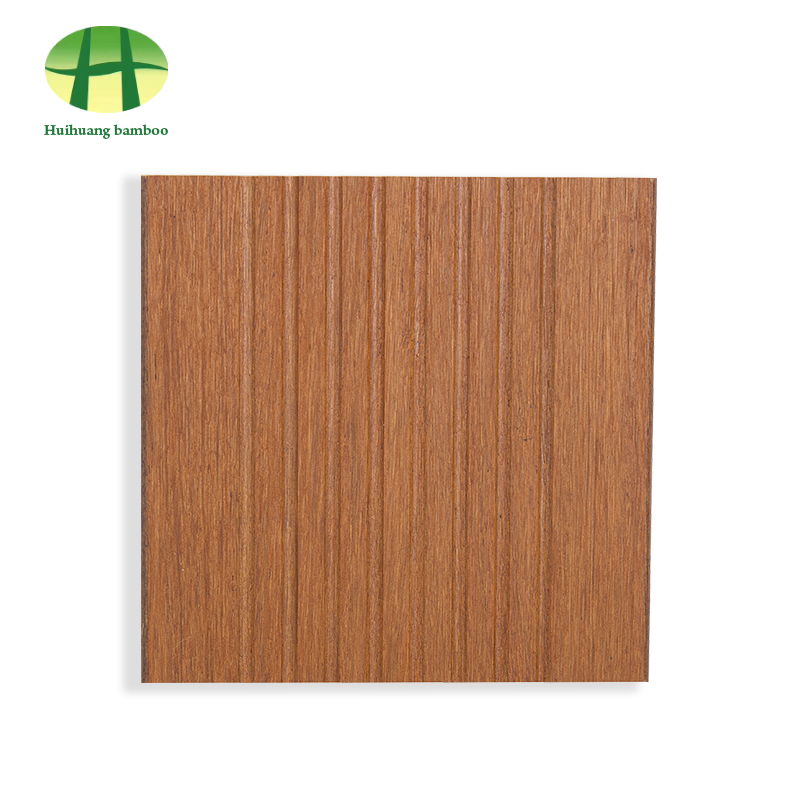
1. The Science of Resistance: Thermo-Density Engineering
The resistance of bamboo flooring for outdoor use is not inherent to the raw plant; it is a result of advanced engineering. Raw bamboo contains high levels of starch and sugar, which act as primary food sources for termites and mold. To combat this, Kuntai utilizes a high-temperature carbonization process that reaches over 200°C. This process "caramelizes" the sugars and breaks down the starch molecules, rendering the material unappetizing to biological pests. According to 2024-2025 technical reports from the International Network for Bamboo and Rattan (INBAR), thermo-modified strand woven bamboo exhibits a biological durability class of 1 (Very Durable) under EN 350-1 standards. This ensures that anti-termite outdoor bamboo timbers remain structurally sound even in humid, subterranean-termite-prone regions.
Source: INBAR: Durability and Preservation Standards for Engineered Bamboo 2024
Comparison: Biological Durability of Outdoor Materials
While traditional timber often requires heavy chemical pressure treatments to achieve Class 1 durability, strand woven bamboo achieves this through mechanical and thermal modification, resulting in a more consistent internal density.
| Property | Untreated Softwood/Hardwood | Patented Strand Woven Bamboo |
| Density (kg/m³) | 500 - 800 | 1,100 - 1,250 (High Density) |
| Starch Content | High (Attracts Pests) | Near Zero (Carbonized) |
| Termite Resistance | Low to Moderate | Excellent (Durability Class 1) |
2. Mold and Fungal Decay: Moisture Management
Mold growth is primarily driven by moisture absorption and the presence of organic nutrients. Mold resistant outdoor bamboo boards are manufactured by crushing bamboo into long fibers and dipping them in phenolic resin before compressing them under 3,000 tons of pressure. This creates a "strand woven" matrix that is virtually impenetrable by water. The 2025 ISO 9001 quality audits for outdoor flooring highlight that high-density strand woven bamboo has a swelling rate of less than 1% after 24 hours of water immersion. This extreme density prevents the hyphae of mold from penetrating the surface, while the phenolic resin acts as a secondary chemical barrier against fungal decay.
Source: ISO 16893:2024 - Wood-based panels: Particleboard and fiberboard specifications
3. Structural Integrity in Variable Climates
Beyond biological resistance, outdoor materials must withstand thermal expansion. Our low maintenance outdoor bamboo flooring is designed to handle the expansion and contraction cycles of the "Bamboo Village" in Anhui and similar global climates. By using weatherproof strand woven bamboo panels, engineers can specify larger continuous deck surfaces with minimal gaps. The US patent-protected manufacturing process used at the KUNTAI factory ensures that the lignocellulosic fibers are fully encapsulated, which prevents the "checking" or surface splitting often seen in standard timber planks after UV exposure.
Comparison: Stability in High-Moisture Environments
Strand woven bamboo exhibits significantly higher dimensional stability compared to traditional decking, which frequently suffers from cupping and warping in high-humidity zones.
| Feature | Composite Decking (WPC) | Outdoor Strand Woven Bamboo |
| Expansion Coefficient | High (Plastic content) | Low (Natural fiber density) |
| Mold Resistance | High (Non-organic surface) | High (Engineered carbonization) |
| Fire Rating | Class C or B | Class B1 (Flame Retardant) |
4. Certified Sustainability and Global Recognition
For international wholesalers, compliance is the ultimate marker of trust. Kuntai is not only an authorized US patent holder but also a leader in environmental transparency, holding ISO14001 and FSC certificates. Our low maintenance outdoor bamboo flooring undergoes rigorous third-party testing by SGS to ensure zero formaldehyde emission and maximum durability. As the holder of the US patent No. US11148318, we provide our global partners with the legal and technical assurance that our bamboo decking is built to withstand the harshest outdoor conditions without compromising the ecological health of the "Bamboo Village" source forests.
Conclusion: The Definitive Choice for Exterior Surfaces
The technical evidence confirms that when bamboo flooring for outdoor use is manufactured via high-density strand weaving and patented thermo-treatment, it is exceptionally resistant to both termites and mold. By removing the biological food sources and densifying the fiber structure, Kuntai's "Huihuang Bamboo" products deliver a maintenance-free, high-performance alternative to traditional wood. Whether for residential garden furniture or large-scale commercial wall-cladding, our bamboo solutions represent the intersection of natural beauty and industrial strength.
Frequently Asked Questions (FAQ)
- Does outdoor bamboo flooring require annual oiling? While mold resistant outdoor bamboo boards are decay-resistant, we recommend a light annual coat of exterior oil to maintain the rich carbonized color against UV fading.
- Is strand woven bamboo safe for barefoot use? Yes, the high-density compression ensures the surface is extremely hard and smooth, significantly reducing the risk of splinters compared to softwoods.
- How does high density strand woven bamboo decking handle fire? Due to its extreme density and phenolic resin content, it naturally achieves a B1 fire rating, making it much safer than many plastic-based composites.
- Why is the US patent No. US11148318 important? This patent specifically covers the innovative structure and manufacturing process that ensures the longevity and stability of our outdoor decking in varied climates.
- Can it be used near swimming pools? Absolutely. Its low moisture absorption and high slip resistance make it an ideal choice for poolside environments.
 View More

 +86-572-5215066 5216895
 office@hh-bamboo.com
 East Side of Huanggang RD,Ningdun County, Ningguo ,Xuancheng City,Anhui Province,China.