


 English
 Deutsch
Content
- 1 Finish Coatings Are the Performance Layer Buyers Often Overlook
- 2 Scratch and Abrasion Resistance: How Coatings Absorb Daily Abuse
- 3 Moisture and Humidity: Why the Finish Is Only the First Defense
- 4 Slip Resistance: Texture and Coating Work as One System
- 5 UV Stability and Color Retention Keep the Floor Looking Maintained
- 6 Comparing Finish Systems: Factory UV-Cured, Polyurethane, and Oil
- 7 The Combined Effect: Matching Coating System to Project Conditions
Finish Coatings Are the Performance Layer Buyers Often Overlook
When a strand-woven bamboo board leaves the factory, its most important structural qualities are already fixed. Hardness, density, and dimensional stability come from the way bamboo fibers are crushed, treated, and compressed into boards. However, the surface that actually meets rain, sunlight, foot traffic, and cleaning products is a separate system: the finish coating. A high-density board with a weak finish will still scratch, absorb moisture, fade, and support mold. The same board with a properly designed multi-layer UV-cured coating will resist wear, shed water, and keep a predictable appearance. The finish coating is an engineering layer, not a decorative afterthought.
Outdoor bamboo flooring performance starts with the substrate, but the coating determines how much of that substrate quality the user experiences. Dense bamboo is a good base because it is smooth and stable, yet it can look dull and vulnerable if the protective film fails. Understanding how finish coatings work is therefore essential for specifiers, contractors, and importers who are selecting exterior decking.
Scratch and Abrasion Resistance: How Coatings Absorb Daily Abuse
The most common complaint about bamboo flooring is surface wear, not structural failure. Dog claws, loose gravel from shoes, dragged planters, and furniture legs all create micro-scratches. On raw bamboo or a thin single-coat finish, these marks accumulate quickly. A factory-applied multi-layer coating changes the outcome because protection is built into the film rather than left on the surface as a single fragile skin.
Modern finishes use a stacked system. A primer layer bonds the coating to the bamboo, one or two sealer coats smooth the substrate, reinforced mid-layers contain aluminum oxide or ceramic particles, and a final topcoat is cured under ultraviolet lamps. The aluminum oxide particles are hard and are suspended uniformly through the finish. This means the coating keeps resisting abrasion even after the uppermost microns have been worn by foot traffic. UV curing also cross-links the resins, making the film tougher and less likely to crack on impact.
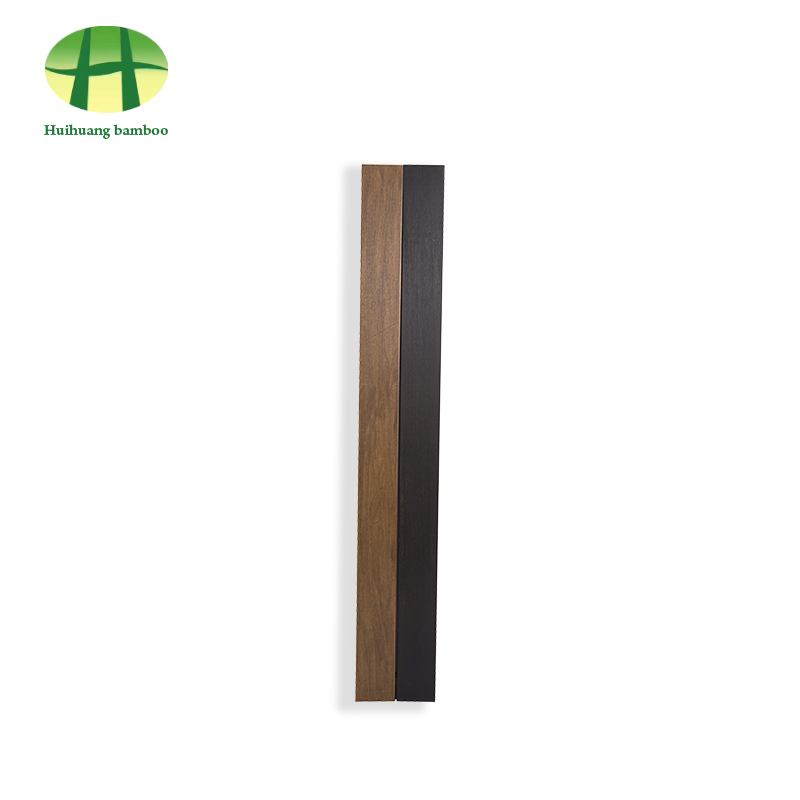
In semi-covered outdoor areas or transition spaces where a clean visual surface matters, the same coating technology works on a smooth board. Natural-color glossy heavy bamboo flooring with a UV-cured wear layer shows the pale grain while protecting the face from everyday scraping. This is the type of specification to choose when the project wants an even surface but cannot compromise on abrasion resistance.
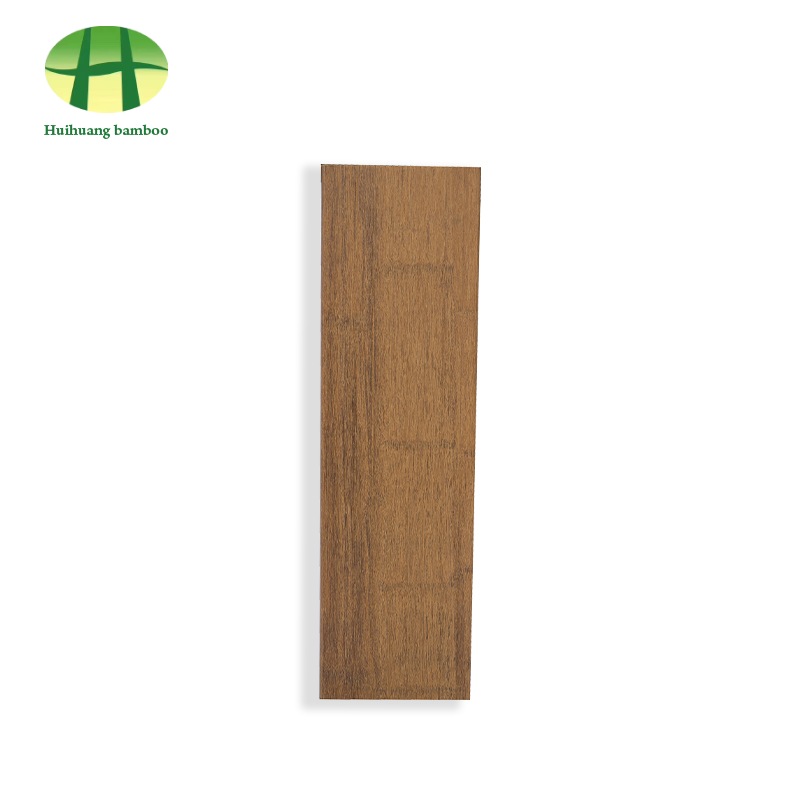 Custom Natural color glossy heavy solid bamboo hardwood flooring Manufacturers, Ningguo Kuntai Bamboo and Wood Co.,Ltd. Offer Custom Natural color glossy heavy solid bamboo hardwood flooring Manufacturers and Factory ...View Product →
Moisture and Humidity: Why the Finish Is Only the First Defense
Outdoor bamboo flooring fails most often when water enters the board and remains trapped. Rain, sprinkler overspray, and cleaning water meet the finish first. A well-cross-linked topcoat prevents liquid from wetting the bamboo surface quickly, giving the plank time to drain. But the finish does not stop at the face: edges, ends, and any cutouts must also be sealed. If water enters through a joint, the coating's performance on the face becomes irrelevant.
The substrate below the finish determines how long the protective layer stays intact. Boards with higher density and lower internal movement create a more stable base for the coating. Buyers should compare thickness swelling values and dimensional stability data measured under EN 317 before comparing gloss levels. A dense strand-woven bamboo board with low thickness swell will hold a coating much longer than a board that expands and contracts with every humidity change. That is why the same coating system can perform differently on different grades of bamboo. Our overview of outdoor bamboo flooring stability EN 317 limits explains the test values and typical thresholds in more detail.
Slip Resistance: Texture and Coating Work as One System
Wet deck surfaces are one of the biggest safety issues on patios, pool surrounds, and commercial boardwalks. A smooth glossy finish can become slippery when rain or puddle water sits on it. Slip resistance is therefore not only a coating property; it is a function of the board's surface profile. Grooves, waves, and channels break the water film and give footwear a mechanical edge to grip.
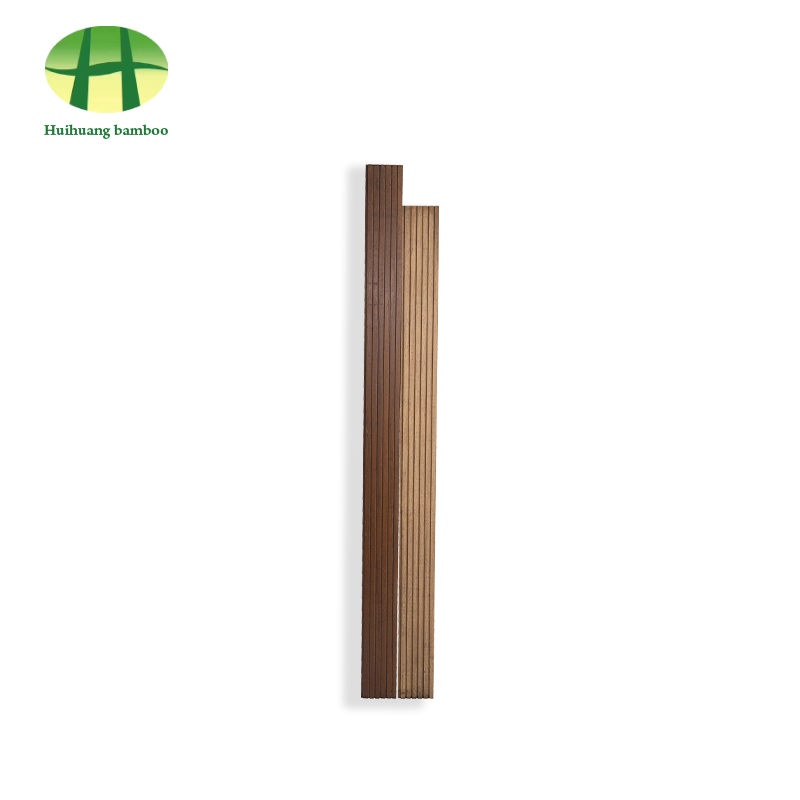
An anti-slip patterned board combines that surface geometry with a coating strong enough to protect the raised edges. A product such as small-groove anti-slip heavy bamboo flooring keeps the channels narrow enough to avoid trapping leaves or dirt, while the UV-cured topcoat stops water from softening the bamboo around the grooves. For project specifications, ask for coefficient-of-friction data measured on wet samples rather than a generic anti-slip label. Practical guidance on outdoor bamboo deck slip resistance and safety covers the test methods and design details that affect real foot traffic.
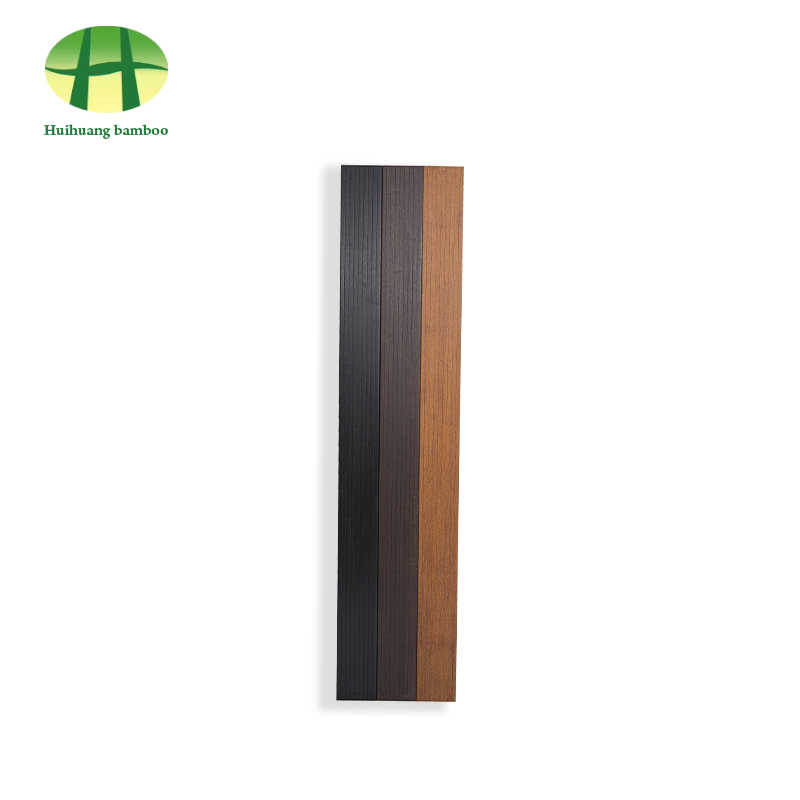 Custom High Density Carbonized Outdoor Bamboo Flooring With Small Grooves Anti SNingguo Kuntai Bamboo and Wood Co.,Ltd. Offer Custom High Density Carbonized Outdoor Bamboo Flooring With Small Grooves Anti Slip Wear Re...View Product →
UV Stability and Color Retention Keep the Floor Looking Maintained
Sunlight is the second major enemy of exterior bamboo floors. UV radiation slowly degrades lignin and the finish resins that hold the surface together. Without UV absorbers and light stabilizers, a bamboo deck turns gray, fades unevenly, and can develop a chalky powder on the surface. Factory-applied UV-cured coatings are more resistant to this photo-degradation because the cross-linked film has fewer weak points than a brushed-on solvent finish.
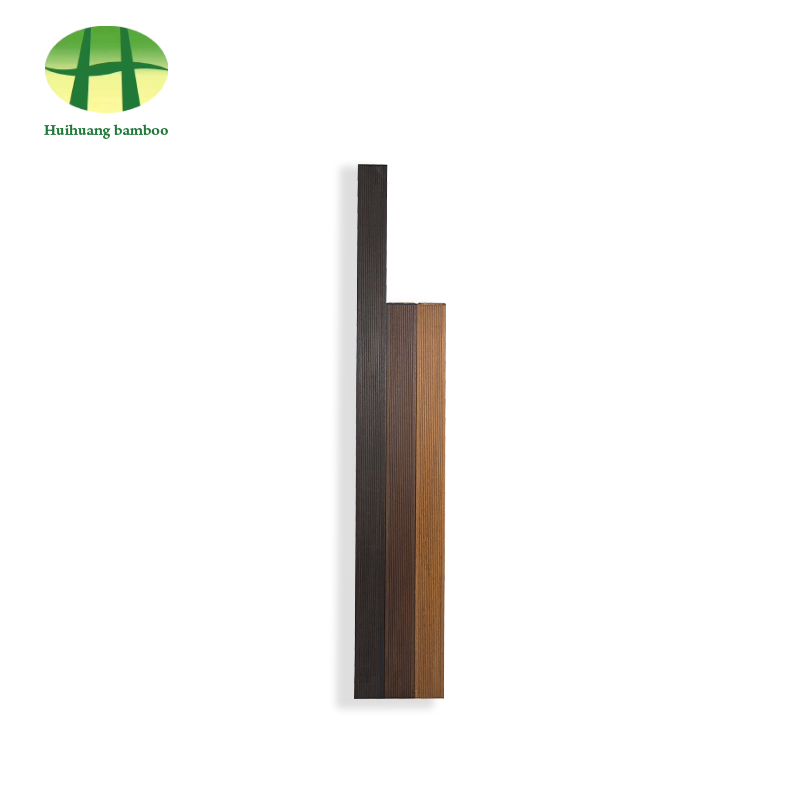
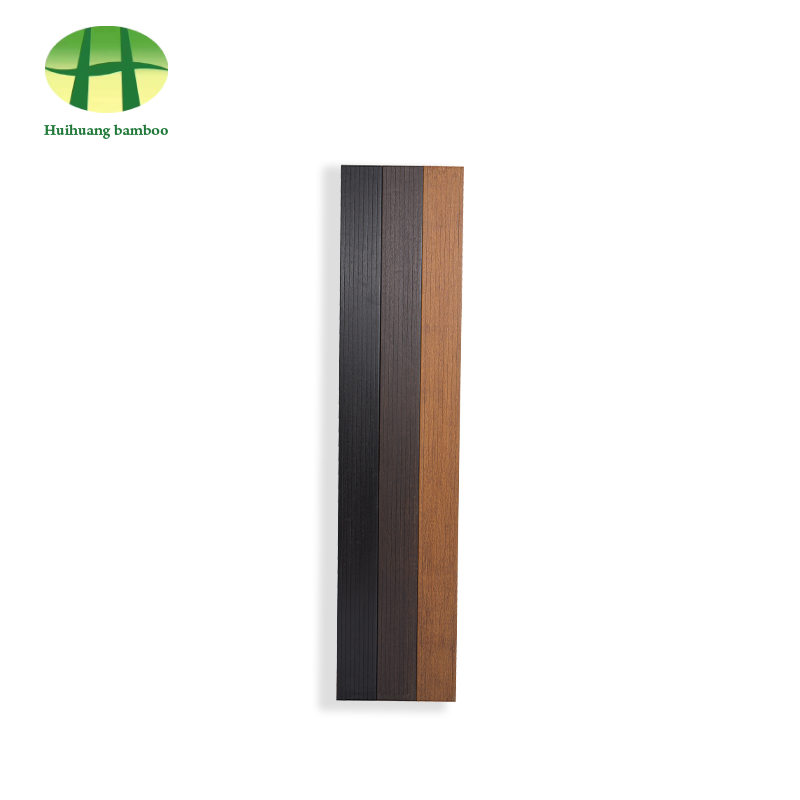
Color retention is an important part of that performance. Deep brown tones from heat treatment need extra protection if they are to stay rich rather than turning muddy. Carbonized color bamboo flooring is heat-darkened through the board, and a coating with strong UV absorption preserves that warm tone for a longer service life. In production, the pigment layer is often placed under the clear wear coat so the color does not erode from the surface. Buyers who want consistent color across a large deck should also review the supplier's maintenance and fading care recommendations. Our bamboo composite decking fading prevention and color care guide provides a step-by-step view of how to keep the color stable.
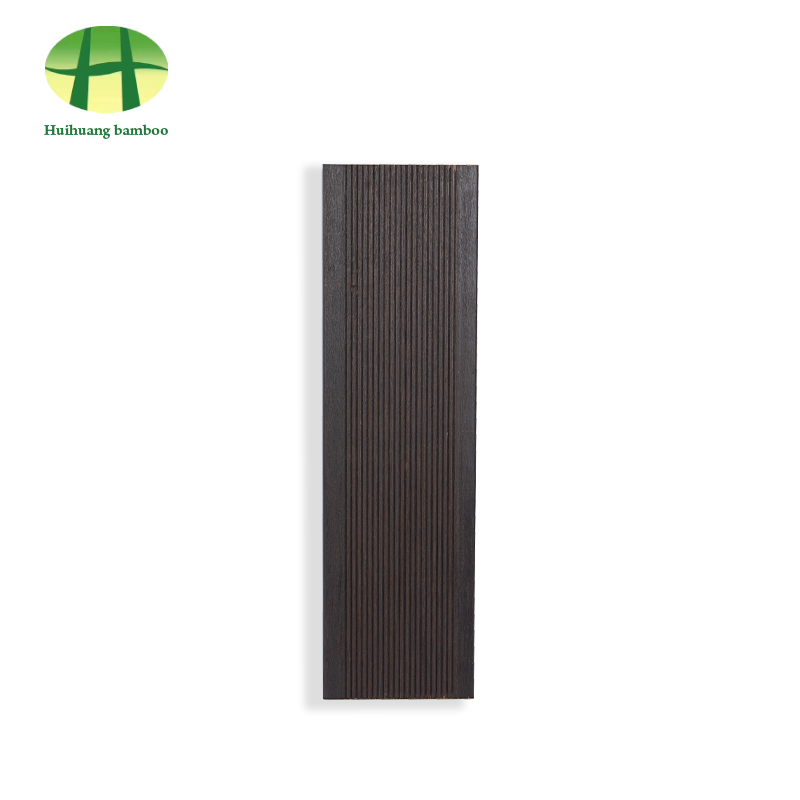 Custom eco friendly Carbonized color bamboo composite flooring Manufacturers, FaNingguo Kuntai Bamboo and Wood Co.,Ltd. Offer Custom eco friendly Carbonized color bamboo composite flooring Manufacturers and Factory In...View Product →
Comparing Finish Systems: Factory UV-Cured, Polyurethane, and Oil
Not all finishes behave the same when installed outdoors. The table below summarizes the three coating approaches most often discussed for bamboo flooring, seen from a procurement perspective.
| Finish Type | Typical Build | Best For | Key Limitation |
|---|---|---|---|
| Factory-applied UV-cured multi-layer | Primer, sealer, aluminum-oxide reinforced mid-coat, UV-cured topcoat | Outdoor decking, high foot traffic, long-term water and UV resistance | Must be applied in the factory; difficult to replicate or repair on site |
| Field-applied polyurethane | Two to three brushed or rolled coats | Quick refresh of interior floors or small areas | Lower UV and moisture resistance outdoors; thinner dry film |
| Hard wax oil | Penetrating oil with wax, often without a continuous film | Natural matte look, low-traffic interior spaces | Requires frequent re-oiling and offers limited scratch and UV protection |
This comparison is deliberately simple. In practice, hybrid systems exist, and some suppliers use ceramically reinforced finishes or dual-cure systems. But for exterior strand-woven bamboo decking, the factory multi-layer approach gives the highest chance of predictable performance.
Five Coating Specifications to Ask Your Supplier
- Number of coats and total dry film thickness
- Whether aluminum oxide or ceramic particles are included and in which layers
- Whether all coats are UV-cured or some are solvent-cured
- Whether edge profiling is sealed after cutting
- Which UV absorbers and weathering tests were used before commercialization
These details matter because two suppliers can both call their product UV-coated and still deliver very different results.
Why the Board Beneath the Coating Matters
Finish coatings improve performance only when the substrate remains steady. Strand-woven bamboo is a strong choice because its compressed fiber structure has relatively low swelling and warping compared with vertical-grain bamboo or many hardwoods. A stable board means the coating experiences less stress, which means fewer cracks, fewer delamination points, and longer service life. This is why a good finish and a good board are inseparable for outdoor bamboo flooring.
The Combined Effect: Matching Coating System to Project Conditions
Finish coatings improve bamboo flooring performance in measurable ways: abrasion resistance, moisture exclusion, slip safety, color retention, and ease of maintenance. They also make cleaning simpler because a cured film stops dirt and grease from penetrating the bamboo surface. But the performance gain depends on the overall system. A coating cannot rescue an unstable board, and a stable board cannot protect itself without a durable finish.
When evaluating suppliers, treat coating specifications with the same seriousness as hardness and density data. Ask how many layers are applied, whether the finish is UV-cured, whether aluminum oxide is part of the build, and whether edge profiles are sealed. For exterior projects, specify a factory-applied multi-layer UV-cured coating on a dense strand-woven bamboo board, and require slip-resistance and dimensional-stability test data before purchasing. That combination is what gives bamboo flooring a realistic chance of long service life outdoors.
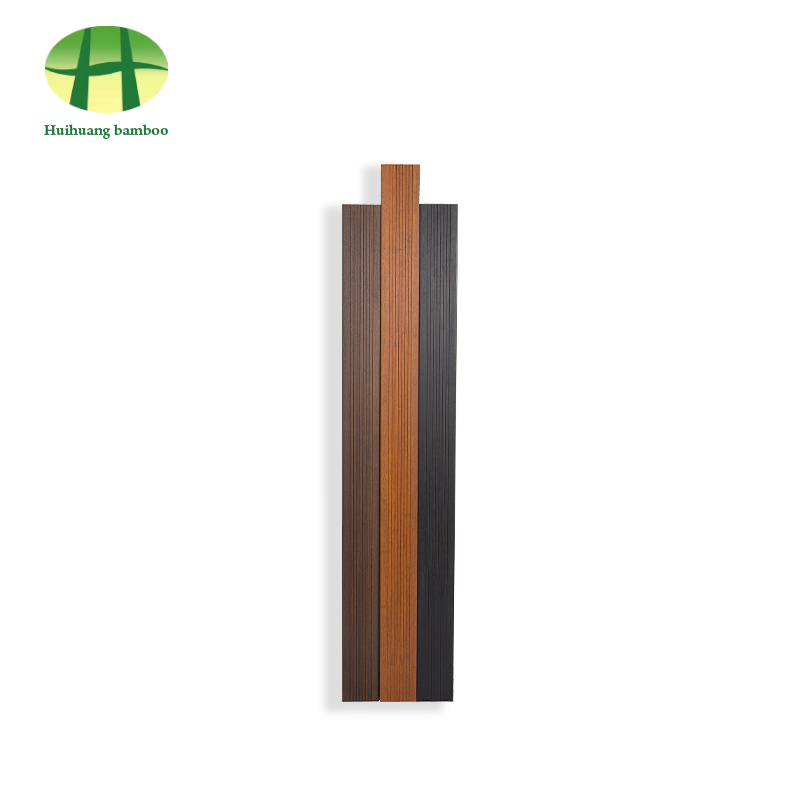
 View More


 +86-572-5215066 5216895
 office@hh-bamboo.com
 East Side of Huanggang RD,Ningdun County, Ningguo ,Xuancheng City,Anhui Province,China.