


 English
 Deutsch

Content
Ningguo Kuntai Bamboo and Wood Co., Ltd., manufacturer of the Huihuang Bamboo brand, has pressed outdoor strand woven bamboo flooring in Anhui since 2002. Across two decades, the company has seen finish quality separate premium boards from early failures more often than density alone.
What a Surface Finish Actually Protects
A surface finish on strand woven bamboo flooring is the engineered top layer that seals compressed bamboo strands against moisture, UV radiation, and abrasion while the board underneath carries the structural load.
Strand woven bamboo already reaches 1,100 to 1,200 kg/m3 density and hardness that rivals tropical hardwoods. The finish adds the defense line between that dense core and the weather. A good finish does four jobs:
- Blocks liquid water from wicking into the strand faces and edge joints.
- Filters UV radiation before it degrades the surface resin and bamboo fibers.
- Carries the prescribed slip texture for decks, ramps, and pool surrounds.
- Absorbs foot traffic and cleaning abrasion so the sealed face stays intact.
Skip any one function and the board fails one corridor at a time. Without a working finish, even dense boards absorb moisture, expand, and stain within two to three seasons. The substrate side of that story is covered in our review of strand woven bamboo outdoor decay resistance.
Five Durability Factors That Decide Finish Performance
Five measurable factors separate a finish that protects for decades from one that fails in months: film thickness, crosslink density, UV stabilizer loading, water repellency, and slip resistance.
Outdoor Finish Types Compared
For outdoor strand woven bamboo flooring, a factory-applied UV-cured polyurethane topcoat beats oils and acrylics on weather resistance, and it can still be repaired in the field.
| Finish system | Film build | Water resistance | UV behavior | Typical role |
| UV-cured PU, factory | 50-80 microns | High, water beads | Absorbers slow silvering | Outdoor decks and walls |
| Solvent PU, field | 30-50 microns | Medium-high | Moderate protection | Refinishing existing surfaces |
| Acrylic maintenance coat | 20-40 microns | Medium, absorbs over time | Low, chalk in 1-2 years | Temporary refresh between cycles |
| Penetrating oil | No film | Low, board wets out | No UV defense | Natural look, frequent re-oiling |
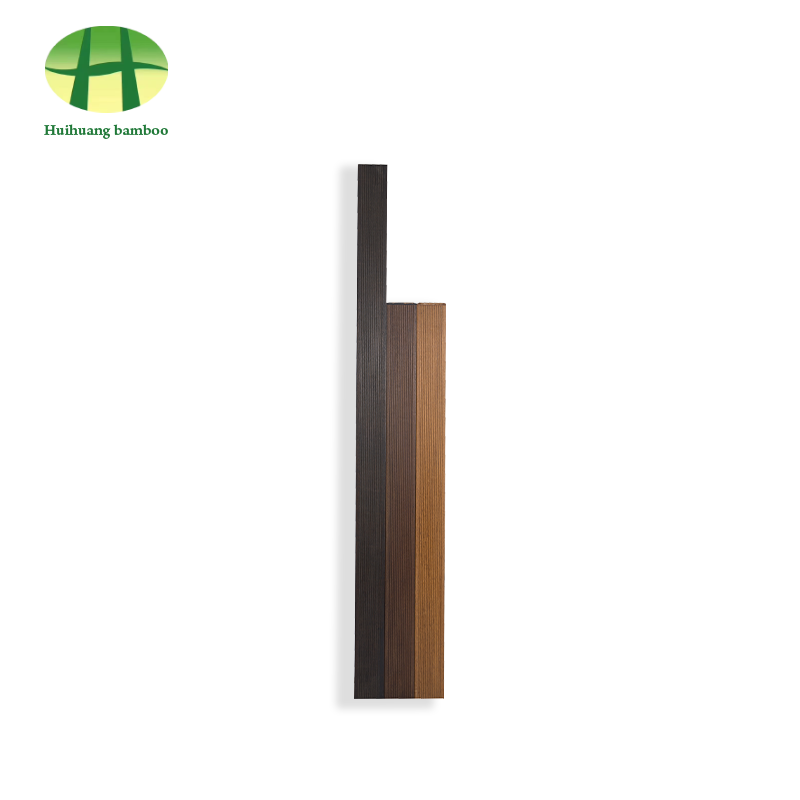
Color stability belongs to the same system. Carbonized boards darken the bamboo polymer during heat treatment, yet the finish must still carry UV absorbers to slow further gray shift. Huihuang Bamboo applies a UV-stable factory coat to its carbonized-color outdoor flooring for exactly this reason.
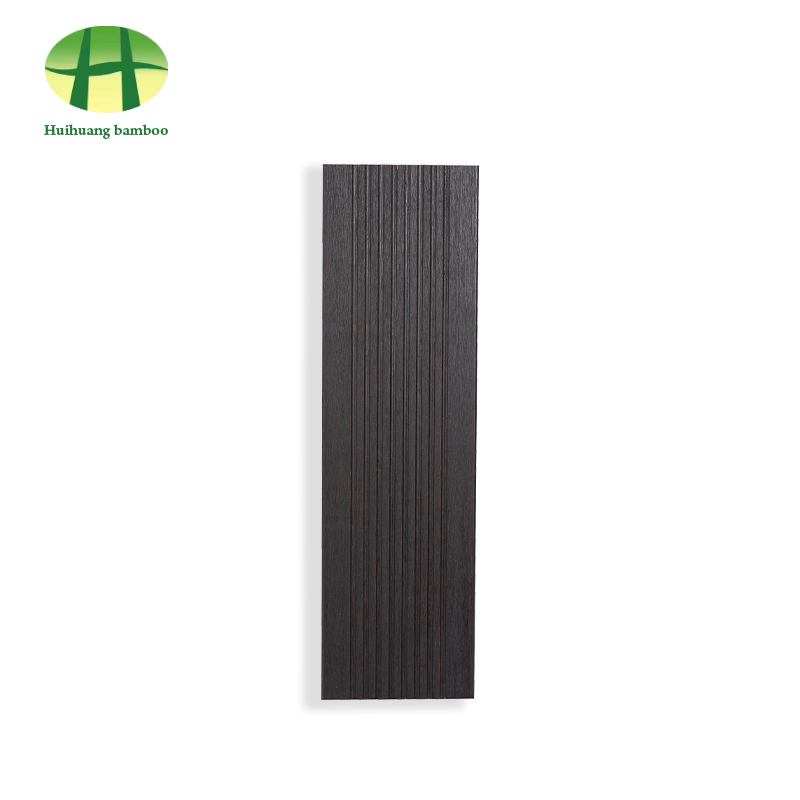 UV-Stable Carbonized Strand Woven Bamboo Outdoor FlooringThis carbonized dark-brown flooring carries a factory UV-stable coat that slows further gray shift, making it a fit for retro or industrial spaces while preserving color stability in outdoor use.View Product →
- Seals the strand faces completely
- Carries UV absorbers and slip additives
- Repairable in sections with solvent PU
- Best for horizontal decks and wet zones
- Natural matte appearance
- No film to chip or peel
- Limited UV protection, surface silvers
- Re-oiling every 6-12 months in high sun
Texture and Color: Finish Options You Can Feel and See
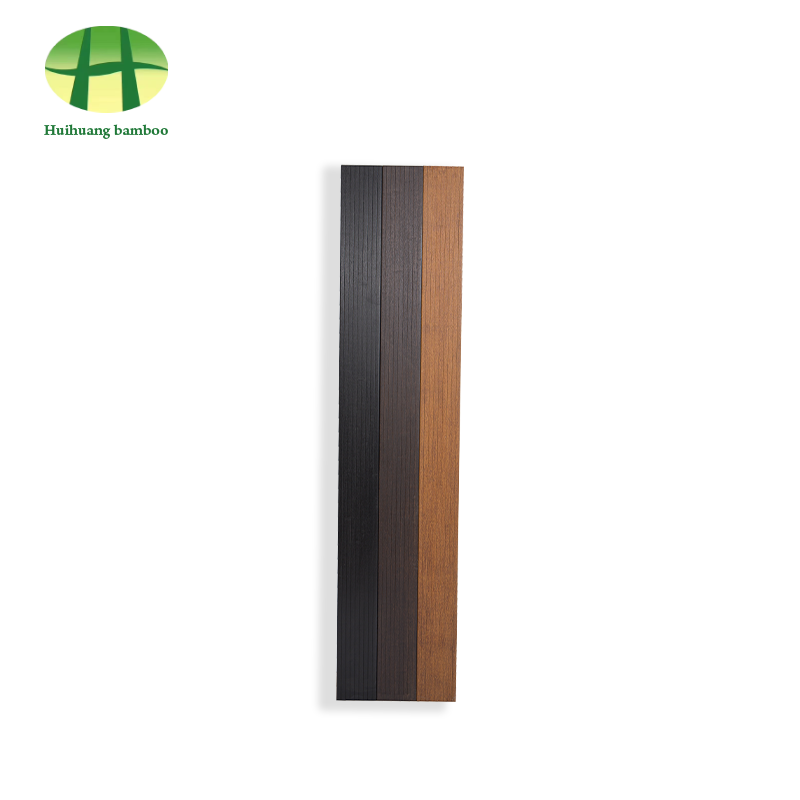
Texture is part of the finish system. Grooves, waves, and brush patterns change the slip profile and protect the film from direct abrasion, while smooth finishes suit covered zones.
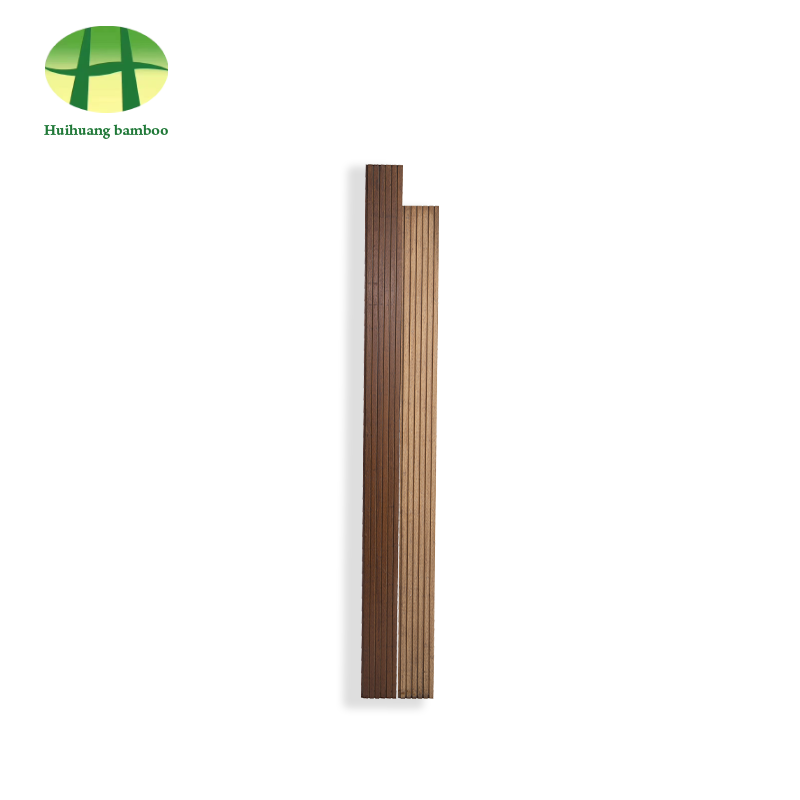
On wet decks and pool surrounds, machined profiles such as small-groove, large-groove, wave, and double-stripe patterns channel water off the surface and interrupt contact between sole and film. The raised lands still carry the same UV-cured topcoat, so slip safety does not sacrifice weather protection. Huihuang's small-groove heavy bamboo flooring is a texture-first choice for rainy-climate decks.
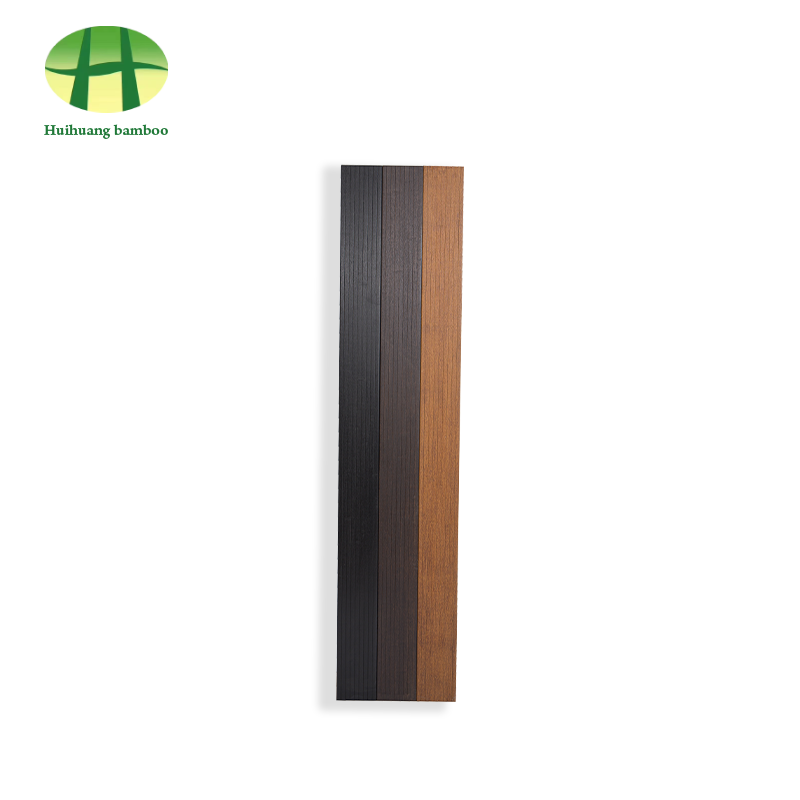 Small-Groove Carbonized Bamboo Decking for Wet AreasThe fine groove texture channels water off the surface and improves slip resistance without sacrificing the UV-cured topcoat, making it a practical choice for rainy-climate decks and pool surrounds.View Product →
Smooth boards make the opposite trade: they clean easily and feel continuous, but wet surfaces rely entirely on slip additives in the coating.
Matching Finish to Project Zone
Choose the finish system by exposure level. A pool deck, a covered patio, and a stable corridor do not need the same surface.
- Exposed deck and pool surround: grooved texture plus a 50 to 80 micron UV-cured PU film.
- Covered patio or indoor-outdoor transition: smooth factory-gloss board for easy cleaning.
- Stable and animal facility: impact-tolerant film that resists scratching and pressure washing.
- Planter boxes and pergolas: vertical surfaces need less slip, but more UV endurance.
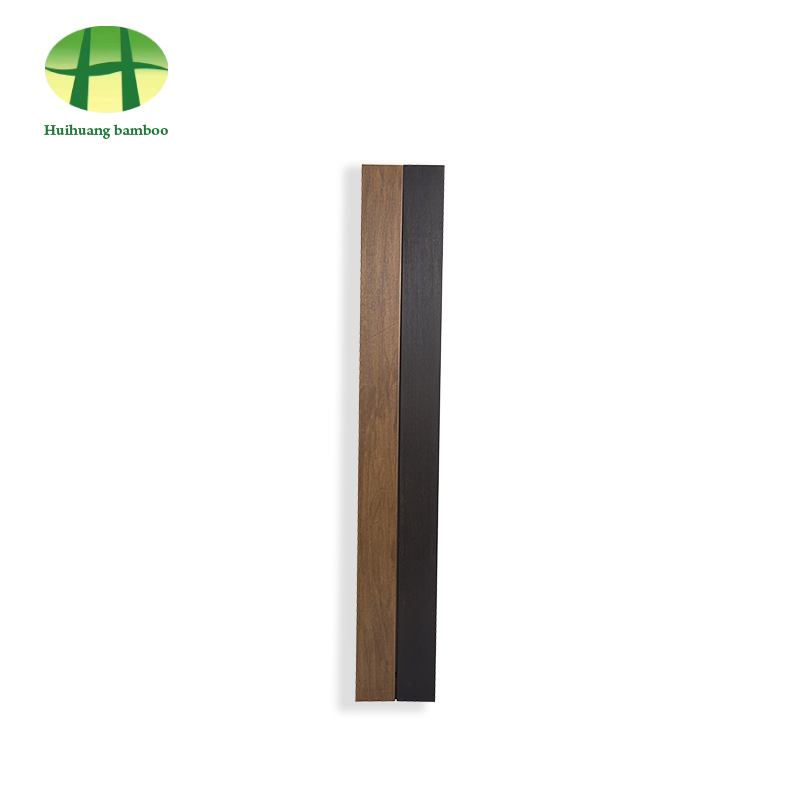
For covered terraces and indoor-outdoor transitions, Huihuang's smooth natural-color glossy flooring carries a factory gloss finish that stays easy to clean and visually continuous.
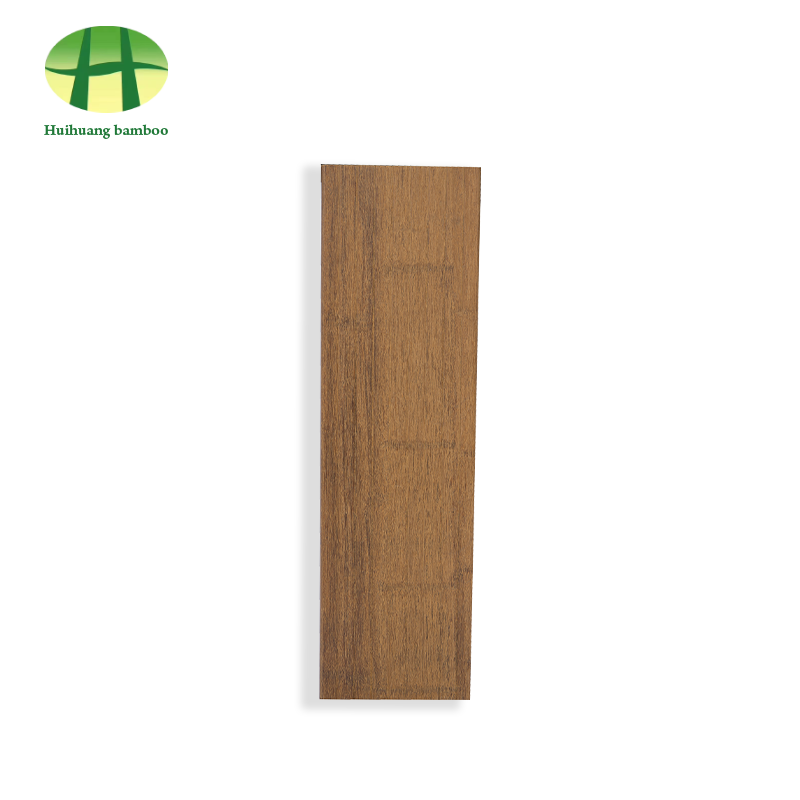 Natural Glossy Solid Strand Woven Bamboo FlooringRetaining bamboo's natural light color and glossy factory finish, this smooth flooring suits covered terraces and indoor-outdoor transitions where easy cleaning and visual continuity matter.View Product →
How to Maintain Finish Performance
A UV-cured PU finish on strand woven bamboo needs annual cleaning and a refinish cycle every five to seven years on horizontal decks, with less frequent attention on walls.
- Clean twice a year with a pH-neutral deck wash. Do not jet water into grooves at close range.
- Watch for water beading. If a splash soaks in quickly and darkens the face, the film has worn through.
- Sand spot damage with 120-grit paper and recoat with solvent PU before applying a full new coat.
- On walls and pergolas, an annual rinse and visual check is usually enough.
Frequently Asked Questions
Can outdoor strand woven bamboo flooring be refinished?
Yes. Sand lightly with 120-grit paper, clean the dust off, and apply a solvent-based or UV-cured polyurethane topcoat. A full refinish on horizontal decks is normally needed every five to seven years.
Which finish is best for a pool surround?
A small-groove or wave pattern with a factory UV-cured PU film. The grooves channel water away and the film resists chlorine and UV exposure better than oils or acrylics. Smooth boards rely only on slip additives and are riskier when wet.
Do carbonized boards need a different finish?
No. Carbonized boards need the same UV-cured topcoat as natural boards. The dark color hides silvering better, but the surface resin still needs UV absorbers to prevent chalking and embrittlement.
How do I know the finish is failing?
When water stops beading and darkens the board face, or when the surface roughens and loses its sheen, the film is degrading. Clean and refinish at that point before moisture reaches the strand mat.
 View More


 +86-572-5215066 5216895
 office@hh-bamboo.com
 East Side of Huanggang RD,Ningdun County, Ningguo ,Xuancheng City,Anhui Province,China.
