


 English
 Deutsch

Content
- 1 Why Inspection Parameters Beat Visual Checks
- 2 Density, Hardness, and Moisture Content
- 3 Dimensional Tolerances: Straightness, Thickness, and Swelling
- 4 Surface Finish, Slip Resistance, and Color Consistency
- 5 Bonding Strength and Internal Structure
- 6 A Practical Inspection Workflow for Buyers
- 7 Certifications and Documentation to Request
- 8 Frequently Asked Questions
A batch of carbonized strand woven bamboo decking can pass a cursory visual check and still fail six months later on a terrace. One European importer we work with received 2,000 square meters of uniform color and clean machining, yet half of the first pallet cupped after a wet spring. The root cause was not finish or color; it was moisture content above 14 percent at packaging.
Strand woven bamboo flooring is made by crushing bamboo culms into fine fibers, saturating them with phenolic resin, and compressing the mass under heat and pressure. The result is an engineered board with density and hardness far above conventional timber, which is why quality control must be based on measurement rather than appearance.
Why Inspection Parameters Beat Visual Checks
Measurable inspection parameters separate a reliable strand woven bamboo shipment from an expensive field failure.
Two boards with identical color and finish can differ in density by 15 percent, in moisture content by four points, and in internal bond strength by a factor of two. They appear only after installation, when boards cup, expand, or delaminate. A numeric acceptance standard, agreed in writing before production, forces the mill to hold a consistent process and gives the buyer a legal reference if a batch drifts.
Density, Hardness, and Moisture Content
Density is the most reliable single indicator of strand woven bamboo quality because it drives hardness, fastener holding, and long-term stability.
Commercial boards typically measure 1,050 to 1,250 kg/m3. Below 1,050 kg/m3, suspect under-compression or low resin content; above 1,250 kg/m3, boards become brittle. Janka hardness for good material lands at 3,000 to 4,000 lbf, roughly three times red oak and comparable to ipe.
Moisture content (MC) is the second critical number. Indoor flooring is packed at 6 to 9 percent MC; outdoor boards are conditioned to 8 to 12 percent for exterior use. If MC is too high at packaging, boards cup after installation; if too low, they can crack in humid weather. Check MC with a calibrated pin-type meter on at least three boards per pallet.
| Parameter | Acceptable range | Test method |
| Density | 1,050 to 1,250 kg/m3 | Oven-dry method |
| Moisture content | 6 to 12 percent by application | Calibrated pin-type meter |
| Thickness swelling, 24 h immersion | 8 percent maximum | EN 317 laboratory test |
| Janka hardness | 3,000 lbf minimum | Janka ball indentation |
| Formaldehyde emission | E1, 0.1 mg/m3 maximum | Chamber test |
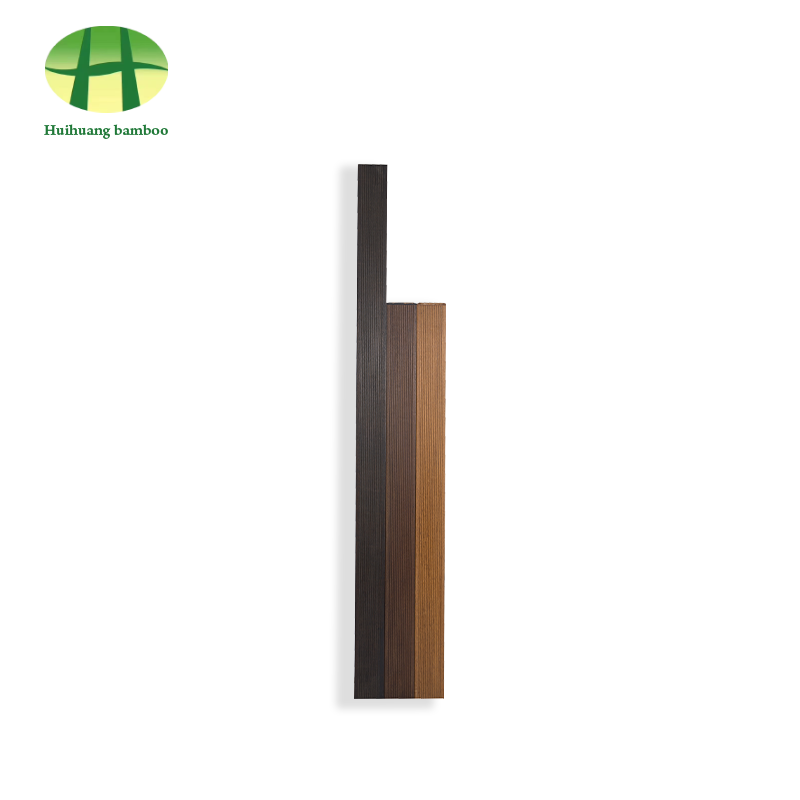
When screening a mill, request the density and moisture records behind its outdoor strandwoven bamboo decking series before discussing price.
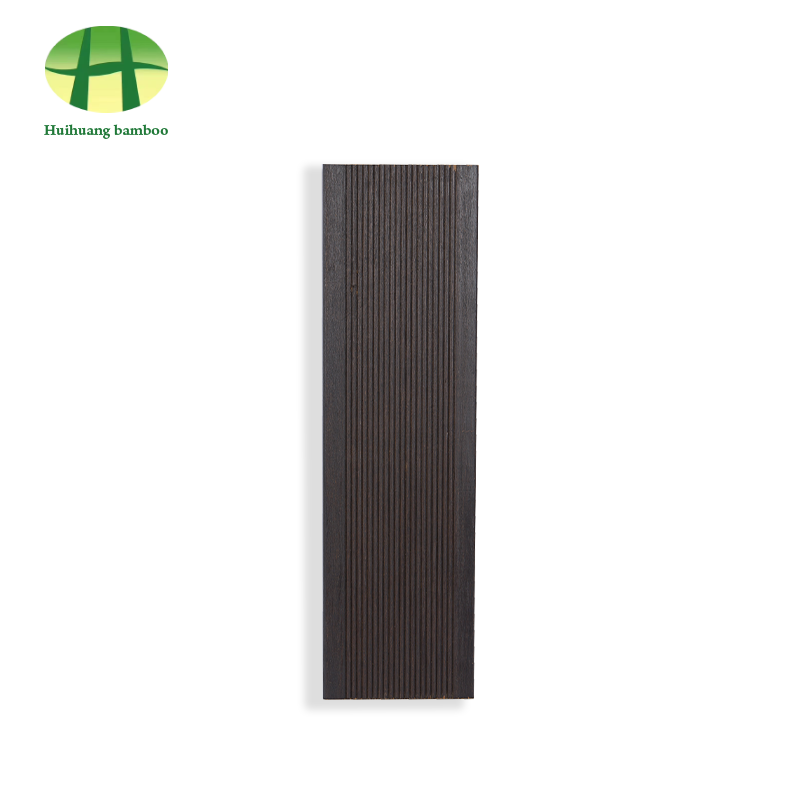 Outdoor Strand Woven Bamboo Decking with Density and Moisture DataThis decking series is highlighted after requesting density and moisture records from the mill. It is high-density, moisture-proof, and suitable for outdoor use, with options like carbonized and anti-slip patterns.View Product →
Dimensional Tolerances: Straightness, Thickness, and Swelling
Dimensional tolerance checks catch boards that will warp, cup, or swell after installation.
Three measurements matter most. Bow: place the board on a flat surface and measure the center gap; below 1.5 mm over 2 m is acceptable. Thickness and width: hold within +/- 0.5 mm and +/- 0.3 mm across the order. Thickness swelling: after 24 hours of water immersion per EN 317, a good board swells no more than 8 percent.
Bow measured on a flat reference surface
Thickness and width across multiple cartons
Thickness swelling after 24 h water immersion
Cupping, rocking boards, and uneven joints
Fastener overloading and visible seam gaps
Expansion buckling after rain exposure
The relationship between moisture, swelling, and EN 317 limits is explained in our guide to outdoor bamboo flooring stability and EN 317 limits. Use its thresholds as your contractual baseline.
Surface Finish, Slip Resistance, and Color Consistency
Surface inspection confirms that the coating, texture, and color of strand woven bamboo flooring will survive real exposure.
A quality factory applies multiple coats of UV-cured acrylic or an equivalent exterior-grade finish and verifies adhesion with a cross-cut method. Ask for the classification: class 0 or 1 (zero or minimal delamination) is acceptable. Slip resistance, especially for boardwalks and pool surrounds, depends more on texture than coating. Grooved profiles with narrow channels deliver a higher wet coefficient of friction than smooth boards.
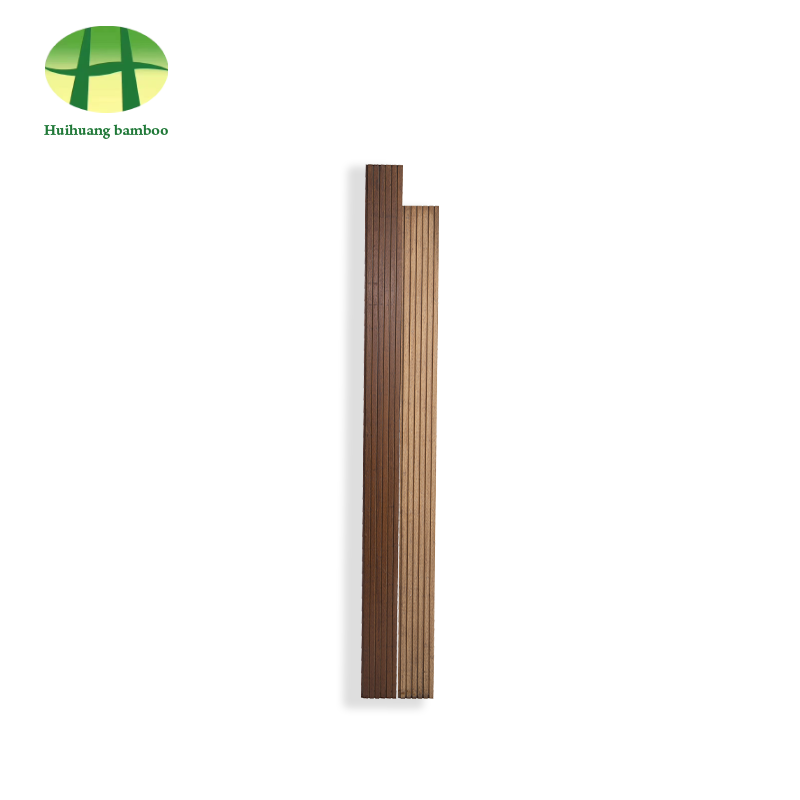
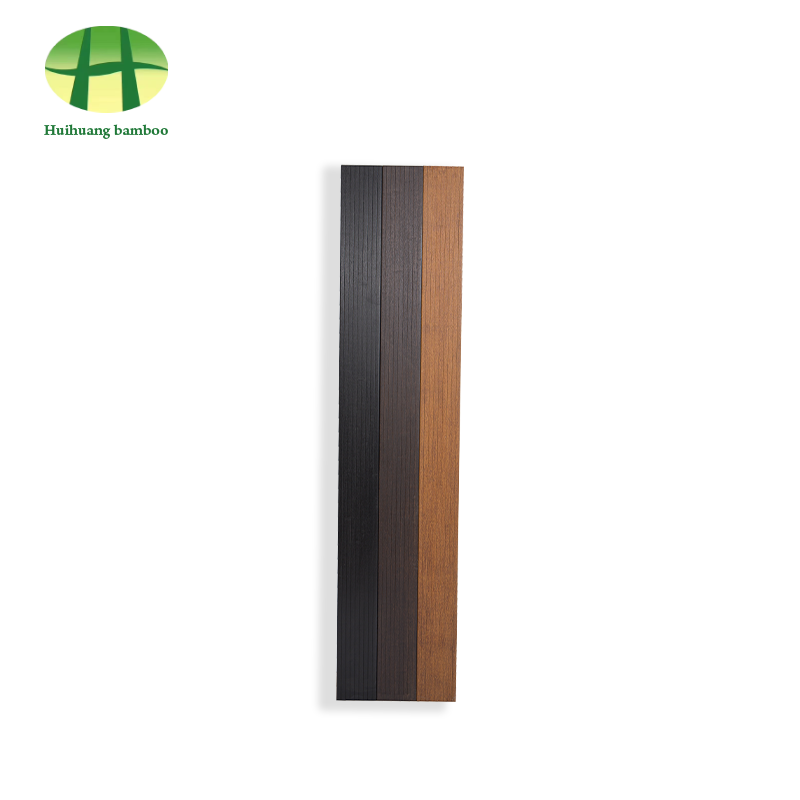
Color consistency has financial consequences. Carbonized boards shift between runs because heat treatment alters the final tone. A practical rule: Delta E between batches should stay below 3.0. For wet areas, review the anti-slip patterned series with narrow grooves, which consistently meets wet-surface slip thresholds.
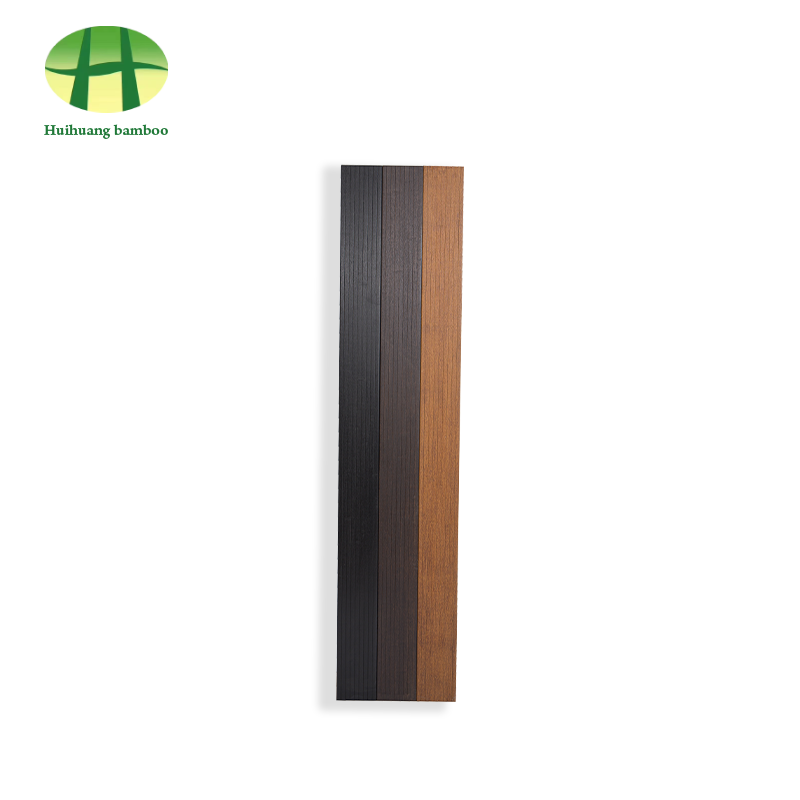 Small Groove Anti-Slip Carbonized Bamboo Flooring for Wet AreasThis flooring features fine grooves for slip resistance in wet areas, with customizable sizes. It is placed after color consistency checks, making it a practical choice for projects requiring stable tone and wet-surface safety.View Product →
Bonding Strength and Internal Structure
Bonding integrity determines whether a strand woven bamboo board will delaminate after freeze-thaw cycles or years of humidity.
The board is held together by resin, so the fiber-resin bond is decisive. Reputable manufacturers use phenolic resin at 12 to 18 percent weight ratio and press at temperatures high enough to cure it fully. Internal bond strength typically ranges from 0.7 to 1.0 MPa; below 0.5 MPa indicates under-curing or excessive fiber moisture.
A practical edge check needs no laboratory. On a fresh cross-section, fibers should be uniformly distributed, dark and glossy from resin, with no voids, white spots, or unbonded bundles. Edges should feel dense, not powdery.
A Practical Inspection Workflow for Buyers
A structured sampling protocol lets buyers verify quality without unpacking every carton.
- Request the mill test report and EN 317 data before loading.
- Inspect packaging on arrival: moisture-resistant wrapping, undamaged edges.
- Pull samples from multiple pallets: at least five boards per 100 m2, per ISO 2859-1 level II, AQL 2.5.
- Measure moisture content with a calibrated pin-type meter on every sample.
- Check thickness, width, bow, and twist against agreed tolerances.
- Run the surface inspection and the boil test on one sample board.
- Record results and compare them with the acceptance criteria.
Certifications and Documentation to Request
Third-party certifications and test documents transform inspection results into a legally defensible quality record.
One mill can produce different quality levels for different markets, so ask for the certificates that match your market and the test reports behind them.
- FSC chain-of-custody certificate for raw bamboo sourcing
- CE marking for European construction product requirements
- ISO 9001 quality management system certificate
- EN 317 swelling test report from an accredited laboratory
- SGS or equivalent third-party inspection certificate for the specific batch
- Formaldehyde emission test report showing E1 compliance
A manufacturer that publishes its production process and certificates, such as Huihuang Bamboo, the export brand of Ningguo Kuntai Bamboo and Wood Co., Ltd., makes pre-shipment verification considerably easier.
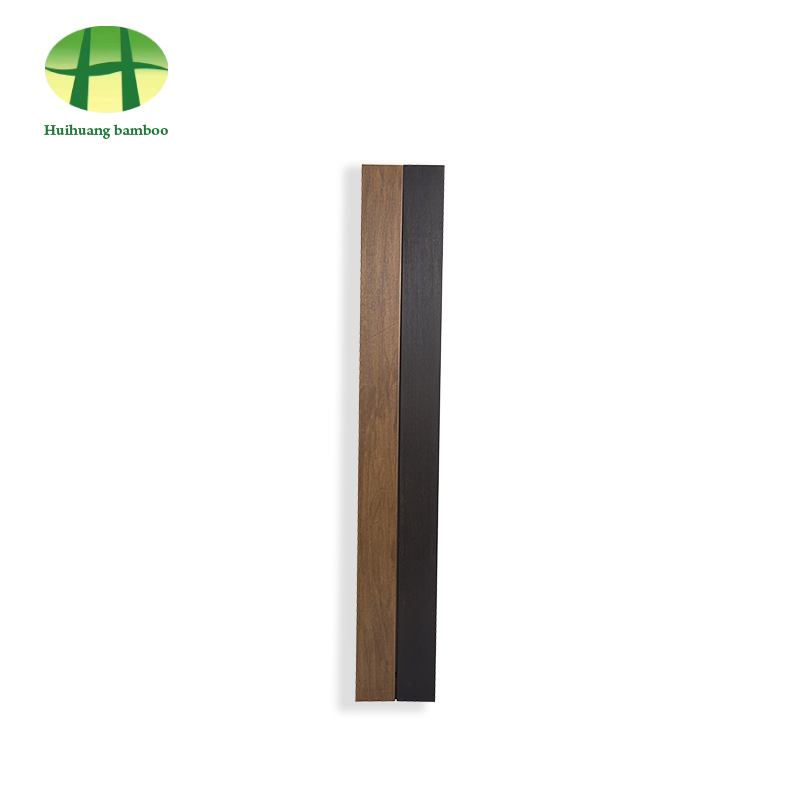
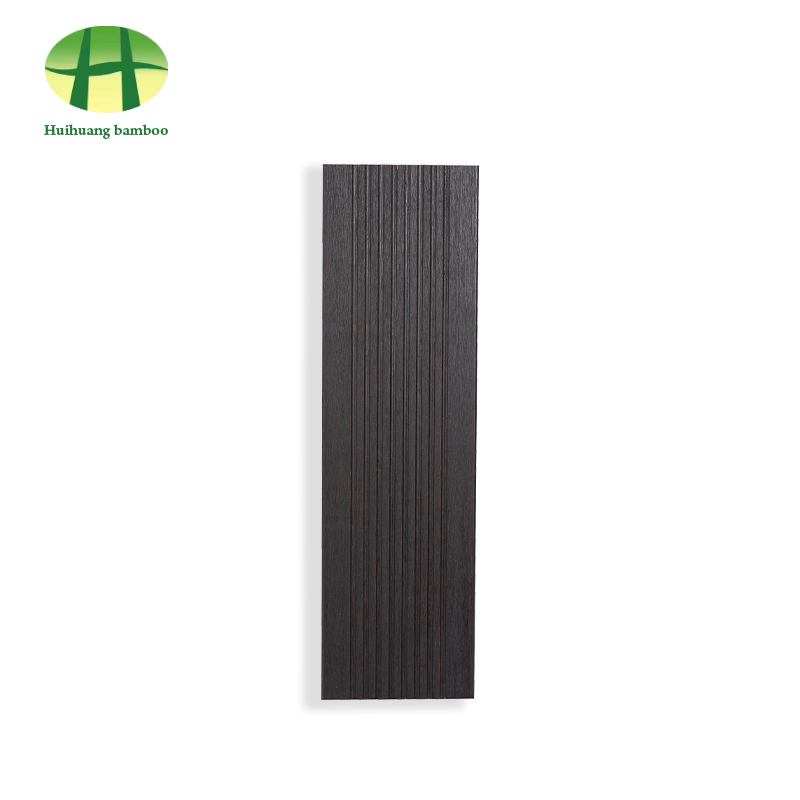 Carbonized Strand Woven Bamboo Flooring for Industrial and Modern StylesThis dark brown or black-brown flooring suits retro, industrial, and minimalist designs. Its high-carbon color elevates decoration grade, and it appears when verifying production processes and certificates from manufacturers like Huihuang Bamboo.View Product →
Frequently Asked Questions
What density should a buyer expect from strand woven bamboo flooring?
Commercial strand woven bamboo typically ranges from 1,050 to 1,250 kg/m3. Below 1,050, suspect under-compression or low resin; above 1,250, check for brittleness.
How can buyers check moisture content during a factory visit?
Use a calibrated pin-type meter on freshly unpacked boards. Insert pins to full depth at the face center, take readings from at least three boards per pallet, and compare the average with the agreed 6 to 12 percent range.
What thickness swelling value signals poor strand woven bamboo quality?
Per EN 317, a 24-hour water immersion test should show thickness swelling of 8 percent or less. Above 8 percent, the board has insufficient resin or compression and will likely cup or warp outdoors.
Are carbonized strand woven bamboo boards weaker than natural color boards?
Properly made carbonized boards lose only a small portion of mechanical performance during heat treatment; density and hardness stay within acceptable ranges. The bigger risk is color batch inconsistency, so confirm Delta E below 3.0 between runs.
 View More

 +86-572-5215066 5216895
 office@hh-bamboo.com
 East Side of Huanggang RD,Ningdun County, Ningguo ,Xuancheng City,Anhui Province,China.
