


 English
 Deutsch
Content
For architects and B2B procurement specialists, selecting sustainable materials that can withstand tropical or coastal environments is a rigorous engineering challenge. Bamboo flooring for outdoor use has emerged as a premier alternative to tropical hardwoods, provided it is engineered through advanced strand-woven processes. Ningguo Kuntai Bamboo and Wood Co., Ltd., located in the heart of China's "Bamboo Village," has spearheaded this technology since 2002. With a 30,000-square-meter modern facility and a US patent (No. US11148318) for outdoor bamboo decking, we specialize in high-density, carbonized solutions that thrive in moisture-heavy zones. Assessing durability in these conditions requires a deep understanding of hygroscopic expansion and biological resistance.
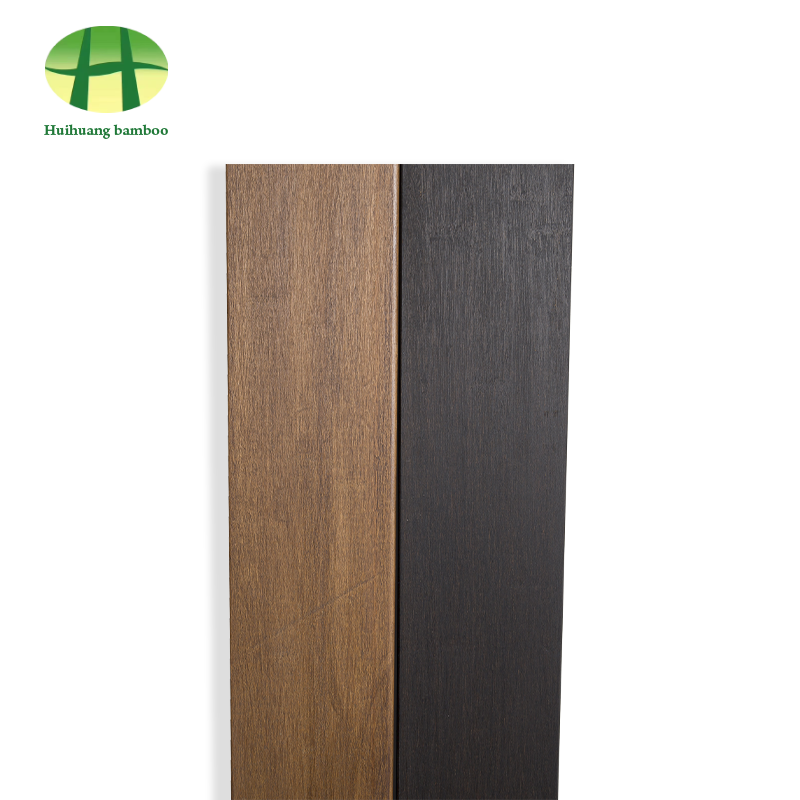
Engineering Resilience: The Strand-Woven Carbonization Process
The durability of bamboo in high humidity is not inherent; it is manufactured. High-quality strand woven bamboo decking for humid climates undergoes a deep carbonization process that alters the bamboo's molecular structure, removing sugars and starches that typically attract fungi and insects. According to the 2024-2025 Global Bio-Based Building Materials Market Report by the International Bamboo and Rattan Organization (INBAR), heat-treated bamboo composites now achieve Class 1 durability ratings, comparable to Teak or Ipe, but with a significantly lower carbon footprint. This process ensures that the high density outdoor bamboo flooring maintains dimensional stability even when the relative humidity exceeds 80%.
Source: INBAR - International Bamboo and Rattan Organization: 2025 Market Trends
Comparative Analysis: Strand-Woven Bamboo vs. Traditional Timber
While traditional softwoods and even some hardwoods absorb moisture and swell, strand-woven bamboo utilizes high-pressure resin bonding to create a nearly impermeable surface.
| Performance Metric | Traditional Exterior Softwood | High density outdoor bamboo flooring |
| Janka Hardness Rating | Approx. 600 - 1,200 lbf | Exceeds 3,500 lbf |
| Moisture Absorption Rate | High (15-25% saturation) | Ultra-Low (<8% saturation) |
| Fungal Resistance | Requires chemical treatment | Naturally resistant via carbonization |
| Expansion/Contraction | Significant (Prone to warping) | Minimal (Dimensional stability) |
Assessing Biological Resistance and Certification Standards
In high-humidity climates, the primary threat to longevity is rot and termite infestation. To ensure long lasting bamboo deck boards, procurement officers should verify certifications such as FSC, CE, and SGS. The ISO 9001 and ISO 14001 standards followed by KUNTAI guarantee that every batch meets specific density and adhesive safety requirements. According to the European Federation of the Parquet Industry (FEP) 2025 Technical Update, mechanical stability in outdoor composites is now measured by rigorous "boil-dry" cycling tests to simulate years of monsoon rains and intense sun exposure. Choosing anti corrosive bamboo wall cladding for gardens ensures that the vertical and horizontal surfaces of a project age at the same rate without structural degradation.
Source: FEP - European Federation of the Parquet Industry: 2025 Technical Guidelines
Comparative Analysis: Weathering and Surface Integrity
Untreated bamboo will grey and crack rapidly; however, professional-grade weather resistant bamboo flooring for patios utilizes UV-inhibitors and oil-based finishes to maintain aesthetic and structural integrity.
| Weathering Factor | Standard Exterior Grade Bamboo | Weather resistant bamboo flooring for patios |
| UV Protection | Baseline (Fades to grey in 6 months) | Enhanced (Retains color for 12-24 months) |
| Surface Checking | Prone to micro-cracks | Highly resistant due to high-density pressing |
| Maintenance Cycle | Every 6 months | Annually or bi-annually |
Installation Precision and Structural Load Capacity
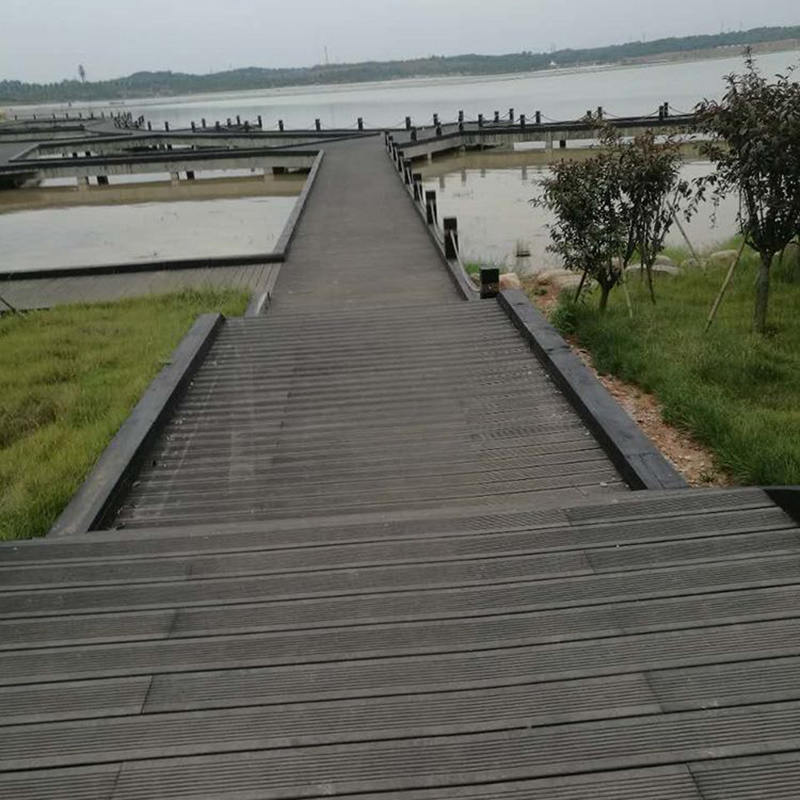
The long-term durability of bamboo flooring for outdoor use is also dependent on the installation system. B2B buyers should look for patented locking or fastening systems that allow for slight natural movement without compromising the load capacity. As a US patent holder, KUNTAI's decking systems are designed to maximize airflow underneath the boards, which is crucial in humid climates to prevent moisture trapped between the subframe and the decking. This engineering detail is what makes our eco friendly bamboo decking for commercial projects a staple for resorts and public boardwalks where foot traffic is heavy and maintenance budgets are optimized for the long term.
- High Density: Our strand-woven products reach a density of 1.15-1.25g/cm³, making them sink in water and resist indentation.
- FSC Certification: Ensures that the bamboo is sourced from sustainably managed forests in the "Bamboo Village."
- Slip Resistance: Engineered surface textures provide R10 or R11 ratings for safety in wet conditions.
- Versatility: Suitable for bamboo timbers, beams, and ceiling structures to create a cohesive outdoor environment.
Frequently Asked Questions (FAQ)
1. How does high humidity affect bamboo compared to wood?
Unlike standard wood, high density outdoor bamboo flooring is compressed under 3,000 tons of pressure. This density, combined with carbonization, prevents the "breathing" that leads to warping in traditional timber.
2. Is maintenance required for outdoor bamboo?
Yes. Even weather resistant bamboo flooring for patios requires a simple cleaning and a coat of maintenance oil once a year to preserve its vibrant color and UV protection.
3. Can bamboo be used for vertical applications in gardens?
Absolutely. Using anti corrosive bamboo wall cladding for gardens is an excellent way to provide a modern aesthetic that withstands the same environmental stressors as the decking.
4. Is Kuntai bamboo decking legally protected in the US?
Yes, we hold a US patent (No. US11148318) for our outdoor bamboo decking, which validates our unique manufacturing process and provides security for our international importers.
5. Why is strand-woven bamboo considered eco-friendly?
Our eco friendly bamboo decking for commercial projects uses Moso bamboo, which matures in just 5 years, compared to 30-50 years for hardwoods, making it a rapidly renewable resource with high carbon sequestration.
 View More

 +86-572-5215066 5216895
 office@hh-bamboo.com
 East Side of Huanggang RD,Ningdun County, Ningguo ,Xuancheng City,Anhui Province,China.