


 English
 Deutsch
Content
- 1 The Technical Superiority of Strand Woven Engineering
- 2 Resistance to Fungal Decay and Termite Infestation
- 3 Sustainable Engineering for Professional Sourcing
- 4 Frequently Asked Questions (FAQ)
- 4.1 1. Does outdoor bamboo flooring get hot in direct sunlight?
- 4.2 2. How does the US patent benefit international buyers?
- 4.3 3. Is the flooring suitable for salt-water pool environments?
- 4.4 4. How does the wholesale outdoor bamboo decking price compare to Ipe?
- 4.5 5. Can high density bamboo flooring for commercial use handle heavy foot traffic?
In the global architectural landscape, the challenge of selecting moisture-resistant materials for external applications is paramount. Architects and B2B procurement specialists frequently debate whether outdoor bamboo flooring can truly surpass the performance of established hardwoods like Ipe or Teak in tropical or high-humidity environments. Ningguo Kuntai Bamboo and Wood Co., Ltd., situated in the heart of Anhui's "Bamboo Village," has addressed this through the engineering of strand woven bamboo decking for humid climates. As the holder of a prestigious US patent (No. US11148318), KUNTAI utilizes advanced thermal modification and compression technology in our 30,000-square-meter facility to redefine the structural limits of bamboo. Understanding the technical divergence between bamboo composites and traditional timber is essential for ensuring long-term project viability.
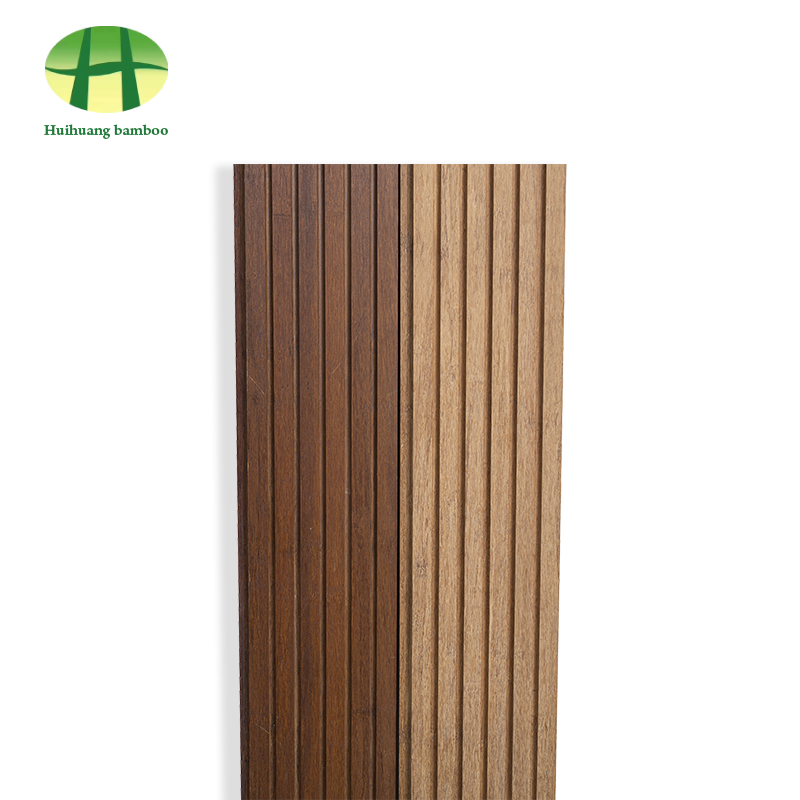
The Technical Superiority of Strand Woven Engineering
Traditional hardwood relies on its natural density and oil content to resist moisture; however, even the densest hardwoods are prone to "checking" and warping as their internal moisture content fluctuates. In contrast, outdoor bamboo flooring is an engineered product created by crushing bamboo fibers and saturating them with phenolic resins under immense pressure. According to the 2024 Global Bamboo Market Analysis by the International Association for Bamboo and Rattan (INBAR), high-density strand woven bamboo now exhibits a swelling rate of less than 2% after 24 hours of water immersion, a significant improvement over the 5-8% commonly seen in high-end hardwoods. This technological leap makes weather resistant bamboo planks for patios a more stable alternative in regions with extreme humidity cycles.
Source: INBAR - International Bamboo and Rattan Organization Market Trends 2024
Dimensional Stability Comparison
Dimensional stability is measured by the material's volumetric change when exposed to humidity. While traditional hardwoods expand and contract across the grain, engineered bamboo fibers are cross-linked during the compression process, resulting in a nearly isotropic material that resists deformation.
| Property | Traditional Hardwood (e.g., Teak/Ipe) | Strand woven bamboo decking for humid climates |
| Density (kg/m³) | 700 - 1,050 | 1,150 - 1,250 (Superior Density) |
| Moisture Absorption | Moderate (Natural pores) | Very Low (Resin-impregnated) |
| Janka Hardness (lbf) | 2,500 - 3,500 | > 5,000 (Highly Impact Resistant) |
| Resistance to Decay | Natural oils (Decreases over time) | High (Carbonization removes sugars) |
Resistance to Fungal Decay and Termite Infestation
In high-humidity climates, the primary threats to flooring are white rot and subterranean termites. Traditional hardwoods contain hemicellulose and starch, which serve as nutrients for pests. However, the manufacturing process of high density bamboo flooring for commercial use includes high-temperature carbonization. This process thermally modifies the bamboo, effectively "caramelizing" the sugars and removing the nutrient source for fungi and insects. Recent technical breakthroughs in 2025, highlighted by the European Federation of the Parquet Industry (FEP), indicate that carbonized bamboo composites are increasingly favored for public infrastructure due to their Class 1 durability rating (EN 350-1), which ensures a service life exceeding 25 years even in damp conditions.
Source: FEP - European Federation of the Parquet Industry Standards 2025
Bio-Resistance Comparison
Durability in humid climates is directly linked to how well a material resists biological degradation. Bamboo flooring is engineered to be an inhospitable environment for pests, whereas hardwoods require periodic chemical treatments to maintain similar protection levels.
| Biological Hazard | Untreated Hardwood Performance | outdoor bamboo flooring Performance |
| Termite Resistance | Species-dependent (Often requires oiling) | Naturally resistant due to carbonization |
| Fungal Growth | Prone to surface mold in shade | High resistance (Anti-fungal resins) |
| Maintenance Cycle | Annual sanding and sealing | Minimal cleaning and occasional oiling |
Sustainable Engineering for Professional Sourcing
For B2B wholesalers and developers, sustainability is no longer optional. Bamboo reaches maturity in 5 years, compared to 50+ years for tropical hardwoods, making sustainable outdoor bamboo wood flooring a more renewable choice. At KUNTAI, our modern factory is ISO9001 and ISO14001 certified, ensuring that our wholesale outdoor bamboo decking price remains competitive without compromising on ecological standards. We offer anti slip bamboo floor tiles for pool areas that combine safety with the aesthetic warmth of natural wood, providing a comprehensive solution for garden furniture, siding, and roofing applications.
- Global Certifications: Our products carry FSC, CE, and SGS certifications for international compliance.
- Patented Technology: Holder of US Patent No. US11148318, guaranteeing unique structural engineering.
- Integrated Production: From strand woven timbers and beams to bamboo ceilings, KUNTAI manages the full manufacturing cycle.
- B2B Support: We offer engineering assistance for large-scale commercial decking and wall-cladding projects.
Frequently Asked Questions (FAQ)
1. Does outdoor bamboo flooring get hot in direct sunlight?
Due to its high density, outdoor bamboo flooring has a high thermal mass. While it absorbs heat, it releases it more slowly than composite plastics. Our weather resistant bamboo planks for patios are designed to remain comfortable underfoot compared to non-natural alternatives.
2. How does the US patent benefit international buyers?
The patent (No. US11148318) signifies a unique manufacturing process that enhances the stability of outdoor bamboo flooring. This provides our clients with a distinct competitive advantage in the North American and European markets.
3. Is the flooring suitable for salt-water pool environments?
Yes. Our anti slip bamboo floor tiles for pool areas are treated with high-grade resins that resist salt-water corrosion, making them ideal for seaside resorts and residential pools.
4. How does the wholesale outdoor bamboo decking price compare to Ipe?
Generally, bamboo offers a lower cost per square meter than premium Grade-A tropical hardwoods like Ipe, while providing superior hardness and comparable durability ratings.
5. Can high density bamboo flooring for commercial use handle heavy foot traffic?
Absolutely. With a Janka hardness rating often double that of White Oak, high density bamboo flooring for commercial use is specifically engineered for public walkways, restaurants, and retail spaces.
 View More

 +86-572-5215066 5216895
 office@hh-bamboo.com
 East Side of Huanggang RD,Ningdun County, Ningguo ,Xuancheng City,Anhui Province,China.