


 English
 Deutsch

Content
- 1 Why Flooring Is a Primary Factor in Indoor Environmental Quality
- 2 How Bamboo Flooring Reduces Indoor Air Pollutants
- 3 Moisture Stability and Microbial Resistance
- 4 Longevity and Carbon Storage: The Overlooked Side of IEQ
- 5 What to Look for in a Health-Conscious Bamboo Floor
- 6 A Floor Material That Works for Both You and the Planet
Why Flooring Is a Primary Factor in Indoor Environmental Quality
A few months after installing a new laminate floor in a home office, a client began waking up with a dry throat and itchy eyes. Air sampling showed elevated aldehyde levels, and the most probable source was the floor covering. This scenario is common in renovated spaces where flooring receives more attention for color than for chemistry.
Bamboo flooring starts from a different point. When manufactured with low-emission adhesives and cured finishes, it releases fewer volatile organic compounds (VOCs), offers a surface that does not trap allergens, and remains stable enough for frequent, simple cleaning. Those properties translate directly into better indoor environmental quality (IEQ), which is why bamboo has become a practical specification for bedrooms, playrooms, and home workspaces.
How Bamboo Flooring Reduces Indoor Air Pollutants
Low-VOC and Formaldehyde Emissions
Most flooring materials emit at least some VOCs after installation. The critical factor is the adhesive system and the surface finish. A well-executed strand-woven bamboo board is pressed under high heat and high density, which consumes much of the free formaldehyde during curing. The dense structure that makes strand-woven bamboo a reliable outdoor decking material also serves indoor spaces well, because a lower adhesive-to-fiber ratio means fewer pathways for VOC release. Products that meet CARB Phase 2 limits or equivalent national standards are suitable for continuous-occupancy rooms.
For example, carbonized strand-woven bamboo flooring provides the same dense base material in a darker, thermally treated tone. If the pressing parameters are controlled, the heat treatment does not add emission risk; the finished board stays within the same low-VOC envelope as natural-tone boards. This is why buyers should request the product’s VOC test data, not just the generic material name.
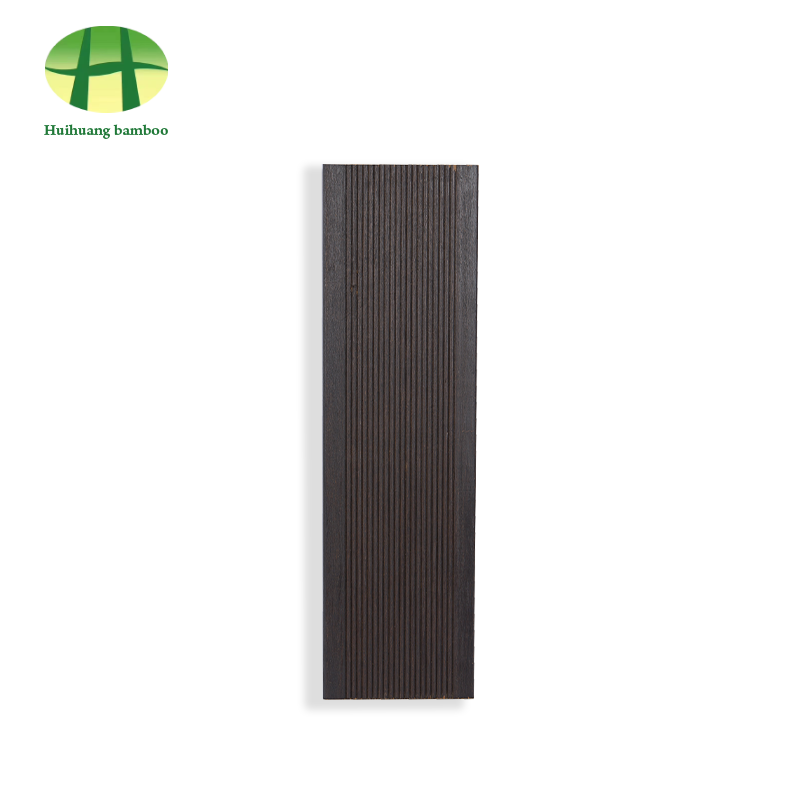 Custom eco friendly Carbonized color bamboo composite flooring Manufacturers, FaNingguo Kuntai Bamboo and Wood Co.,Ltd. Offer Custom eco friendly Carbonized color bamboo composite flooring Manufacturers and Factory In...View Product →
The first weeks after installation can be decisive. A fully cured, water-based finish releases a higher initial load immediately and then drops quickly. For a closer look at how bamboo flooring types and finishing affect offgassing, see this guide to outdoor bamboo flooring types, benefits, and offgassing facts.
A Surface That Does Not Trap Allergens
For allergy-prone households, surface texture matters as much as emissions. Pollen, dust-mite waste, pet dander, and mold spores settle into carpet fibers and are repeatedly lifted back into the air by foot traffic and vacuuming. A dense bamboo floor interrupts that cycle: allergens stay on the surface where a damp mop removes them at the source.
A natural-color glossy strand-woven bamboo floor is a useful example of a closed-surface product. It has no deep grain or open pores, so microscopic particles find little to hold onto. That physical characteristic can help reduce nighttime congestion and asthma triggers, especially in bedrooms.
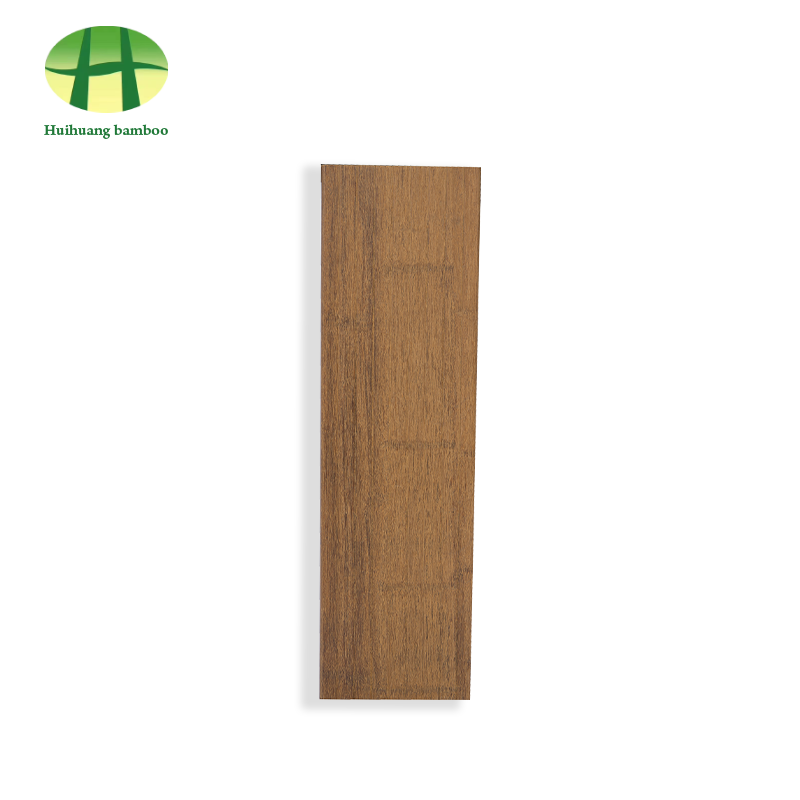 Custom Natural color glossy heavy solid bamboo hardwood flooring Manufacturers, Ningguo Kuntai Bamboo and Wood Co.,Ltd. Offer Custom Natural color glossy heavy solid bamboo hardwood flooring Manufacturers and Factory ...View Product →
Easier Cleaning Means Better Air Over Time
Indoor air quality is the accumulated result of daily cleaning. Soft or textured floors tend to hold residues, which pushes residents toward stronger chemicals and more frequent cleaning. Bamboo’s hard surface requires only water, neutral soap, or a microfiber pad. Because less chemical is needed and the floor can be wiped repeatedly without damage, the long-term chemical load in the room stays lower.
Moisture Stability and Microbial Resistance
Microbial growth is an overlooked contributor to poor IEQ. When moisture enters a wooden or composite floor through seams, gaps, or the substrate, mold can develop and release spores into the room. The floor becomes a chronic pollution source.
Strand-woven bamboo is denser than many temperate hardwoods, with fewer voids in its structure. That density slows water absorption and limits dimensional movement under humidity changes. A standard-size glossy bamboo floor can be installed with tight joints that remain stable across seasons, reducing the chance of water intrusion into the subfloor. In concrete-slab buildings, where rising moisture is a real risk, this stability has a direct impact on mold prevention.
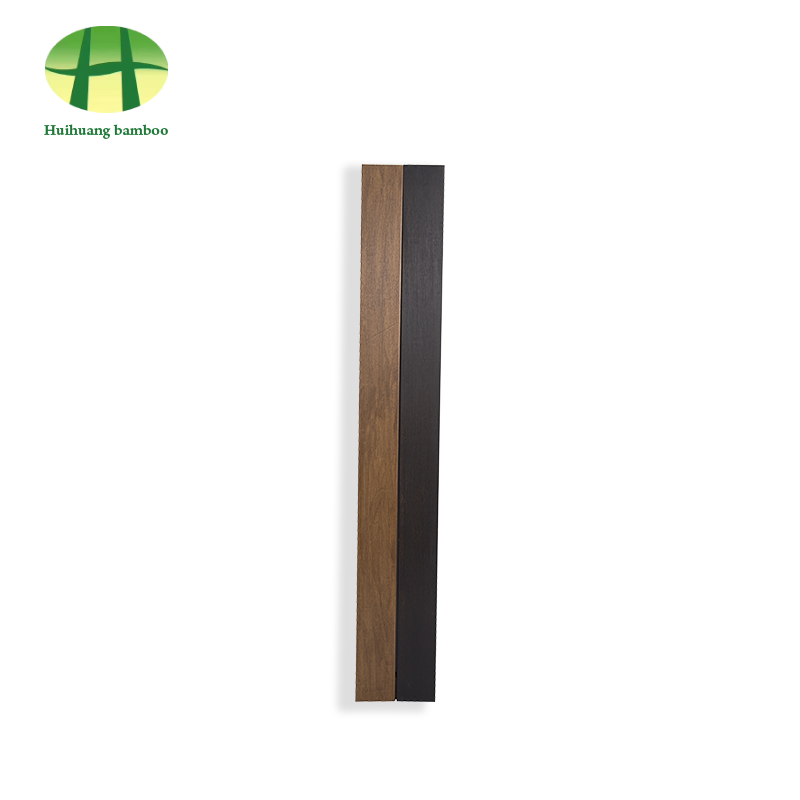 Custom Standard Size Glossy Heavy Bamboo Decking All Weather Durable Heavy Duty Ningguo Kuntai Bamboo and Wood Co.,Ltd. Offer Custom Standard Size Glossy Heavy Bamboo Decking All Weather Durable Heavy Duty Exterior Fl...View Product →
Durability also plays a role in indoor environmental quality. A hard-wearing strand-woven bamboo floor keeps its surface intact, avoiding the scraped, dust-trapping wear that older floors develop. More on why strand-woven bamboo durability matters for indoor use can be found here.
Longevity and Carbon Storage: The Overlooked Side of IEQ
Indoor environmental quality is not only about the air inside a room; it also includes the building’s material flow over time. A floor that lasts 20 years instead of 8 years avoids the burden of replacement: the waste, the transport, and the emissions of manufacturing a second floor.
Strand-woven bamboo is among the hardest flooring materials available commercially. Its Janka hardness typically exceeds red oak and many hickory species, which means it resists indentation and scratching under daily use. A floor that remains smooth and undamaged is easier to clean and less likely to harbor particulates in surface scratches.
Bamboo’s growth cycle adds another layer. Bamboo reaches full height in 5 to 7 years and regenerates from its root system, reducing soil erosion and preserving the surrounding ecosystem. When the harvested stems are compressed into a dense bamboo board, the carbon absorbed during growth stays stored in the material for the life of the building. That makes bamboo flooring a meaningful part of a low-impact, health-conscious renovation.
What to Look for in a Health-Conscious Bamboo Floor
Not all bamboo flooring performs equally indoors. Low-cost boards may rely on higher-emission binders or thin surface layers that wear down quickly. The specification, not the material name alone, determines the indoor environmental outcome.
Start with certifications. CARB Phase 2 compliance, or an equivalent national limit, confirms that formaldehyde emissions have been independently tested. FSC certification ensures the raw material comes from a responsibly managed bamboo source. For production quality, factory-level certificates such as FSC, CE, SGS, ISO9001, and ISO14001 give a baseline of process control.
The table below compares the broad characteristics of common indoor floor coverings:
| Floor type | Typical VOC profile | Allergen retention | Moisture risk | Typical service life |
|---|---|---|---|---|
| Strand-woven bamboo | Low (CARB Phase 2 common) | Low | Low | 20+ years |
| Hardwood | Low to moderate (depends on coating) | Low | Moderate | 15–30 years |
| Laminate | Moderate to high (adhesive dependent) | Low | High when seams fail | 10–15 years |
| Carpet | Moderate to high (fiber and backing) | High | High | 5–10 years |
Then ask the manufacturer three questions: What adhesive system is used and does it meet CARB Phase 2 or equivalent? Is the surface finish fully cured before packaging? What are the dimensional tolerances and moisture-content limits for the boards?
A manufacturer with a stable production base and documented processes, such as the bamboo flooring specialist Huihuang Bamboo in Ningguo, China, will answer these directly rather than referring only to brochures. For a practical buying checklist, read a guide on how to choose the right bamboo or wood floor to avoid greenwashing and hidden emissions.
- Check for a third-party VOC or formaldehyde test report.
- Confirm FSC or comparable responsible sourcing certification.
- Ask about the adhesive type and the curing time used in production.
- Request dimensional tolerance and moisture-content data.
- Verify the finish is suitable for the intended traffic level and humidity range.
A Floor Material That Works for Both You and the Planet
Measured against indoor environmental quality, bamboo flooring earns its place. It lowers chemical emissions that affect respiratory comfort, provides a surface that reduces allergen accumulation, supports simple maintenance, and resists moisture-related microbial problems. Its long service life and rapid renewability also reduce the building’s overall material footprint.
For specifiers who want the full benefit, the choice is not simply “bamboo” but a product with verified emissions data, documented material sourcing, and controlled manufacturing processes. A bamboo floor is more than a visual surface; it is part of the air that occupants live with every day.
 View More


 +86-572-5215066 5216895
 office@hh-bamboo.com
 East Side of Huanggang RD,Ningdun County, Ningguo ,Xuancheng City,Anhui Province,China.
