


 English
 Deutsch
Content
Project Specification Guide
Specifying outdoor flooring for a project means committing thousands of square meters to a single material, so tolerance matters as much as aesthetics. Custom strand woven bamboo flooring turns that risk into a controlled process: you define the dimensions, color, surface profile, and installation method, and the factory holds the line from the first pre-production sample to the final container.
What Custom Strand Woven Bamboo Flooring Actually Is
Strand woven bamboo flooring is a densified bamboo composite made by crushing bamboo culms into strands, saturating them with resin, and compressing the result under high heat and pressure into boards that behave more like an engineered material than sawn timber. Because the board is manufactured rather than cut from a log, density, color, and dimensional tolerances can be controlled and repeated across full production runs, which is exactly what a project specification requires.
Huihuang Bamboo, the outdoor flooring brand of Ningguo Kuntai Bamboo and Wood Co., Ltd., has manufactured this material since 2002 at a 30,000 sq m factory in Ningguo, Anhui province, a region known for its bamboo resources. Finished boards typically reach an air-dried density of about 1180 kg/m3, and the material's resistance to impact and heavy traffic is documented in detail in this guide to strand woven bamboo hardness and uses.
Project-grade strand woven bamboo is a manufactured bamboo board with documented density, moisture content, and dimensional stability, produced to agreed tolerances and verified batch by batch. It should be specified by measurable thresholds, not by a supplier's description of quality.
Four Customization Levers That Change The Project
Custom projects usually control four variables: board dimensions, color, surface texture, and installation method. Each one affects cost, installation speed, and long-term performance, so the decisions should be made early and frozen before mass production begins.
- Board dimensions. Length, width, and thickness can be adjusted to reduce end joints, match a railing module, or comply with a specific joist spacing. For continuous outdoor runs, ordering custom-size glossy heavy bamboo flooring means fewer cut-offs and a cleaner finished elevation.
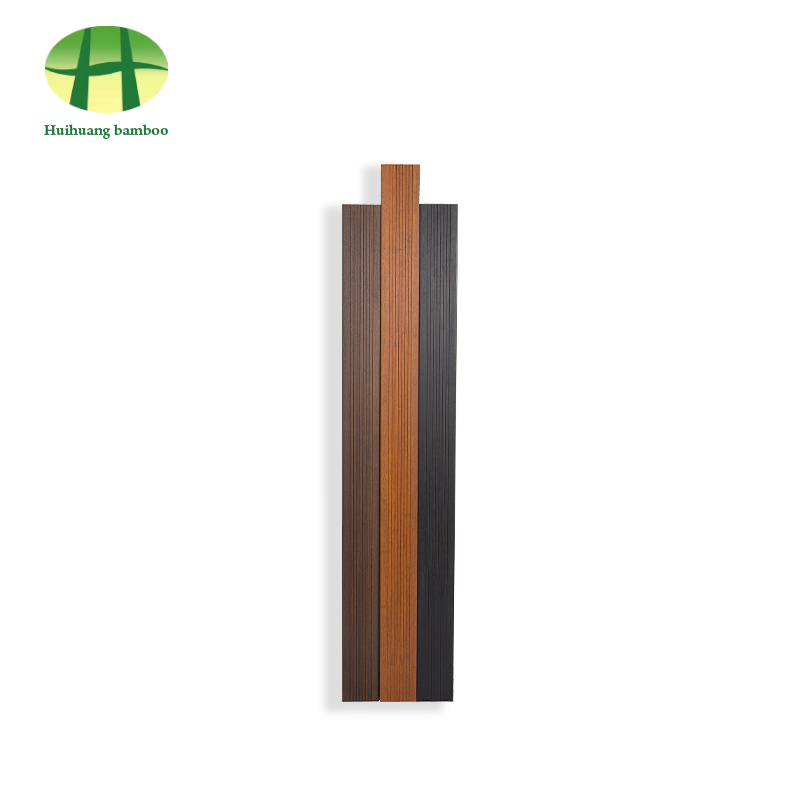
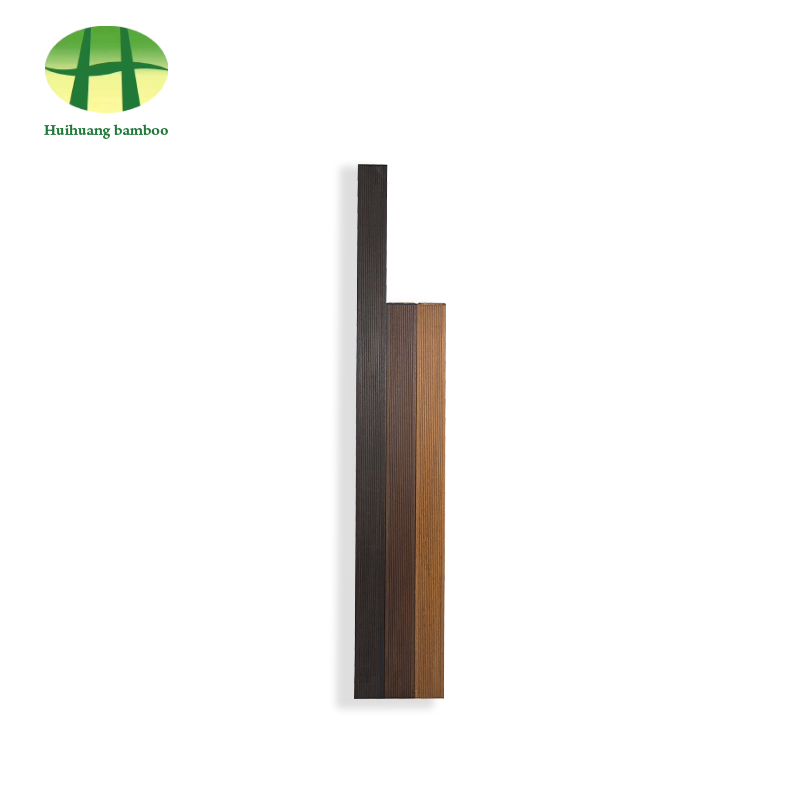
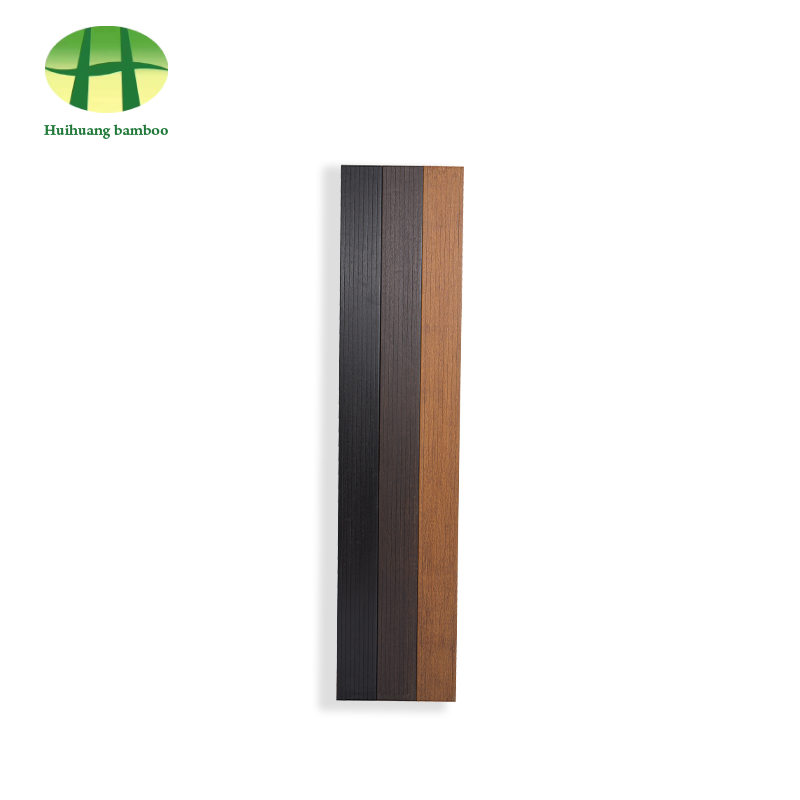
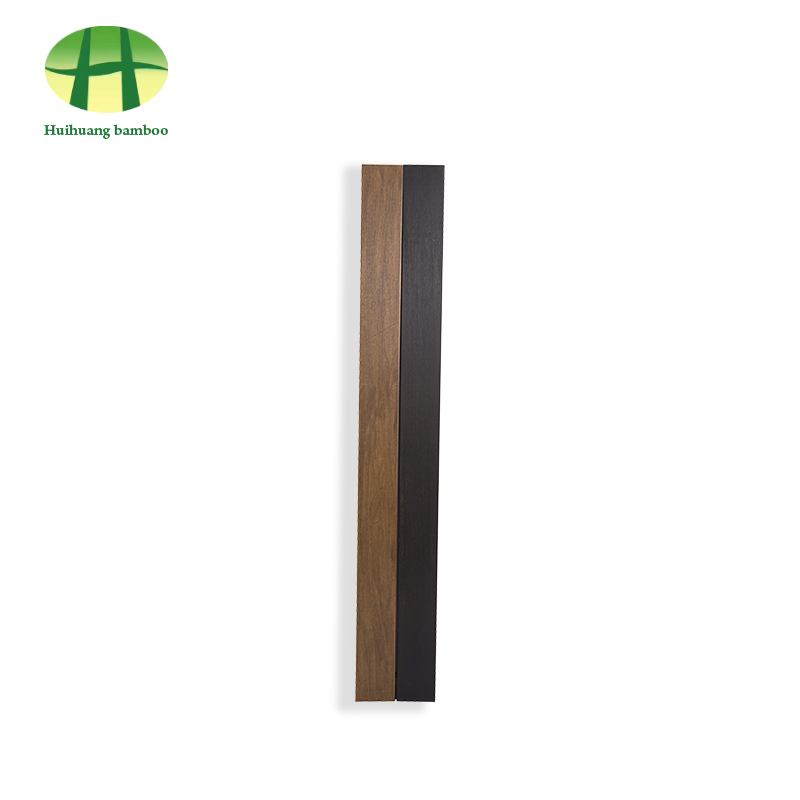
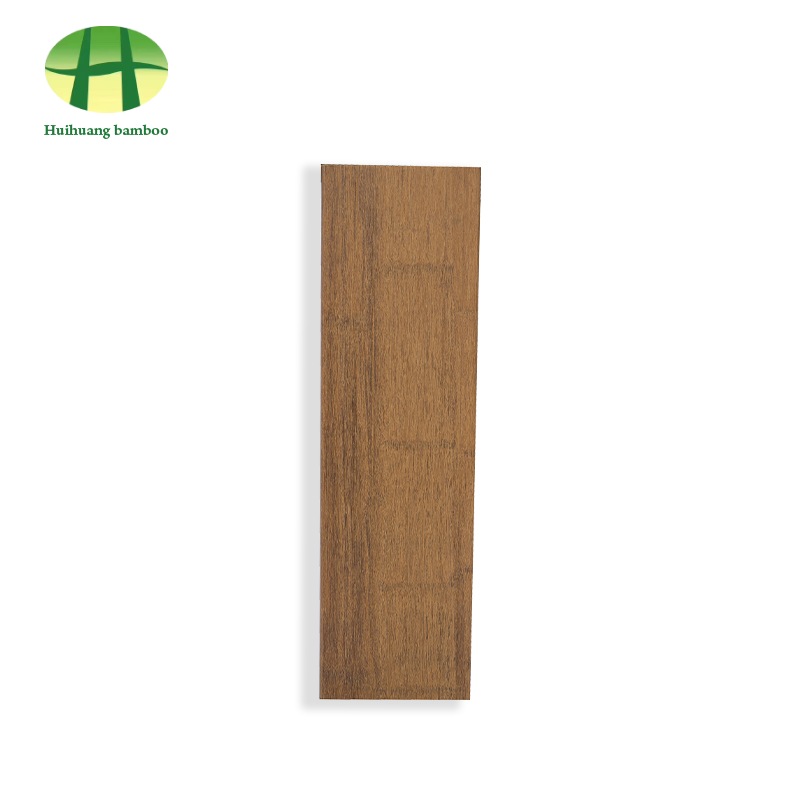
- Color system. Natural, carbonized, coffee, and pineapple finishes are produced by different heat treatments and blend positions, not by surface staining alone. Carbonized boards deliver deeper brown tones while keeping the same resin system and moisture performance.
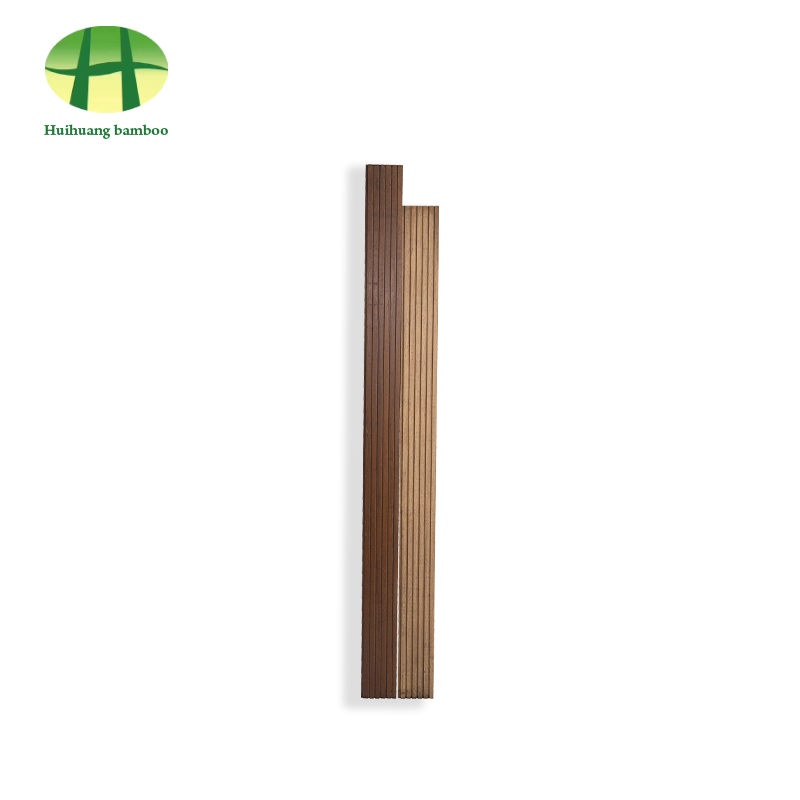
- Surface texture. Flat faces suit covered terraces, while grooved, waved, or striped profiles provide slip resistance and drainage for pool decks, boardwalks, and rain-exposed stairs. Wet zones should use an anti-slip face such as small-groove anti-slip bamboo flooring.
- Installation method. Visible nailing is fast and familiar; hidden fastener splicing removes face fixings, speeds up laying, and lets maintenance crews replace a single damaged board without disturbing the rest of the deck. Projects with future service access usually prefer fastener-splicing bamboo flooring with hidden clips.
Change only one variable at a time during sampling. If you request a new board length at the same time as a new color and a grooved face, a defect can no longer be traced back to a single cause.
Performance Data Worth Writing Into The Contract
A defensible specification is built on thresholds: density, hardness, moisture content, and swelling resistance. Strand woven bamboo clears those thresholds with consistent margins, which is why it has replaced solid hardwoods on commercial boardwalks and public terraces.
| Property | Typical threshold | Why it matters on site |
| Air-dried density | About 1180 kg/m3 | Improves screw holding, resistance to indentation, and overall rigidity of the deck system |
| Janka hardness | 2000 lbf or higher | Limits scratches and dents in corridors, pool surrounds, and commercial terraces |
| Thickness swelling, 24h | 8% or lower under EN 317 swelling limits | Controls edge swell, cupping, and joint movement in wet climates |
| Moisture content at delivery | 6-10% | Keeps boards dimensionally stable through the first climatic cycle after installation |
| Slip performance | Grooved or striped profiles for wet zones | Prevents falls on pool decks, boat docks, and rain-exposed stairs |
Janka hardness: strand woven bamboo vs common decking materials (lbf)
Representative mid-range figures for finished deck boards; request batch test certificates for the exact product you intend to buy.
Swelling under the EN 317 standard is the single most useful test for outdoor flooring: ask for it before approving any sample intended for a wet climate.
Vet The Factory, Not Just The Sample
Project durability depends more on production consistency than on the most attractive sample sheet, so certification and process control determine which supplier can actually deliver at scale. A factory tour, virtual or physical, shows whether the claims survive contact with the production line.
Huihuang Bamboo's manufacturing base covers 30,000 sq m and employs more than 100 people, and the company holds US patent US11148318 for outdoor bamboo flooring, a sign that the product has been engineered as a system rather than sold as a commodity. The certifications below are the minimum documentation a project buyer should request.
- FSC - chain-of-custody proof that bamboo raw material comes from responsibly managed sources.
- CE - market access for construction products in the European Union and many aligned markets.
- SGS - independent third-party verification of physical and mechanical properties.
- ISO 9001 - quality management for batch consistency and defect control.
- ISO 14001 - environmental management across the manufacturing site.
Ask for a pre-production sample with a confirmed batch number, then compare delivered boards against that sample for color, thickness, and surface profile. If you are sizing a house build rather than a commercial site, also review how strand woven bamboo for residential projects is selected to avoid under-specifying.
Catalog Buying vs A Custom Project Program
Catalog sizes work well for small terraces and quick repairs. Projects beyond roughly 300 sq m justify a custom program, because tailored dimensions reduce waste, speed up installation, and make the visual result repeatable across the entire site.
Catalog buying
- Fixed widths and lengths; more end joints to plan around
- Cutting time and offcut waste absorbed by the site crew
- Color options limited to standard stock batches
- Best for retail orders, small terraces, and maintenance pickups
Custom project program
- Board dimensions matched to the plan grid and joist spacing
- One color and surface system across deck, wall, and fence areas
- Pre-production sample approved before full-volume manufacturing
- Batch traceability and QC documentation in every delivery
Bottom line: once you count labor and waste, a custom program usually costs about the same per square meter as catalog boards, and it installs faster.
Frequently Asked Questions
What customization options are available for strand woven bamboo flooring?
Buyers can change board length, width, and thickness; choose natural, carbonized, coffee, or pineapple colors; select smooth, grooved, waved, or striped surface profiles; and decide between visible nailing and hidden fastener splicing. The surface profile is the main variable that controls slip resistance in wet zones.
How does strand woven bamboo compare with tropical hardwood outdoors?
Strand woven bamboo typically reaches 2000 lbf or higher on the Janka scale with an air-dried density near 1180 kg/m3, which places it above red oak and teak on hardness while providing better dimensional stability in changing humidity. Independent batch test certificates should be attached to any project order.
What certifications should a project buyer request?
Request FSC for raw material sourcing, CE for construction-market access, and a third-party test report such as SGS covering density, hardness, and EN 317 swelling. ISO 9001 and ISO 14001 indicate disciplined quality and environmental management at the factory itself.
 View More

 +86-572-5215066 5216895
 office@hh-bamboo.com
 East Side of Huanggang RD,Ningdun County, Ningguo ,Xuancheng City,Anhui Province,China.