


 English
 Deutsch
Content
Strand Woven Bamboo Flooring: Why Good Boards Still Have Problems
Strand woven bamboo flooring is one of the densest and most stable natural-fiber decking materials you can buy, but no outdoor product is maintenance-free. A typical complaint from homeowners who chose strand woven bamboo for a sunny patio is that the boards start to grey after two or three seasons. Another common one is cupping after a damp spring. The conclusion we share after years of manufacturing outdoor heavy bamboo decking is this: most of these issues come down to specification, installation, and care rather than a fundamental flaw in the bamboo itself.
Get those three areas right, and strand woven bamboo will outperform many hardwoods and composites in the same climate. Get them wrong, and even a premium board will struggle. This article walks through the most frequent problems we see, explains why they happen, and gives practical solutions you can apply on any residential or commercial project.
Understanding the Material Before Troubleshooting
Strand woven bamboo starts as raw bamboo that is crushed, saturated with adhesive, compressed under extreme pressure, and cured into a dense board. The final density is typically 1,000–1,200 kg/m³, which is why people often compare it to tropical hardwoods like ipe. That density gives excellent screw-holding power and impact resistance. It also means the boards are less reactive to humidity than solid softwoods, but they are not immune to moisture, UV, or biological growth.
Because the manufacturing process varies between factories, the actual performance depends heavily on the quality of the bamboo strands, the adhesive system, and the finishing line. A well-made board from a factory with controlled production processes will behave very differently from a cheap import with poor curing. If you want a detailed comparison of structural behavior, see our guide to the hardness and durability of strand woven bamboo.
Common Problems and Practical Solutions
1. Fading and Discoloration
Problem: The deck slowly loses its original color, often turning grey or patchy. This is the single most common complaint we hear. The conclusion: fading is inevitable outdoors, but the speed depends on the coating and the color of the board.
Explanation: UV radiation breaks down the lignin in bamboo, while rain and humidity wash away tannins. A dark carbonized board may lighten, while a natural board may grey. The result is uneven color if some areas are shaded and others are not.
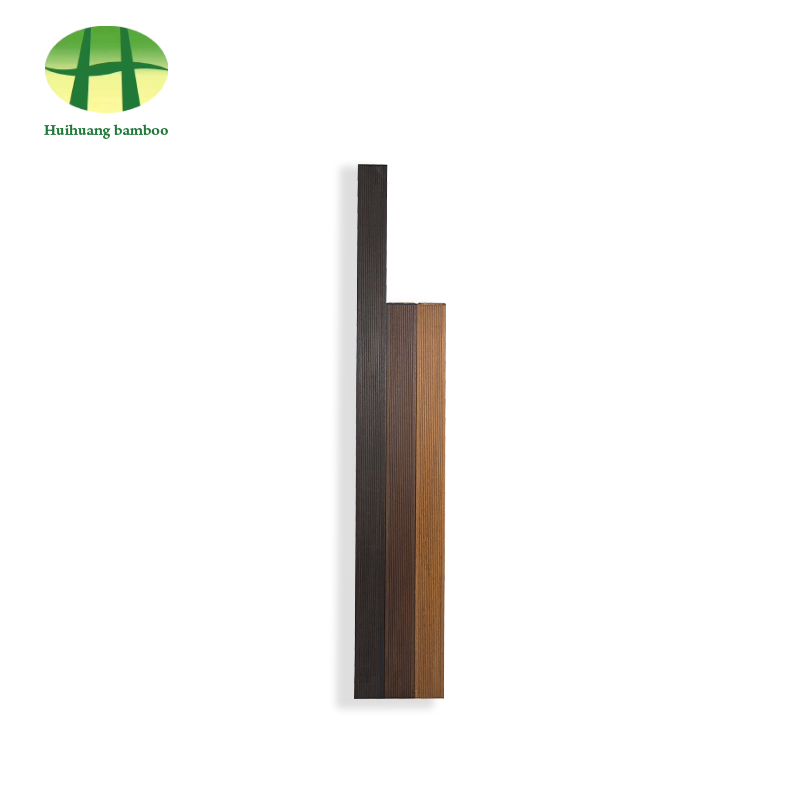
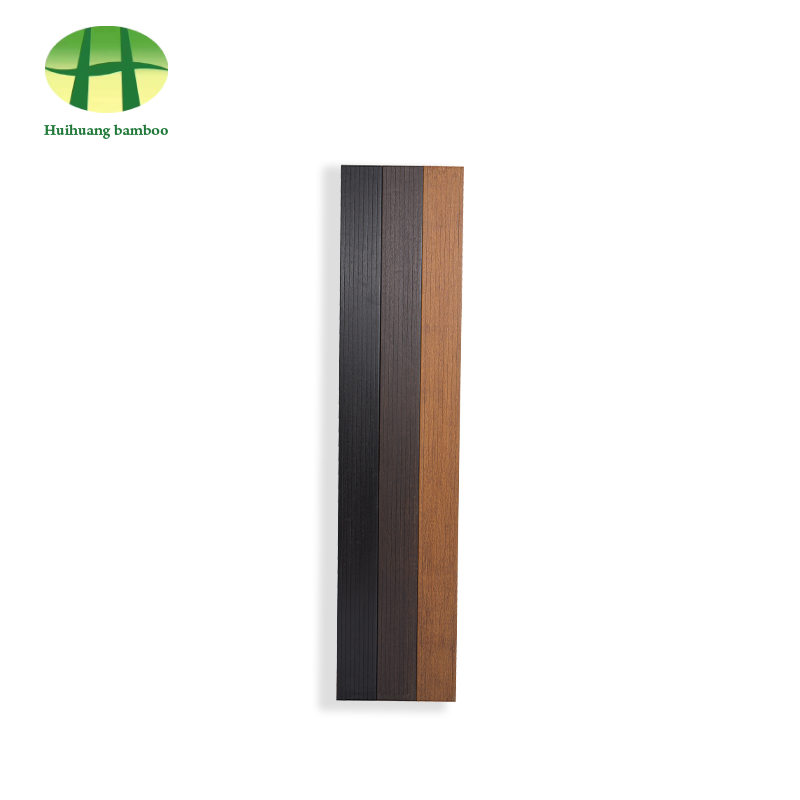
Solution: Choose a board with a factory-applied UV-resistant coating, and reapply exterior wood oil or a UV sealer every 12–24 months. Do not use household deck stains designed for softwood; they can form a film that flakes. Instead, use a penetrating oil formulated for bamboo or tropical hardwood. For long-term color, carbonized boards tend to stay more stable than natural ones because the darker color comes from heat treatment, not from surface dye. You can see this in our carbonized strand woven bamboo flooring, which uses a thermal treatment that darkens the full board rather than just the surface. For a deeper color-care routine, read our fading prevention and color care guide.
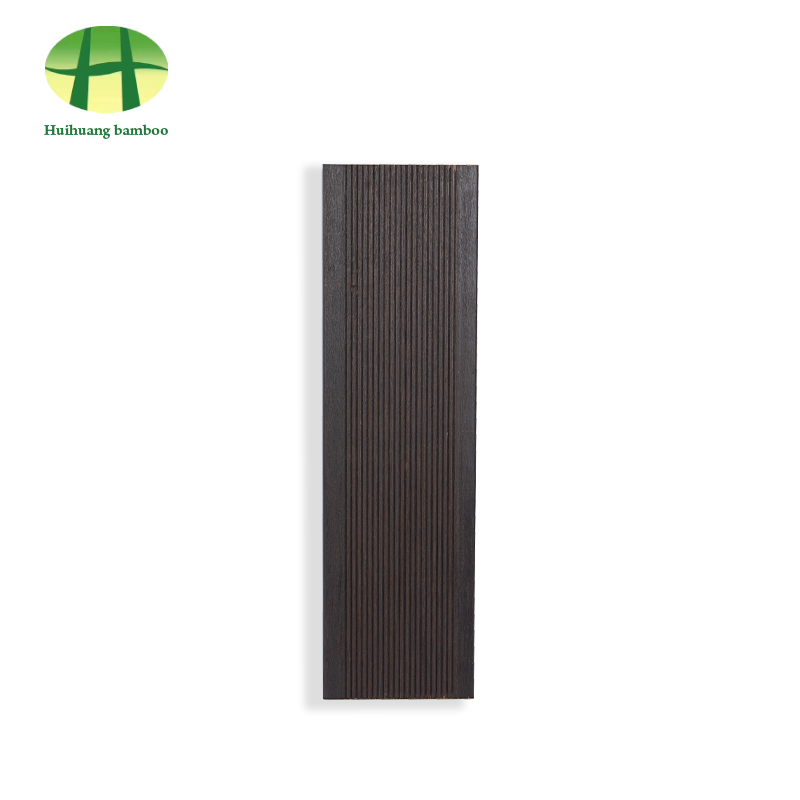 Custom eco friendly Carbonized color bamboo composite flooring Manufacturers, FaNingguo Kuntai Bamboo and Wood Co.,Ltd. Offer Custom eco friendly Carbonized color bamboo composite flooring Manufacturers and Factory In...View Product →
2. Surface Cracking and Checking
Problem: Fine hairline cracks appear along the grain, usually at board ends or around fasteners. Conclusion: this is a moisture response, not a structural failure. Because strand woven bamboo is very dense, it cannot absorb water quickly; it releases it slowly. When the surface dries faster than the core, tensile stress creates micro-cracks.
Key causes: end-grain exposed to rain, undersized expansion gaps, and installing boards with no ventilation underneath.
Solution: leave 5–8 mm gap between boards and 10–15 mm at perimeter; seal the cut ends with a compatible end-grain sealer; allow air circulation under the deck. If you are building over a concrete slab, use a pedestal system or a batten with a moisture barrier. The same principle applies to walls and facades – proper drainage is essential.
3. Mold, Mildew, and Stains
Problem: dark spots, white streaks, or greenish growth on the surface. Conclusion: mold and mildew are almost always a drainage or ventilation problem, not a material defect.
Explanation: bamboo contains starch and sugars, which are food for fungi in humid environments. When water pools on the surface or organic debris collects in seams, mold can establish itself. A shaded patio that stays damp all day is especially vulnerable.
Solution: keep the deck clean of leaves and pollen; sweep regularly; use a mild alkaline cleaner (such as a diluted deck wash) once a quarter; ensure water can drain freely. For installations in dense shade, consider a board with a tighter surface texture and better coating. If you need a maintenance routine for mold-prone areas, our patio flooring maintenance for mold prevention covers this in detail.
4. Warping, Cupping, and Buckling
Problem: boards lift at the edges or bow up in the middle. Conclusion: warping in strand woven bamboo is rare compared with solid lumber, but when it happens it usually points to poor substructure, trapped moisture, or a lack of expansion room.
Causes: joist spacing too wide, blocking airflow underneath, water trapped between the board and the substructure, and boards fastened too tightly.
Solution: follow joist spacing guidelines for the board thickness (typically 300–400 mm for 20 mm boards), install moisture barriers over concrete, and never screw a board down completely flush without allowing seasonal movement. A good practice is to use a fastening system that allows slight sliding. Our fastener-splicing strand woven bamboo flooring, for example, is designed with a clip system that permits controlled expansion, which significantly reduces the risk of buckling.
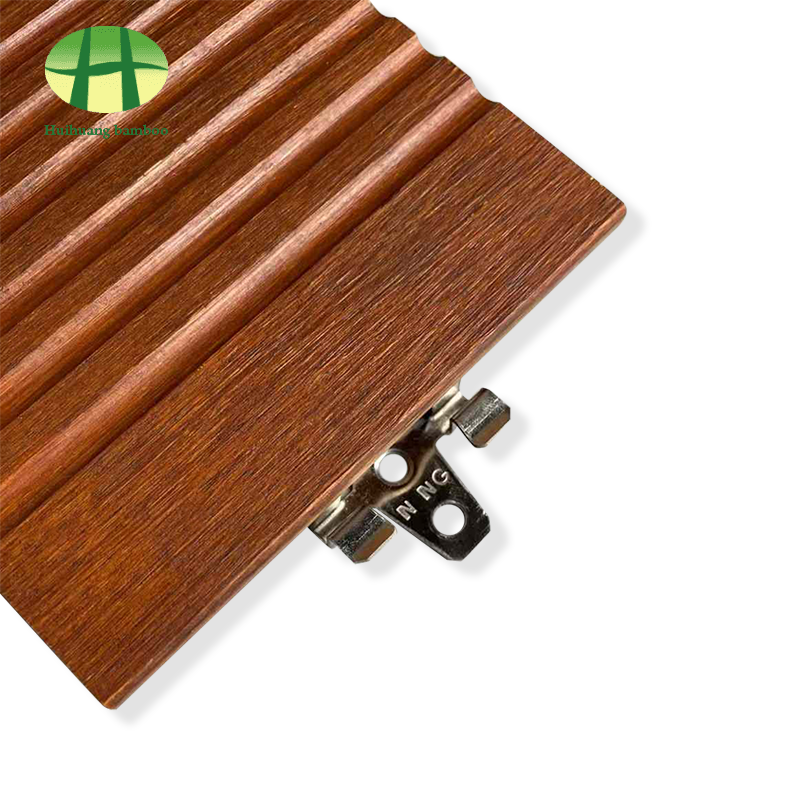 Custom Fastener splicing outdoor heavy strand woven bamboo flooring ManufacturerNingguo Kuntai Bamboo and Wood Co.,Ltd. Offer Custom Fastener splicing outdoor heavy strand woven bamboo flooring Manufacturers and Facto...View Product →
5. Loose or Corroded Fasteners
Problem: screws back out, or rust streaks appear around heads. Conclusion: almost always a fastener-grade issue. Stainless-steel screws are non-negotiable for outdoor bamboo.
Explanation: regular carbon steel screws corrode quickly in outdoor conditions, especially near the ocean or in regions with heavy rain. The rust expands and pushes the screw out. Additionally, if pilot holes are too small, the hard bamboo can fracture around the thread, causing the screw to lose grip.
Solution: use 316 stainless-steel screws or hidden clips; pre-drill to the recommended diameter; avoid mixing aluminum flashing with galvanized fasteners because the galvanic reaction can eat the metal. Re-tighten screws once after a few weeks of weather cycles.
6. Scratches and Surface Wear
Problem: surface scratches, scuff marks, or localized gouges in high-traffic areas. Conclusion: no material is completely scratch-proof, but strand woven bamboo is harder than most woods; the damage you see is often from dirt and grit, not from walking itself.
Explanation: sand, gravel, and small stones get trapped on shoe soles and grind into the surface. Over a summer, that creates a worn path.
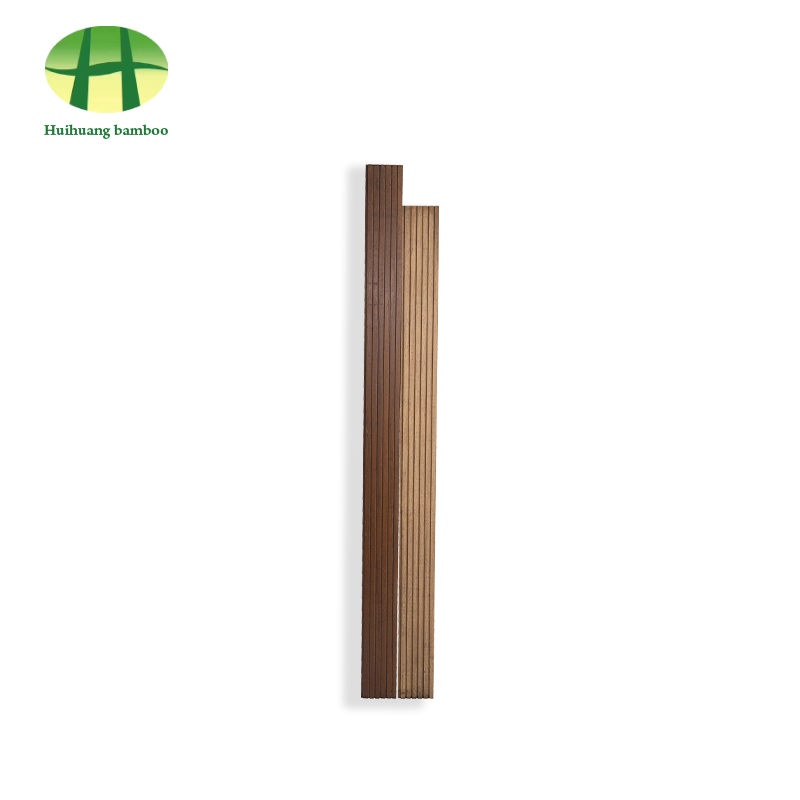
Solution: place doormats and a scraper at the entry point; sweep or blow off debris weekly; use outdoor rugs under heavy furniture; and for very busy patios, choose a board with a textured surface that hides minor scratches better than a smooth glossy finish. Our small-groove strand woven bamboo decking is a popular choice for that reason, because the micro-grooves break up the visual line and help with slip resistance at the same time.
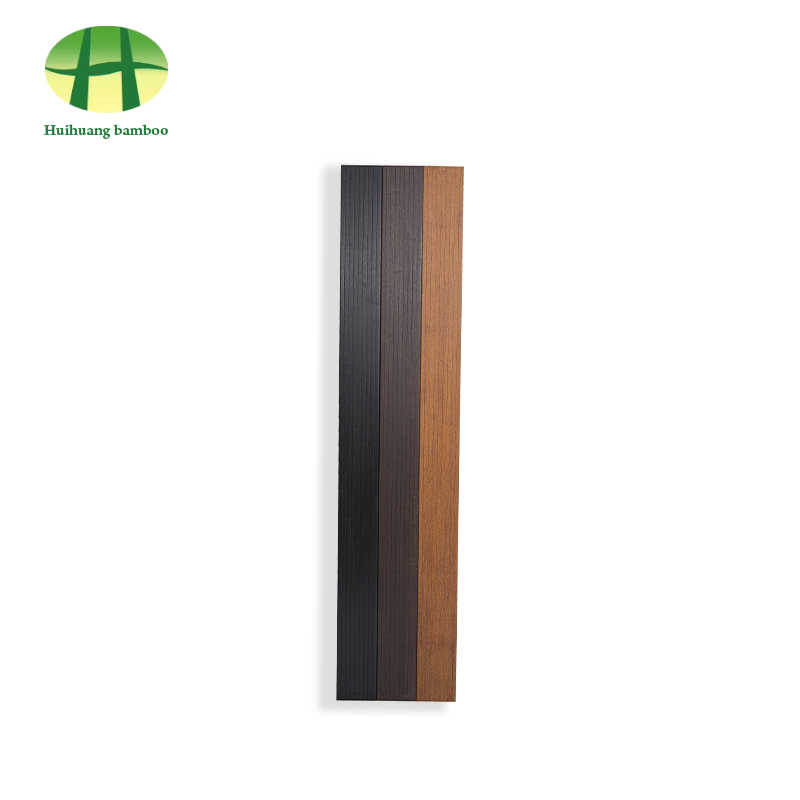 Custom High Density Carbonized Outdoor Bamboo Flooring With Small Grooves Anti SNingguo Kuntai Bamboo and Wood Co.,Ltd. Offer Custom High Density Carbonized Outdoor Bamboo Flooring With Small Grooves Anti Slip Wear Re...View Product →
Preventive Maintenance That Extends the Life of Your Deck
Most of these problems can be prevented with a simple seasonal maintenance routine. We recommend the following schedule for residential decks in most climates:
| Task | Frequency | Why it matters |
|---|---|---|
| Sweep and remove debris | Weekly | Prevents mold and scratches |
| Wash with mild cleaner | Quarterly | Removes algae and pollen |
| Inspect fasteners and gaps | Every 6 months | Catches loose screws and blocked drainage |
| Apply UV-protective oil | Every 12–24 months | Reduces fading and moisture penetration |
| Re-seal cut ends | Every 2 years | Keeps end-grain moisture resistant |
In coastal areas, increase the frequency of washing and fastener checks because salt air accelerates corrosion. In hot, sunny climates, a lighter-color board and a higher-quality UV oil will do more for color stability than any amount of cleaning.
Choosing the Right Product for Your Climate and Use
Not all strand woven bamboo behaves the same. In a coastal area with salt spray, you need a board with low moisture uptake and very stable dimensions. In a rainy climate, good drainage and a textured surface are more important. In a hot, sunny climate, UV protection and a lighter color can reduce surface temperature and fading. Think about exposure, foot traffic, and your willingness to maintain. A factory that understands these conditions can help you specify the right board.
Our production range includes smooth boards for indoor-outdoor transitions, grooved anti-slip options for pool surrounds, and spliced boards that work with invisible fasteners. We also offer custom color and size, so you can match the board to the project rather than forcing the project to fit a stock product. If you are uncertain about which grade to specify, starting with a clear conversation about your local weather and expected loading will save you from most of the problems listed above.
Final Thoughts
The bottom line is that strand woven bamboo flooring is a robust and sustainable choice if you treat it as an outdoor building material rather than a maintenance-free synthetic. Most problems are avoidable with the right product grade, correct installation techniques, and a sensible cleaning schedule. When issues do appear, fix them early – a small crack can become a source of rot if left untreated, and a single trapped screw can turn into a costly repair.
If you are specifying material for a new project, talk to your supplier about how the boards are made, what the warranty covers, and what installation details are required. An experienced manufacturer will give you clear advice on expansion gaps, substructure, and maintenance intervals – and that advice is often more valuable than the board itself.
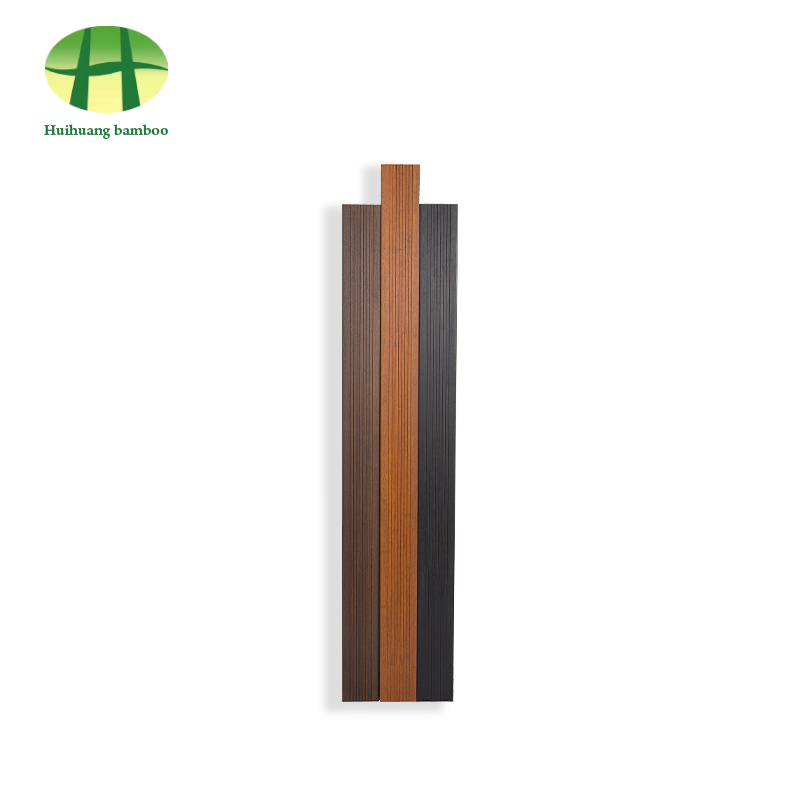
 View More

 +86-572-5215066 5216895
 office@hh-bamboo.com
 East Side of Huanggang RD,Ningdun County, Ningguo ,Xuancheng City,Anhui Province,China.