


 English
 Deutsch

Content
- 1 Moisture Content in Strand Woven Bamboo: Definition and Impact
- 2 Five Quality Control Parameters That Decide Stability
- 3 Acceptable Moisture Ranges by Application
- 4 How Factories Control Moisture From Bamboo Culm to Finished Board
- 5 How to Verify Moisture Content When Sourcing
- 6 Frequently Asked Questions About Strand Woven Bamboo Moisture
- 6.1 What is the ideal moisture content for strand woven bamboo flooring?
- 6.2 How is moisture content measured in bamboo flooring quality control?
- 6.3 Why does moisture content matter more for strand woven bamboo than for solid wood?
- 6.4 Can strand woven bamboo flooring be installed in a humid coastal environment?
A contractor in Miami unloaded twenty cartons of strand woven bamboo decking on a humid July morning, installed them the same week, and returned eight months later to find cupped planks and hairline cracks along the joints. The boards had passed every surface check he ran on site. What failed was the number he never asked for: the moisture content locked into the bamboo during pressing, equalisation, and site acclimation. For importers, architects, and installers, moisture content is the one parameter that separates a deck that stays flat for decades from one that fails inside a year.
Moisture Content in Strand Woven Bamboo: Definition and Impact
Moisture content (MC) is the weight of water inside a plank expressed as a percentage of its oven-dry weight, and the quality-controlled final MC for strand woven bamboo flooring is 6-10 percent for interior planks and 8-12 percent for outdoor decking. Keeping every board inside that window, with a spread below 1 percentage point between boards, is what prevents cupping, twisting, and edge checking in service.
Strand woven bamboo is produced by crushing bamboo culms into fibre, mixing the fibre with phenolic resin, and compressing it under heat and high pressure. The result is a dense board of roughly 1,100 kg per cubic metre, about 30-40 percent denser than conventional strip bamboo flooring. High density leaves less open capillary space for moisture movement, so even a small MC shift generates large dimensional stress. A plank that leaves the factory at 6 percent MC and later rises to 12 percent will swell with far more force than an oak board experiencing the same change.
Five Quality Control Parameters That Decide Stability
Five factory-level parameters determine the moisture behaviour of the finished floor: raw-material pre-drying, resin loading, hot-press schedule, equalisation period, and batch moisture consistency. A defect in any one of these shows up later as warping, swelling, or surface cracking on the job site.
- Raw bamboo pre-drying. Crushed bamboo fibre must be kiln-dried to below 8 percent MC before resin is applied. Uneven raw moisture creates hard spots that cure differently during pressing.
- Resin application. Phenolic resin is normally loaded at 12-15 percent of fibre weight. Resin trapped unevenly makes some zones swell more than others when the board meets water.
- Hot-press conditions. Pressing at 130-150 degrees Celsius drives moisture out to a final 6-8 percent MC. Short press cycles leave a wet core that later migrates to the surface.
- Equalisation storage. Boards should rest for 14-28 days in a climate-controlled area at 55-65 percent relative humidity so internal stress gradients level out.
- Batch consistency. The maximum MC spread within one production batch should stay within plus or minus 1 percentage point. Wider spreads create wavy surfaces when boards sit side by side.
| Parameter | Factory target | Failure mode when uncontrolled |
| Raw bamboo pre-dry MC | Below 8 percent | Case-hardened fibre, uneven resin cure |
| Resin distribution | Plus or minus 0.5 percent across the mat | Differential swelling, surface blisters |
| Hot-press final MC | 6-8 percent out of press | Internal stress, delayed checking |
| Equalisation period | 14-28 days at 55-65 percent RH | Residual stress, cupping after install |
| Batch MC consistency | Plus or minus 1.0 percent maximum | Wavy field, mixed movement between rows |
The practical rule for buyers: EN 317 thickness-swelling data is the companion to MC readings. See how EN 317 limits and outdoor bamboo flooring stability work together before you compare price lists.
Acceptable Moisture Ranges by Application
The acceptable MC range depends on the installation environment: interior, semi-conditioned, outdoor, and coastal sites each require a different target window, and the boards delivered to site must be conditioned toward the equilibrium moisture content (EMC) of that location.
| Application environment | Recommended MC range | Verification basis |
| Interior conditioned space | 6-9 percent | Oven-dry method per ASTM D4442 |
| Semi-conditioned or seasonal rooms | 7-10 percent | Pin-type meter, three points per plank |
| Outdoor decking, temperate climate | 8-12 percent | 24-hour water immersion, thickness swelling |
| Coastal or high-humidity region | 10-12 percent at delivery | Match to site EMC before acclimation |
Recommended MC windows by installation environment
In a humid coastal city where ambient relative humidity sits at 80 percent, bamboo naturally equilibrates to roughly 12-13 percent MC. Boards delivered at 6-8 percent will absorb moisture after installation, and that expansion must be absorbed by the gaps and the fixing pattern. The supplier should document MC at dispatch plus a recommended acclimation time for the destination climate. Carbonized boards are slightly more dimensionally stable than natural boards because of the heat treatment, but both follow the same MC rules.
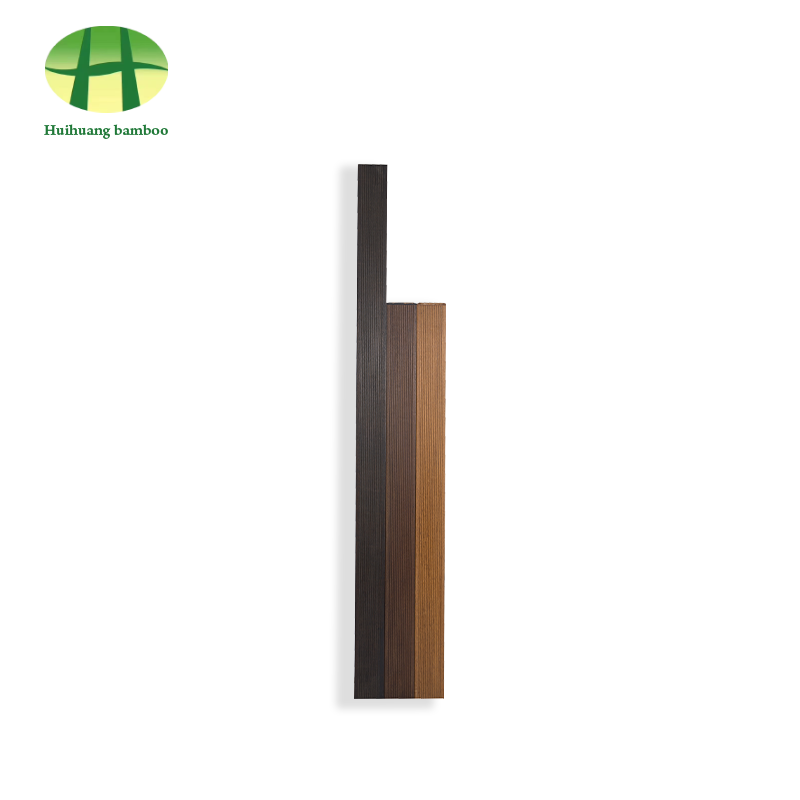
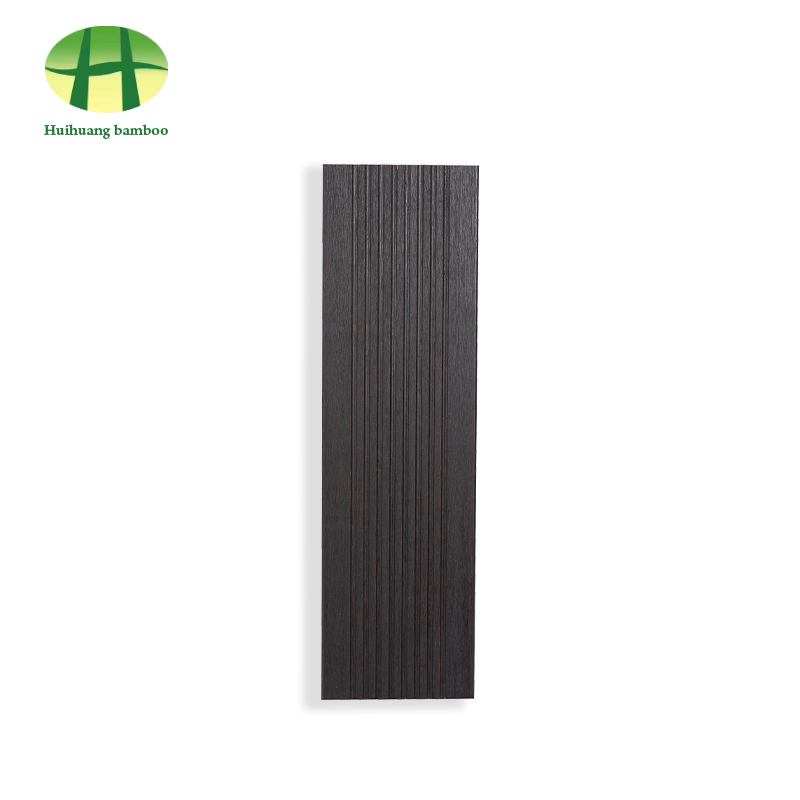 Carbonized Bamboo Flooring for Outdoor Spaces with Customizable SizeThis carbonized dark-brown bamboo flooring suits retro or industrial styles and can be tailored in size. Its heat-treated structure offers enhanced dimensional stability, making it a practical choice for humid coastal climates where moisture balancing is critical.View Product →
How Factories Control Moisture From Bamboo Culm to Finished Board
Moisture control runs through four manufacturing stages: kiln drying of the crushed fibre, resin blending, hot pressing, and climate-controlled equalisation. Each stage needs its own checkpoint, and every batch should be traceable back to the press logs and drying records.
Kiln dry the fibre. Fresh bamboo carries a high moisture load, often above 60 percent, so the first drying stage is the foundation of everything that follows. Factories such as the Huihuang Bamboo plant in Ningguo, Anhui, reduce the fibre to 6-8 percent MC before any resin is added.
Control resin blending. The resinated mat is weighed and checked for uniform spread. Moisture content of the mat is measured again immediately before it enters the press, because wet pockets in the mat become weak points in the finished board.
Log the press cycle. Temperature, pressure, and dwell time are recorded for every billet. Boards leaving the press above 8 percent MC are diverted for re-processing, not packed into cartons.
Equalise every batch. Finished boards rest 14-28 days in a warehouse held near 60 percent relative humidity. QC samples are pulled at the start and end of each week and measured with calibrated moisture meters.
For a professional buyer, the presence of a real equalisation step is more convincing than any certificate. Ask the factory for the duration of equalisation and the humidity range of the storage area. A producer that skips equalisation to save two weeks of inventory is handing you the cupping risk.
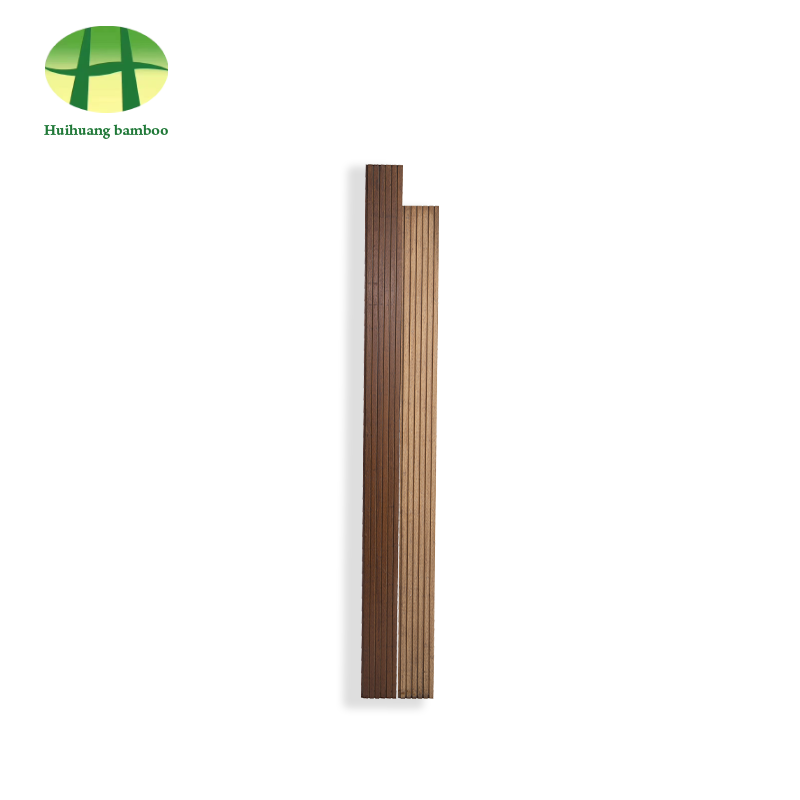
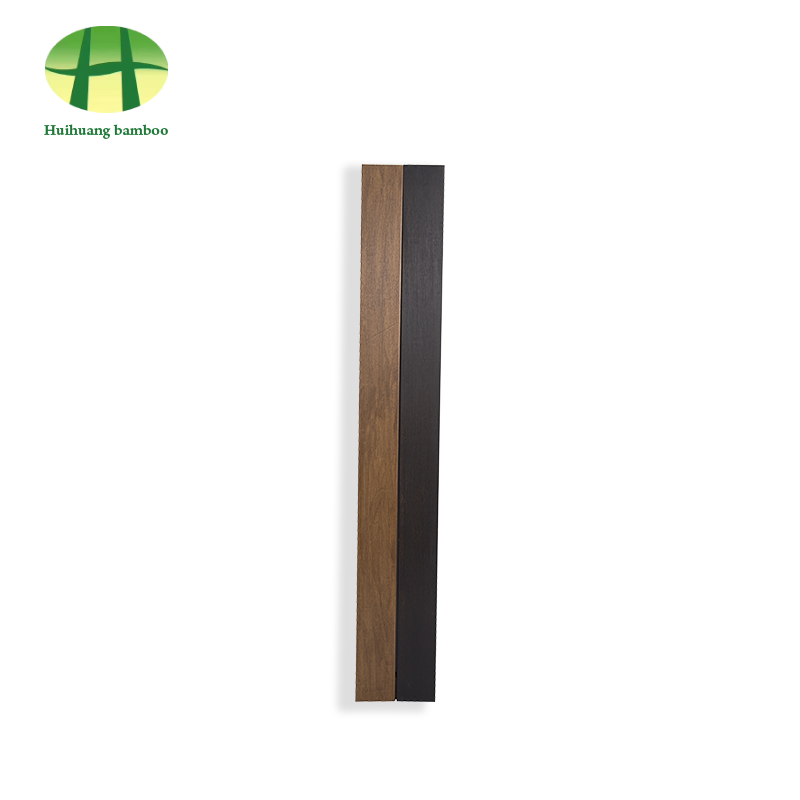 Standard Size Glossy Heavy Bamboo Decking for All-Weather DurabilityA regular-sized glossy heavy bamboo decking built for large-area paving and outdoor durability. For professional buyers, verifying the producer's equalisation process is key; this product line likely supports such traceability, reducing cupping risk in humid environments.View Product →
How to Verify Moisture Content When Sourcing
You can verify MC three ways before committing to a shipment: require batch-level test results, request a defined measurement method, and spot-check delivered boards with a calibrated pin-type moisture meter.
- Ask for oven-dry MC test certificates per production batch, not a single annual report covering the whole factory.
- Compare reported thickness-swelling values against the EN 317 procedure; a high-quality strand woven board holds 24-hour thickness swelling at 5 percent or below. For the full technical background, read this detailed analysis of bamboo decking warp resistance and moisture cracking stability.
- Confirm the recorded equalisation time and storage humidity of the exact lot you are buying.
- Measure three points per plank, both ends and the middle, on at least 10 percent of delivered cartons.
- Return or re-condition any pallet where the MC spread within a single plank exceeds 1.5 percentage points.
Reputable producers publish their test protocol and welcome third-party inspection. Ningguo Kuntai Bamboo and Wood Co., Ltd., the manufacturer behind the Huihuang Bamboo brand, documents its production process and holds ISO 9001 and FSC certification, so batch records travel with the order rather than staying hidden behind a sales sheet.
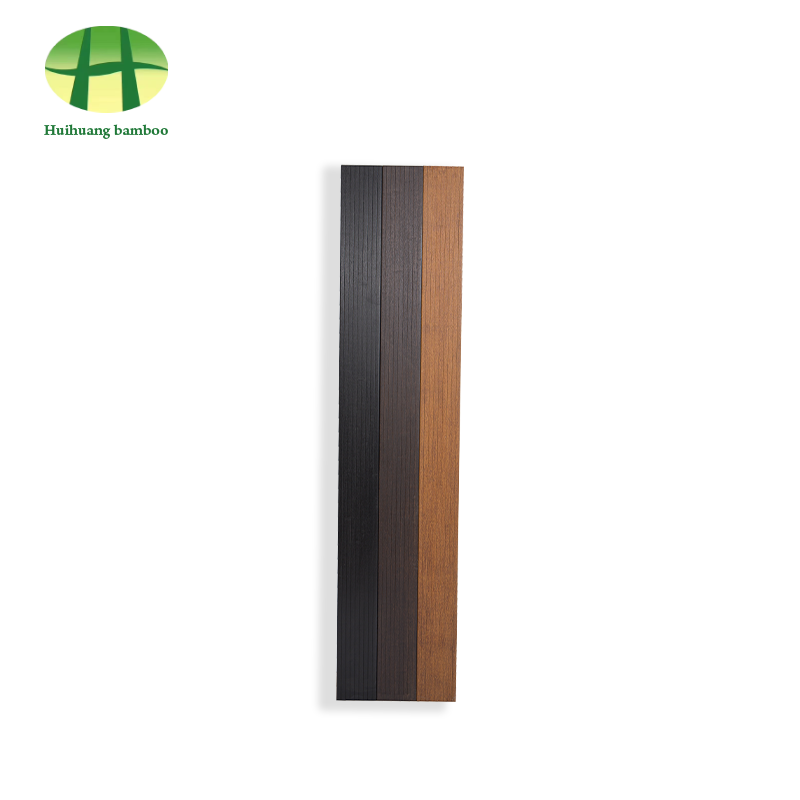
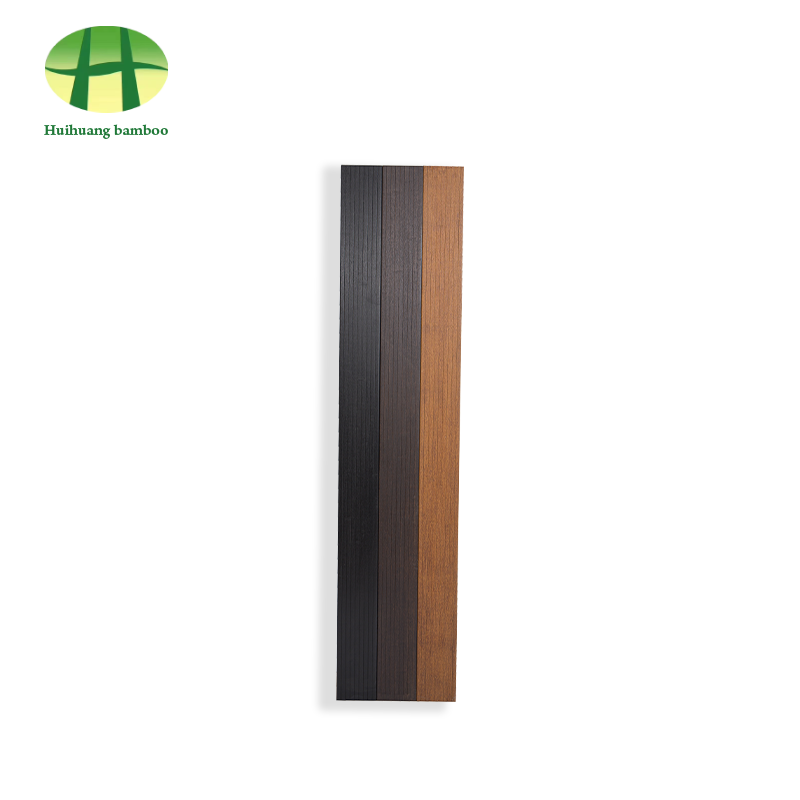 High-Density Carbonized Outdoor Bamboo Flooring with Anti-Slip GroovesFeaturing fine grooves for superior slip resistance and easy cleaning, this high-density carbonized flooring is ideal for wet areas. It comes from a manufacturer with documented quality certifications, helping buyers align delivery moisture content with site equilibrium for reliable performance.View Product →
Frequently Asked Questions About Strand Woven Bamboo Moisture
What is the ideal moisture content for strand woven bamboo flooring?
Interior planks should measure 6-9 percent MC at delivery, and outdoor decking 8-12 percent. In coastal climates, ask the supplier to condition boards to 10-12 percent so they sit close to the equilibrium moisture of the site.
How is moisture content measured in bamboo flooring quality control?
The arbitration method is oven-dry testing per ASTM D4442, where a sample is weighed, dried, and weighed again. In daily factory work, calibrated pin-type or pinless moisture meters provide fast readings at multiple points on each board.
Why does moisture content matter more for strand woven bamboo than for solid wood?
Strand woven bamboo is 30-40 percent denser than solid oak or conventional bamboo, so a 1 percent MC change generates higher internal stress inside a smaller volume. That density creates hardness and durability, but it also converts small moisture mistakes into visible distortion.
Can strand woven bamboo flooring be installed in a humid coastal environment?
Yes. Order boards conditioned to the destination EMC, keep them acclimating on site for 48-72 hours, and follow the manufacturer gap and fastener schedule. High-density strand woven boards perform well in humid regions when the MC is matched at dispatch.
 View More

 +86-572-5215066 5216895
 office@hh-bamboo.com
 East Side of Huanggang RD,Ningdun County, Ningguo ,Xuancheng City,Anhui Province,China.
