


 English
 Deutsch

Content
- 1 What Counts as Shipping-Grade Packaging for Strand Woven Bamboo Flooring?
- 2 Moisture Control Is the Requirement That Decides Everything Else
- 3 Pallets, Bundles and Container Loading Standards
- 4 Labeling and Documentation That Customs and Buyers Both Read
- 5 A One-Hour Pre-Shipment Inspection Checklist
- 6 Frequently Asked Questions
Export Operations - Packaging and Logistics
Forty days at sea is a long time to ask a hygroscopic material to stay exactly as it left the factory, and the pallets that disappoint buyers are almost never the ones with bad flooring inside them.
A buyer in Rotterdam opens a 40-foot container and finds pallets where the shrink wrap has slipped, corner boards have folded flat, and a pale dust of early mold sits across exposed plank faces. The boards underneath are dense strand woven bamboo, hard enough to shrug off dents that would ruin oak, yet the shipment is now a claim negotiation. In bulk export of strand woven bamboo flooring, packaging is the only protection the product has between the kiln and the job site, and most transit complaints trace back to four gaps: moisture barriers, pallet quality, restraint force, and documentation. Ningguo Kuntai Bamboo and Wood Co., Ltd., the manufacturer behind the export brand Huihuang Bamboo, has packed outdoor strandwoven bamboo flooring since 2002, and the baseline below reflects what that experience keeps proving.
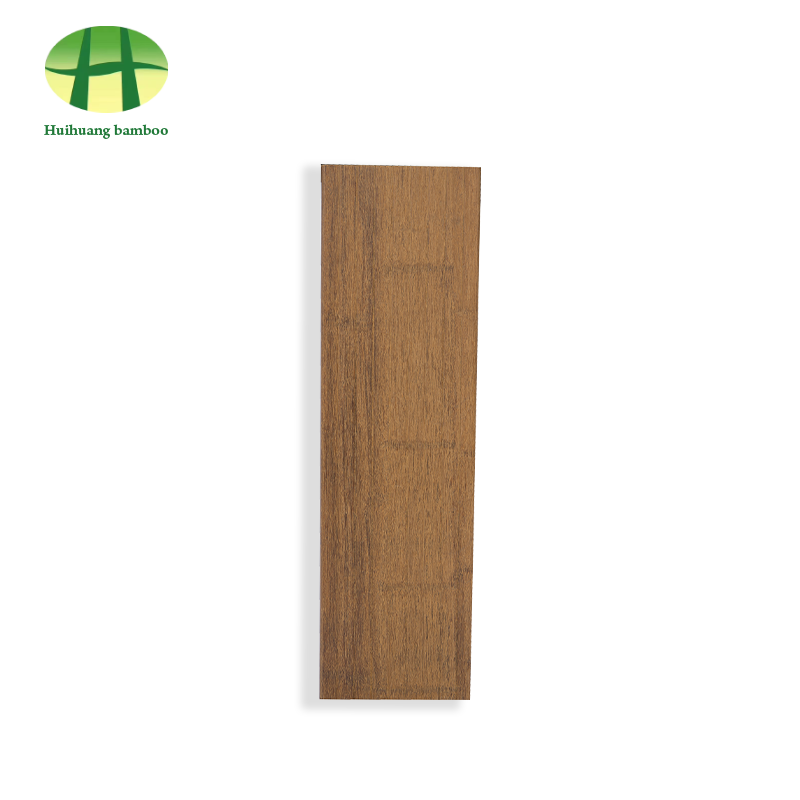
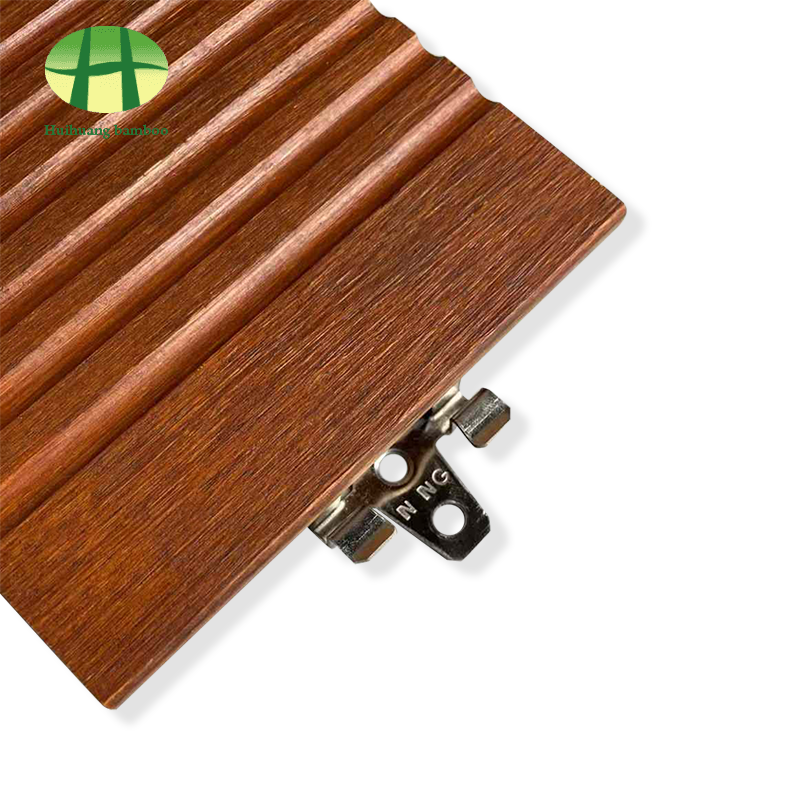 Outdoor Strand Woven Bamboo Flooring for ExportThis dense, high-pressure-treated bamboo flooring suits outdoor use with moisture-proof, anti-corrosion performance. It appears here because its bulk shipment value depends entirely on correct moisture barriers, pallet quality, restraint, and transit documentation.View Product →
What Counts as Shipping-Grade Packaging for Strand Woven Bamboo Flooring?
Shipping-grade packaging is the combined system of moisture barriers, load restraints, and compliance markings that keeps flooring at its factory condition from kiln to job site, and it is specified before production, not improvised at loading.
The full set of moisture barriers, structural restraints, and compliance markings that allows strand woven bamboo flooring to survive ocean transit with no change in moisture content, geometry, or surface finish.
The material itself explains why the spec is strict. Strand woven bamboo is compressed to roughly 1,100 kg per cubic meter, so a pallet of 20 mm decking routinely weighs 500 to 700 kg. Loads like that punish thin pallets and slack straps, and every millimeter of bundle movement turns into edge chips on arrival. Four components do almost all of the protective work:
Moisture Control Is the Requirement That Decides Everything Else
Pack and seal strand woven bamboo flooring only after it stabilizes at 8 to 12 percent moisture content, then hold that seal with vapor barriers and container desiccants until the container is opened at destination.
Bamboo fiber stays hygroscopic for life. Inside a steel box cycling between tropical days and cool nights, water vapor condenses on the ceiling and rains onto cargo, a phenomenon forwarders call container rain. Once relative humidity inside holds above about 65 percent, mold colonies can establish on wrapped bundles in two to three weeks, and boards can gain two to four points of moisture content, exactly the window where cupping and edge swelling begin.
Relative humidity above this level inside a closed container for two to three weeks is where mold starts on bamboo cargo.
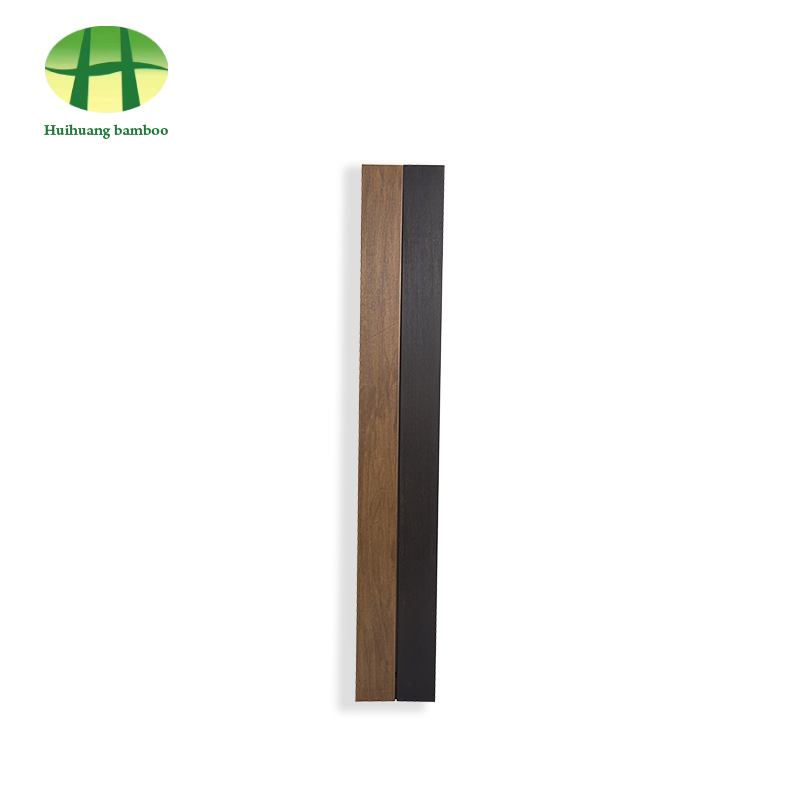
Carbonized and natural color lines, such as the carbonized color flooring range, follow the identical barrier specification; color treatment changes appearance, not hygroscopic behavior.
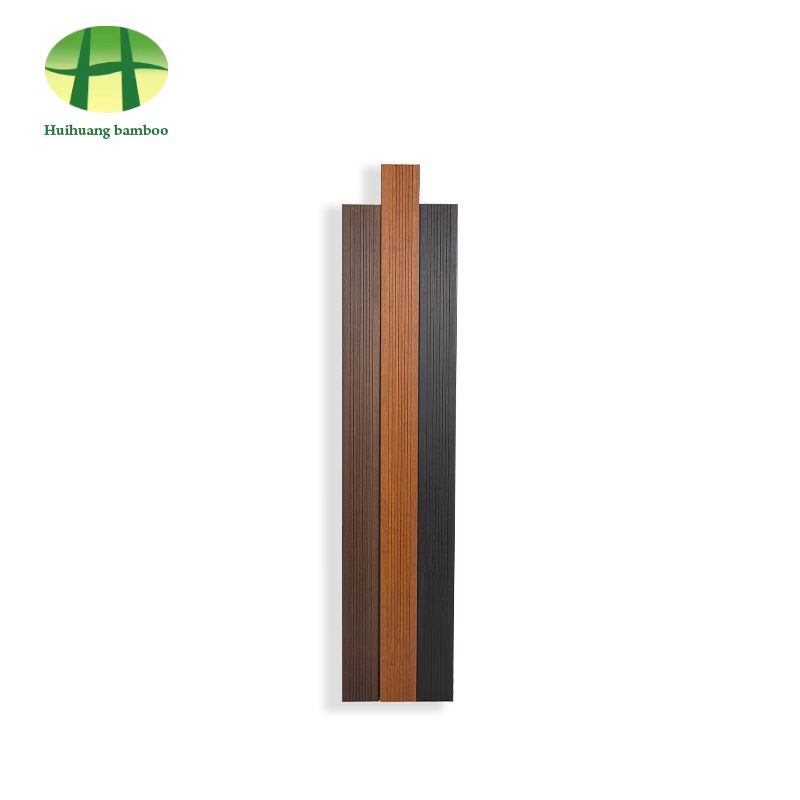
 Natural and Carbonized Color Bamboo FlooringOffered in light natural tones and darker carbonized coffee shades, this outdoor flooring retains the same hygroscopic behavior regardless of color treatment, so it needs the identical barrier specification during shipping to arrive at job sites in factory condition.View Product →
For the laboratory background on why that window matters, the guide to thickness swelling limits under EN 317 explains how bamboo panels behave once moisture gets past the barrier.
Pallets, Bundles and Container Loading Standards
Build bundles face-to-face on certified pallets, restrain each bundle with two to three straps, and keep a 20-foot container within its practical 24-tonne payload.
Geometry does the quiet work. Planks are stacked face-to-face with interleaf paper between decorative surfaces, corner boards sit under every strap line so tension never cuts into board edges, and a top cap board spreads shrink-wrap pressure across the load. Inside the container, pallets go flat and tight, airbags fill the top gap every second row, and the stuffing sequence is photographed for the file. Twenty-millimeter decking runs about 23 kg per square meter, so a full 20-foot box lands near 1,000 square meters.
| Component | Requirement | Why It Matters |
|---|---|---|
| Pallet | ISPM-15 heat-treated timber or plastic, 1200 x 1000 mm, four-way entry | Carries 500 to 700 kg per pallet without flex |
| Vapor wrap | PE or nylon barrier film, heat-sealed seams, full bundle coverage | Holds the 8 to 12 percent moisture window |
| Strapping | Two to three PET or steel bands per bundle | Stops the movement that chips plank edges |
| Edge protectors | Rigid corner boards under every strap line | Distributes tension so straps never cut planks |
| Desiccant | Calcium chloride bags, about 6 per 20 ft, 10 to 12 per 40 ft HC | Fights container rain for the whole voyage |
| Top cap | Solid cap board over each pallet | Spreads shrink-wrap pressure across the load |
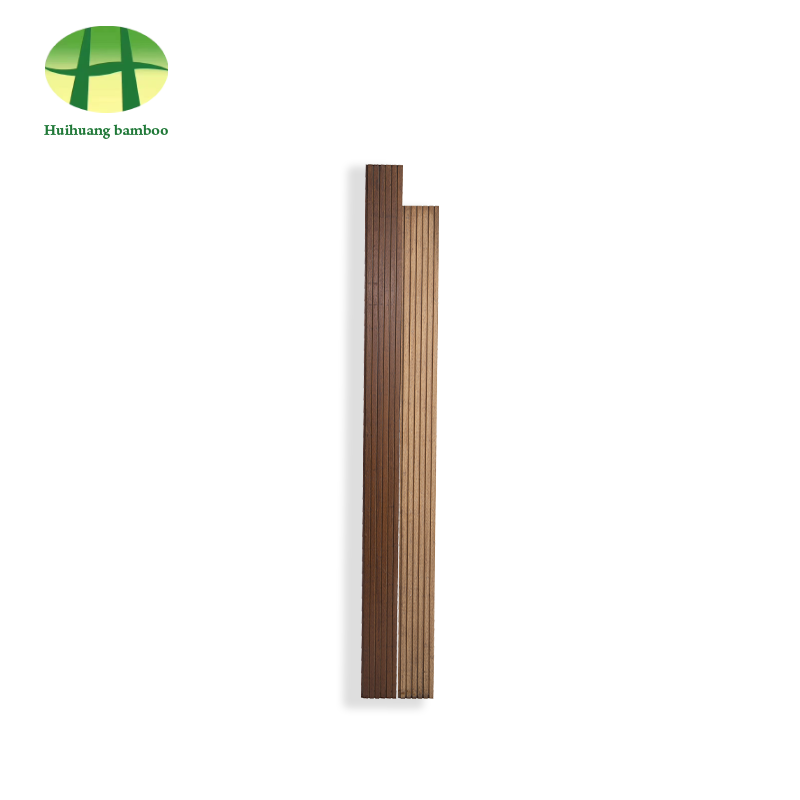
Textured faces need extra care at this stage; ridged anti-slip patterns hold interleaf paper poorly, so those bundles get an additional wrap turn.
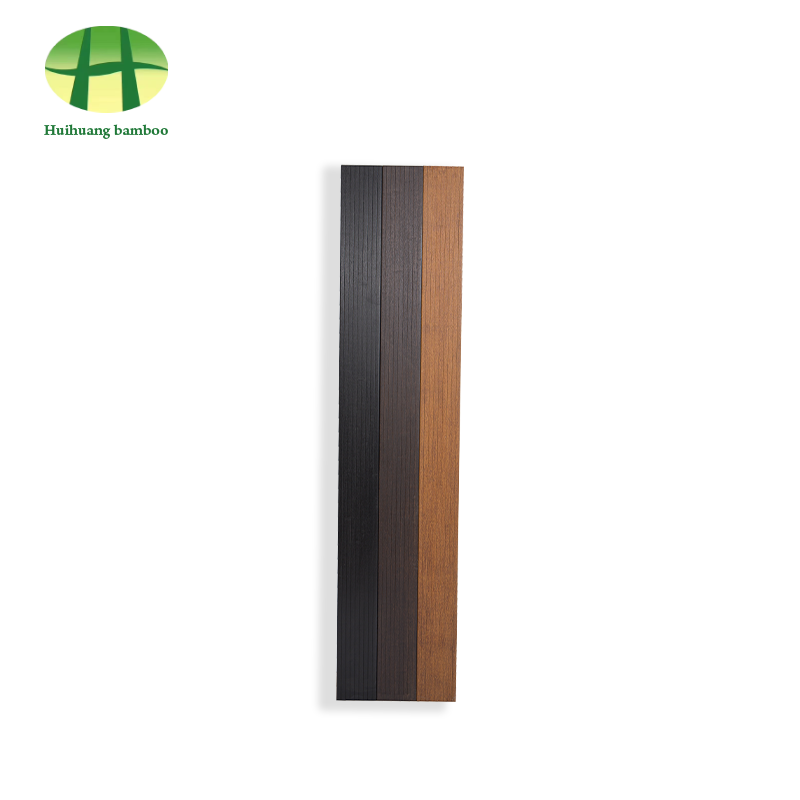 Anti-Slip Textured Bamboo DeckingWith grooved and wave-patterned faces that increase friction for wet poolside, balcony, and garden areas, this decking requires an additional wrap turn during packing because ridged surfaces hold interleaf paper poorly before batch-labeled pallets ship.View Product →
Labeling and Documentation That Customs and Buyers Both Read
Every pallet must carry batch-level labels and certification marks that match the shipping documents exactly, because a mismatch stops a container at customs faster than any physical damage.
- Product code, dimensions, and square meters per bundle
- Batch number and production date for traceability
- FSC claim with certificate code, where certified
- CE marking reference where the destination requires it
- Consignee details and destination port
- HS heading 4418 for bamboo flooring products
- Keep dry and stacking instructions, plus the ISPM-15 stamp on the pallet itself
- Commercial invoice listing HS heading 4418
- Packing list with a pallet-by-pallet map
- FSC chain-of-custody certificate number
- Certificate of origin and bill of lading draft
- SGS or equivalent third-party test report
A One-Hour Pre-Shipment Inspection Checklist
Run one structured hour over the packed pallets before the container doors close, and photograph every step of it.
Check that seams are heat-sealed, film is opaque and puncture-free, and the barrier laps beneath the pallet feet.
Pull three to five boards per pallet and confirm meter readings of 8 to 12 percent before sealing.
Test strap tension by hand deflection, confirm corner boards sit square, and look for gaps at pallet feet.
Read the ISPM-15 stamp and cross-check pallet labels against the packing list, not the invoice.
Photograph the stuffing order, airbag positions, and the seal number before the doors close.
Frequently Asked Questions
How many square meters fit in a 20-foot container?
A 20-foot box reaches its 24-tonne practical payload before it fills volumetrically with 20 mm decking, which typically lands at 950 to 1,050 square meters. Thicker 30 mm boards cut that figure by roughly a third.
What moisture content should bamboo flooring have before packing?
Eight to twelve percent, verified with a calibrated meter on three to five boards per pallet, with the barrier heat-sealed the same day to hold that reading through transit.
Do bamboo flooring pallets need a fumigation certificate?
Pallets bearing a legible ISPM-15 heat-treatment stamp generally clear import inspection without fumigation. Some buyers still request the certificate, and plastic pallets remove the question entirely.
Who pays when packaging fails in transit?
Liability follows the Incoterms in the contract, but enforceable claims depend on evidence: loading photographs, barrier condition records, and moisture readings taken before the doors closed.
 View More

 +86-572-5215066 5216895
 office@hh-bamboo.com
 East Side of Huanggang RD,Ningdun County, Ningguo ,Xuancheng City,Anhui Province,China.
