


 English
 Deutsch

Content
Click-lock bamboo flooring has become a standard choice for projects that need fast, clean installation without nails or adhesive. A two-person crew can lay roughly 80 square meters of a floating click-lock system in one workday, but that speed disappears if the subfloor is out of tolerance or if the joist spacing exceeds the deflection limits. This guide covers the installation prerequisites and the structural performance factors that determine whether click-lock bamboo stays tight for decades or fails within two years.
What Defines Click-Lock Bamboo Flooring?
Click-lock bamboo flooring is a plank system that connects through a machined tongue-and-groove profile, allowing the floor to float above the subfloor without being fastened to it. The locking profile serves three jobs: it transfers lateral loads from one plank to the next, it holds the surface plane flat across the joint, and it permits slight movement so the entire floor expands and contracts as one sheet.
Core concept: The click-lock joint is a mechanical restraint, not a waterproof seal. It resists lateral pull from foot traffic and plank movement, but it does not block moisture from reaching the board edges.
In strandwoven bamboo, the profile is milled into a dense board made from compressed bamboo strips. Huihuang Bamboo, the outdoor strandwoven bamboo brand of Ningguo Kuntai Bamboo and Wood Co., Ltd., machines its fastener-splice click-lock profile into boards pressed to roughly 1,150 kg/m³ density, which gives the joint a harder, more stable edge than a conventional hardwood plank.
- Floating installation means no glue, no nails, and faster site work
- Individual planks can be lifted out for repair without dismantling the floor
- The floor moves as one sheet with the building's humidity cycle, reducing stress at the joints
- Works directly over concrete slabs without a wood subfloor structure
Installation Methods and Field Requirements
Correct click-lock bamboo installation starts with the subfloor: flat within 3 mm over a 2-meter straightedge, dry below 75% relative humidity, and covered by a polyethylene moisture barrier.
Subfloor preparation
Test the concrete slab with a calcium chloride kit before installation. Readings under 3 lb per 1,000 sq ft in 24 hours are acceptable; anything higher requires a moisture barrier or a waterproofing membrane. Remove old adhesive, wax, oil, and curing compounds, then lay a 2 mm foam underlayment with a vapor barrier to protect the locking joints from moisture migration.
| Parameter | Requirement | Risk if ignored |
| Level tolerance | At or below 3 mm over 2 m | Click joints open, squeaking |
| Concrete moisture | Under 3 lb/1,000 sq ft/24h | Swelling, edge damage |
| Surface residue | Free of oil, wax, glue | Poor locking, gaps |
| Underlayment | 2 mm foam + vapor barrier | Moisture migration |
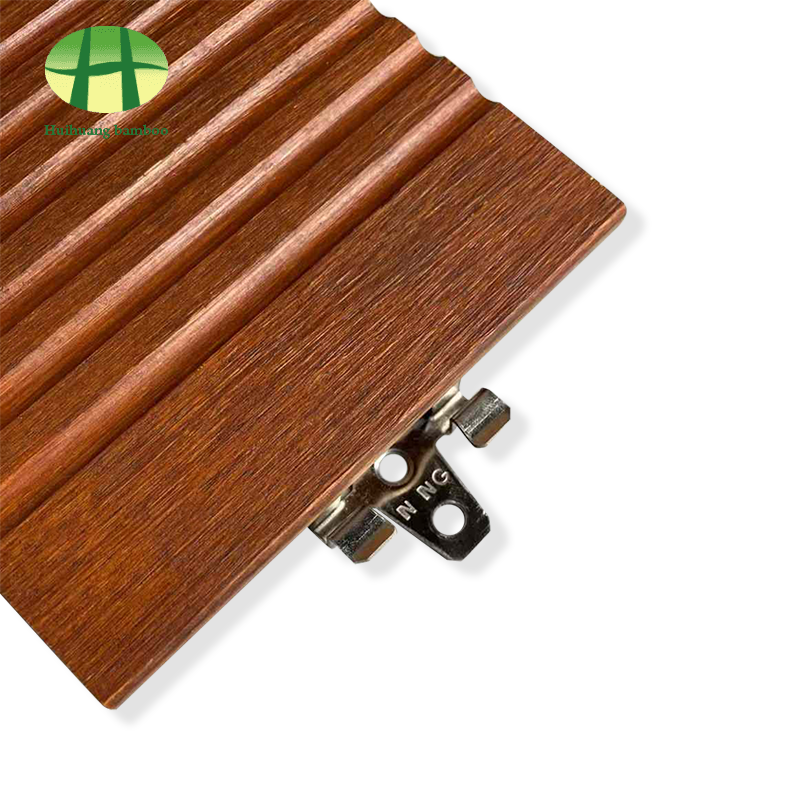 Fastener-Spliced Outdoor Strand Woven Bamboo FlooringThis flooring uses a hidden fastener system for tight, seamless joints without exposed hardware. It is easy to install, removable for temporary setups, and available in customizable sizes like L*W*18/20/30 mm.View Product →
Installation sequence
Dry-lay the first row and leave a 10-12 mm expansion gap at all walls. Insert each following plank at a 20-degree angle into the previous board and press flat. Use a tapping block with a rubber mallet to close tight seams; never strike the locking edge directly, because a damaged click profile will not hold. Stagger end joints by at least 300 mm to avoid weak lines across the floor.
For a full project walkthrough, see our guide on preventing warping during bamboo floor installation.
Structural Performance Factors That Matter
The three structural factors that determine long-term click-lock bamboo performance are dimensional stability under humidity change, load deflection at the joist spacing, and the locking joint's resistance to lateral force.
Moisture and dimensional stability
Strandwoven bamboo moves about 0.9 mm per meter for each 1% change in moisture content, while conventional hardwood can exceed 1.5 mm per meter. Acclimate click-lock planks for 48-72 hours on site at the target indoor humidity before installing, and keep indoor relative humidity between 40% and 60% after installation to minimize joint stress. Color choice also affects thermal expansion: carbonized boards absorb more solar heat than natural boards, which raises surface temperature and increases the expansion rate.
Practical impact: A 6-meter row of click-lock bamboo will change about 5.4 mm in width if the moisture content shifts by 1%. The expansion gap must absorb this movement, or the boards will buckle against the wall.
Load and deflection
Joist spacing depends on plank width and thickness. Outdoor 20 mm thick strandwoven boards should be supported at 300 mm spacing, while indoor 15 mm boards can span up to 400 mm. Keep live-load deflection below L/300 of the span, and always position the locking edge so it sits over a joist - an unsupported click joint is the weakest point in the floor.
We published a technical guide on joist spacing and load deflection standards for bamboo decking, which covers the calculation in more detail.
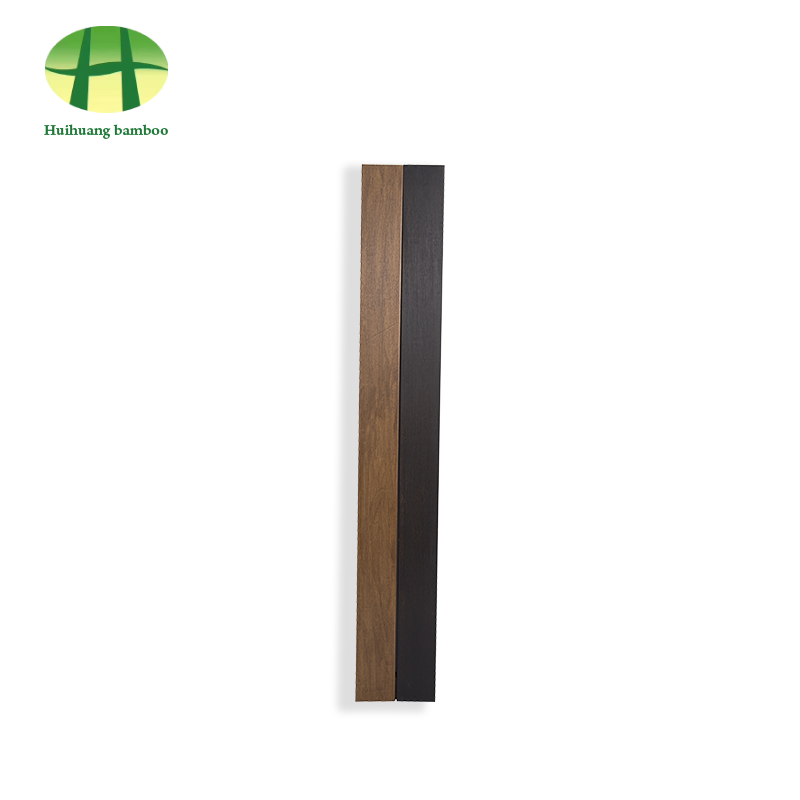 Standard-Size Glossy Heavy Bamboo Decking for Outdoor UseWith a standard 1860mm×140mm×18/20mm profile, this heavy-duty board suits large-area paving. Its glossy finish and all-weather durability make it a reliable choice for exterior decks requiring structural performance.View Product →
Locking joint integrity
The click-lock joint is not a structural fastening. Point loads near a free edge can pry the joint open, and heavy furniture without felt pads can cause localized damage. For commercial decking or high-traffic areas, use a structural subfloor, a thicker board, and mechanical fixing at the perimeter.
Click-Lock vs. Glue-Down and Nail-Down
Click-lock installation is the fastest method, but for commercial or high-traffic outdoor applications, glue-down or mechanical fixing is often the more reliable choice. The selection depends on the substrate, the load, and the desired service life.
Click-Lock
- Fastest installation
- No adhesive or nails
- Best for concrete slabs
- Moderate joint strength
Glue-Down
- Highest bond strength
- Best for commercial traffic
- Slowest site process
- Requires 24-hour cure
Nail-Down
- Traditional mechanical fixing
- Needs wood subfloor or joists
- Best for interior hardwood
- No expansion gap needed
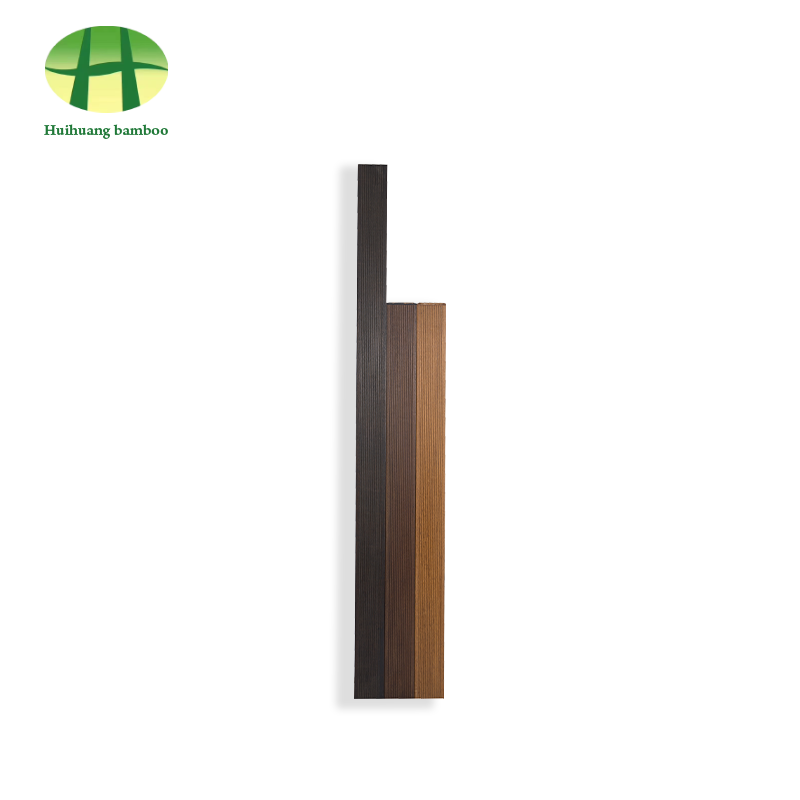
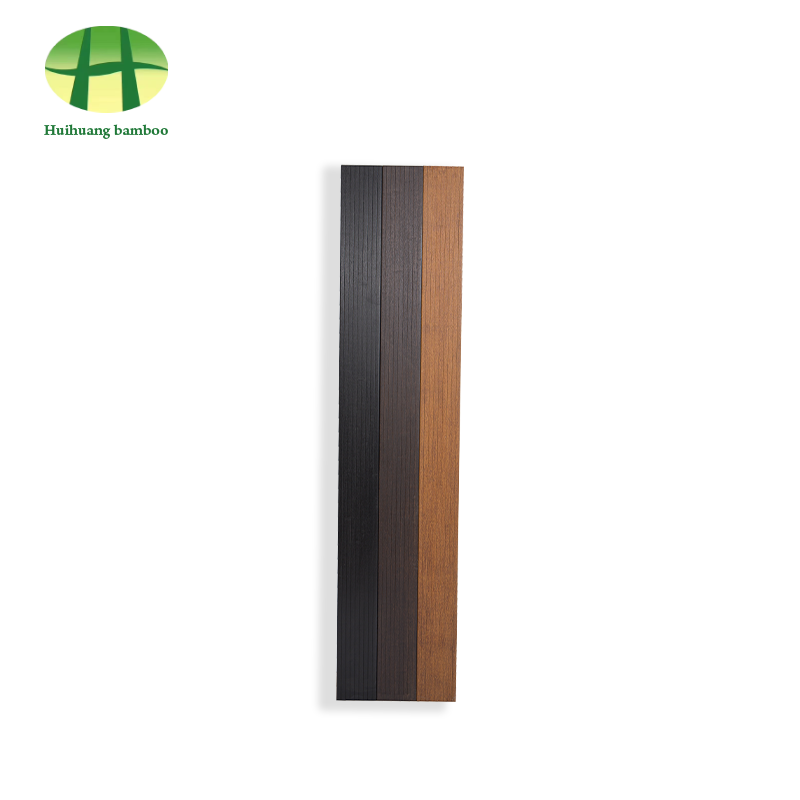
All three fixing methods are available on Huihuang Bamboo outdoor strandwoven boards. For projects that need a dark, UV-stable surface, the carbonized color series is the most common choice; for maintenance-free bright tones, the natural color series suits residential decks.
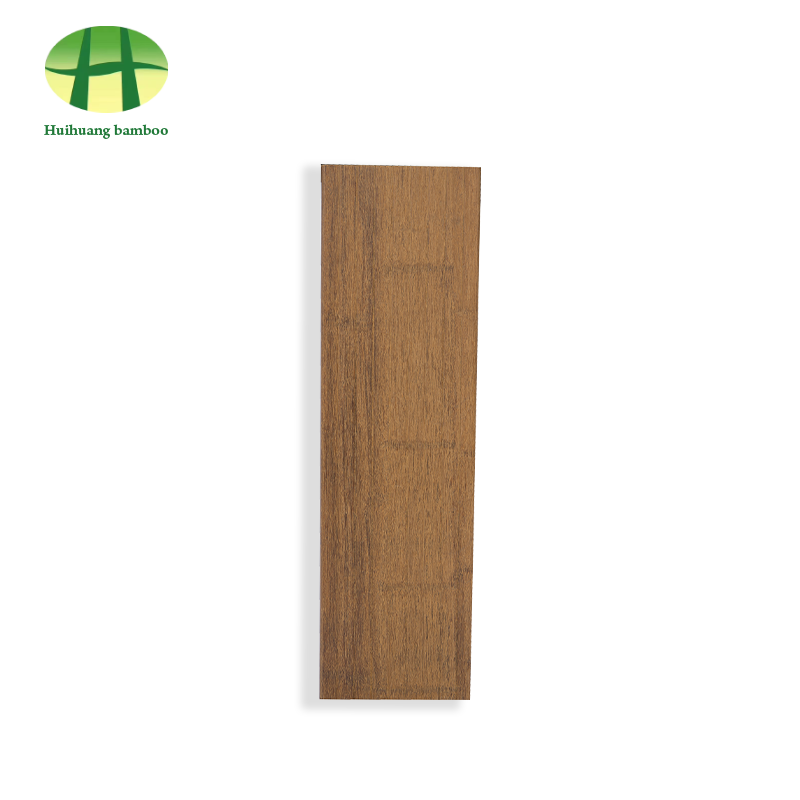
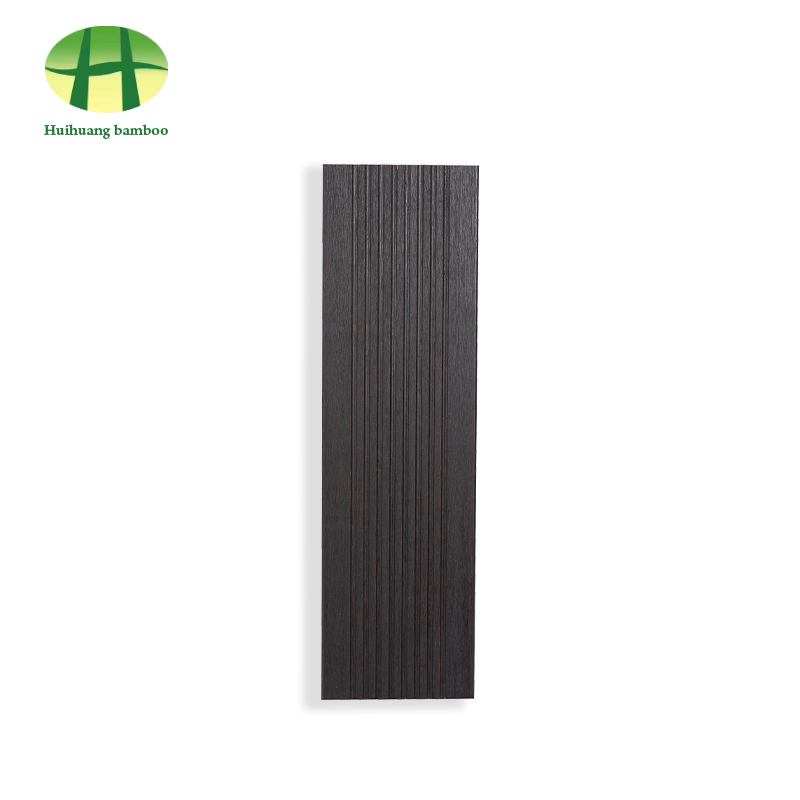 Carbonized Bamboo Flooring for Stylish Outdoor SpacesThis carbonized dark-brown board adds a calm, industrial or retro vibe to any project. Its simple texture and deep color elevate modern, Chinese, or minimalist designs, making it a strong aesthetic option for commercial or residential spaces.View Product →
Frequently Asked Questions
Short answer: Click-lock bamboo is not waterproof. It is durable and dimensionally stable, but the joints are not sealed, so moisture management is mandatory.
Is click-lock bamboo flooring waterproof?
No. Click-lock bamboo has a factory lacquer on the top surface, but the joints are not waterproof. Install a moisture barrier, wipe spills quickly, and avoid standing water on the floor.
Can click-lock bamboo be installed over existing tile?
Yes, provided the tile is level, clean, and firmly bonded. Add a thicker underlayment to compensate for the tile profile and ensure the expansion gap is maintained at the walls.
How long does click-lock bamboo last?
With proper installation and maintenance, strandwoven click-lock bamboo can last 20-30 years in outdoor applications and longer indoors. The key factors are humidity control, subfloor quality, and limiting point loads.
Do I need an expansion gap with click-lock flooring?
Yes. Leave a 10-12 mm gap on all sides and cover it with skirting or a transition profile. The floating floor must be free to move as it absorbs and releases moisture.
 View More

 +86-572-5215066 5216895
 office@hh-bamboo.com
 East Side of Huanggang RD,Ningdun County, Ningguo ,Xuancheng City,Anhui Province,China.
