


 English
 Deutsch

Content
- 1 Standard Width Specs for Strand Woven Bamboo Flooring
- 2 Why Width and Thickness Control Structural Performance
- 3 Surface Patterns and Width Consistency Across Product Lines
- 4 Installation Guide for Strand Woven Bamboo Projects
- 5 Quantity Planning and Procurement for Project Buyers
- 6 Frequently Asked Questions
A 220 m2 boardwalk specification called for 140 mm x 20 mm strand woven bamboo decking. The first factory quoted 135 mm stock, the second offered 145 mm, and neither matched the joist layout already priced by the contractor. Width, thickness, and installation tolerance are not finish details - they are the specifications that decide whether the deck performs at all.
This guide compiles the width and thickness values that matter for project planning, the surface options that share the same dimensional standards, and the installation rules that keep a strand woven bamboo deck stable under real foot traffic.
Strand woven bamboo is an engineered board made by compressing adhesive-coated bamboo strands into a dense billet under high pressure. The resulting density of roughly 1,150 kg/m3 is what gives the material its hardness and dimensional stability in outdoor use.
Standard Width Specs for Strand Woven Bamboo Flooring
Commercial strand woven bamboo decking is manufactured in three standard widths - 135 mm, 140 mm, and 145 mm - with a finished thickness of 18 mm or 20 mm. The 140 mm x 20 mm profile is the most specified combination for outdoor projects because it delivers the best balance of coverage per square meter and point-load resistance.
These dimensions come directly from the production process. Densified bamboo strands are compressed under high pressure into large billets, then sawn and milled into boards. Billet size sets an upper limit on width, so any custom width beyond 145 mm is achieved by re-sawing or edge-gluing rather than single-billet cutting. Dimensional tolerance on factory-milled boards typically stays within +/-0.5 mm in width and thickness.
| Specification | Typical Range | Common Project Value |
| Nominal width | 135 - 145 mm | 140 mm |
| Finished thickness | 18 - 20 mm | 20 mm |
| Standard length | 1,800 - 2,200 mm | 1,900 mm |
| Density | 1,100 - 1,200 kg/m3 | 1,150 kg/m3 |
| Moisture content | 6 - 9% | 8% |
| Dimensional tolerance | +/-0.5 mm | +/-0.5 mm |
Janka hardness values in lbf; strand woven bamboo varies from 3,500 to 4,500 lbf depending on density grade.
1,100 - 1,200 kg/m3 density makes strand woven bamboo about 40% heavier than solid oak decking. That mass is why it resists compression from furniture legs, pallet jacks, and concentrated rainfall impact better than solid softwood boards.
Why Width and Thickness Control Structural Performance
Board width determines how many joists a board crosses, and thickness determines how the board responds to concentrated loads. A 20 mm board on 400 mm joist centers behaves substantially stiffer than an 18 mm board at the same span, which is why commercial specifications almost always call for the thicker profile.
Three project-relevant rules follow from the relationship between board geometry and span:
- 135 mm boards suit curved staircases and narrow landings where cutting waste dominates.
- 140 mm boards are the default for straight deck runs, delivering 6.90 linear meters of coverage per square meter at a 5 mm gap.
- 145 mm boards reduce the total piece count on wide terraces but demand a flatter subframe to avoid lipping between boards.
- 18 mm boards are acceptable for residential balconies with joists at 300 mm or less.
- 20 mm boards are the practical minimum for elevated public decks, boardwalks, and high pedestrian traffic.
18 mm board profile
- Joist spacing limited to 300 mm
- Suitable for balconies and light residential use
- Lower transport weight per square meter
20 mm board profile
- Joist spacing up to 400 mm
- Required for boardwalks and public projects
- Better resistance to point loads and impact
Deflection is the vertical movement of a board under load before it returns to rest. In practical terms, specifying 20 mm boards on 400 mm joist centers keeps deflection low enough to avoid visible movement and connector fatigue, while an 18 mm board needs 300 mm spacing to achieve the same behavior.
Surface Patterns and Width Consistency Across Product Lines
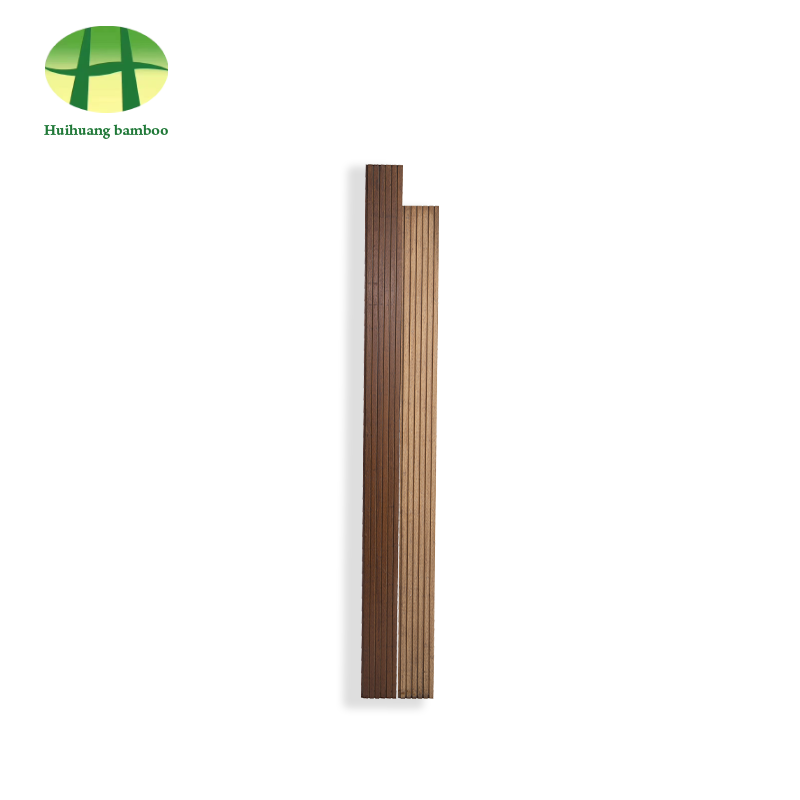
Anti-slip patterns - small groove, large groove, small wave, large wave, and double stripe - are cut into the same nominal width as smooth boards. Choosing a textured surface does not require recalculating joist spacing or coverage, because the pattern is pressed into the same sawn billet without changing the board structural dimensions.
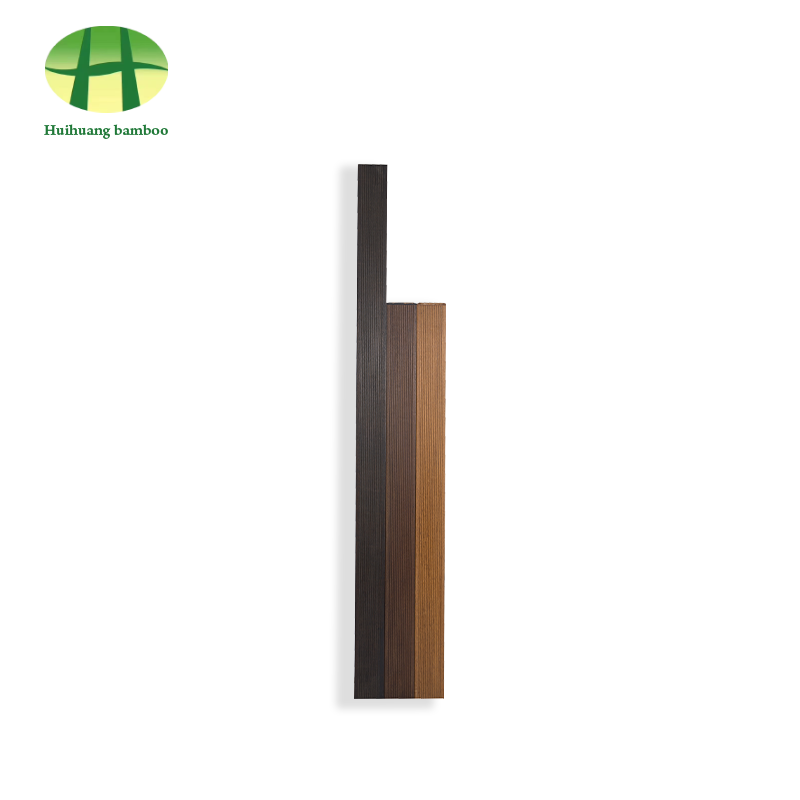
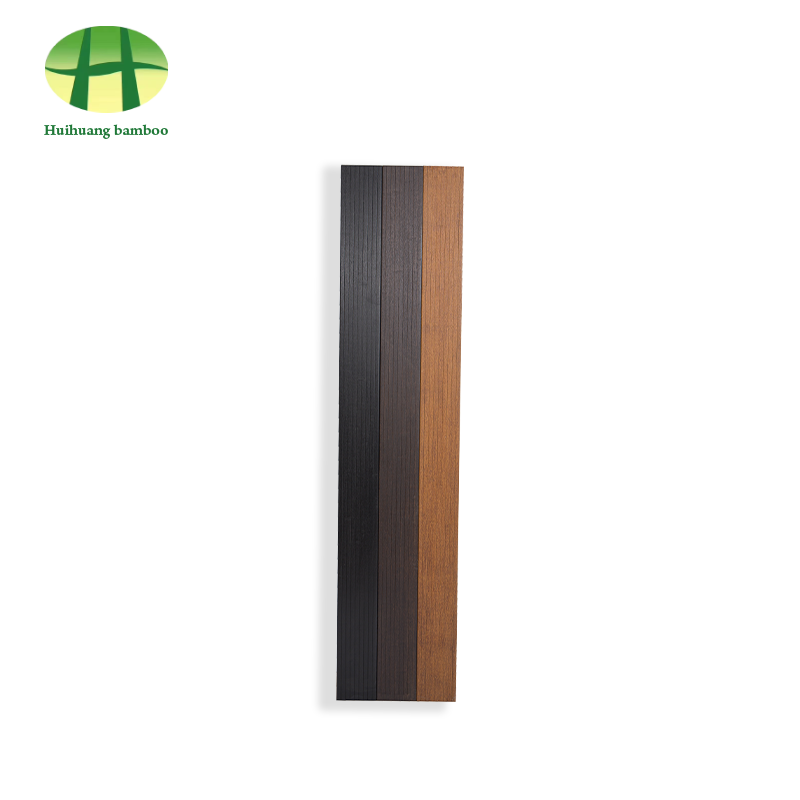 High Density Carbonized Outdoor Strand Woven Bamboo Flooring With Small Grooves Anti Slip The surface has fine groove texture to increase the anti-slip property, suitable for wet areas, anti-slip, beautiful, easy to clean (customizable size such as L*W*18/2...View Product →
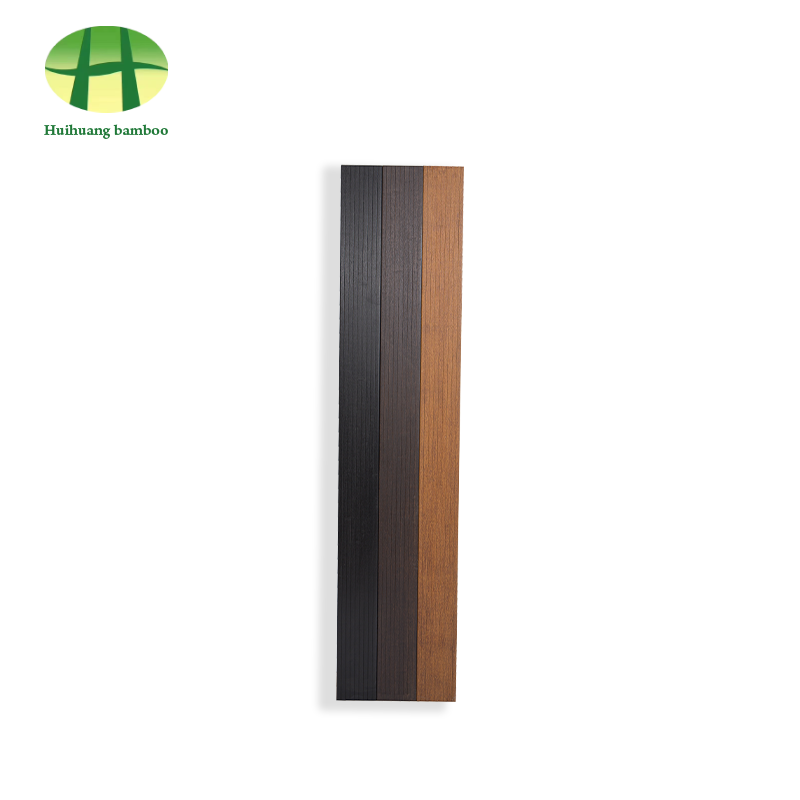
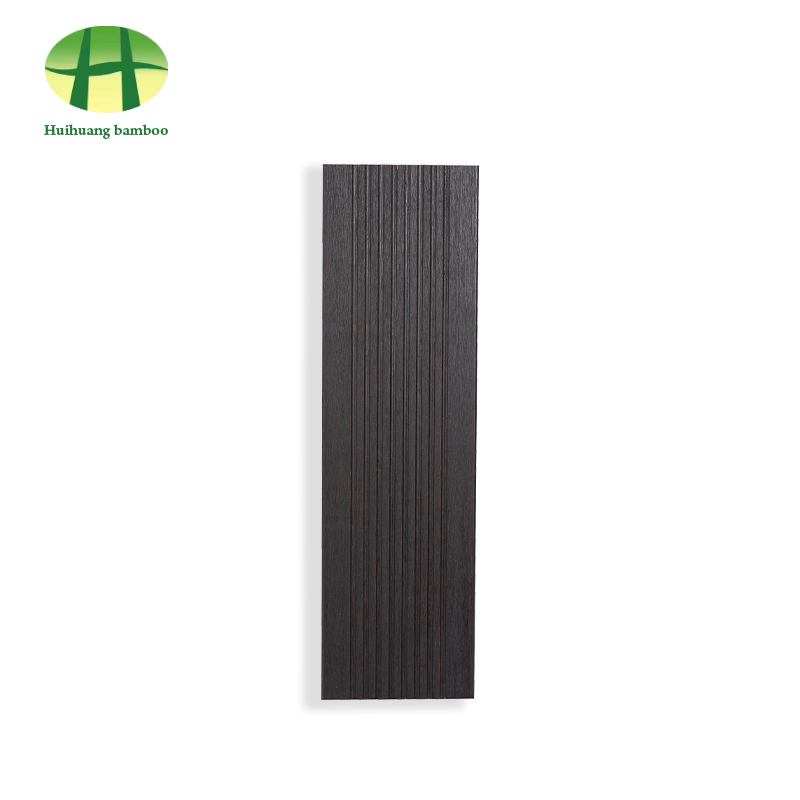 Eco Friendly Carbonized Color Strand Woven Bamboo Flooring for Outdoor SpacesCarbonized dark brown or black brown, with a simple texture, suitable for retro or industrial style and special commercial space (customizable size such as L*W*18/20/30)View Product →
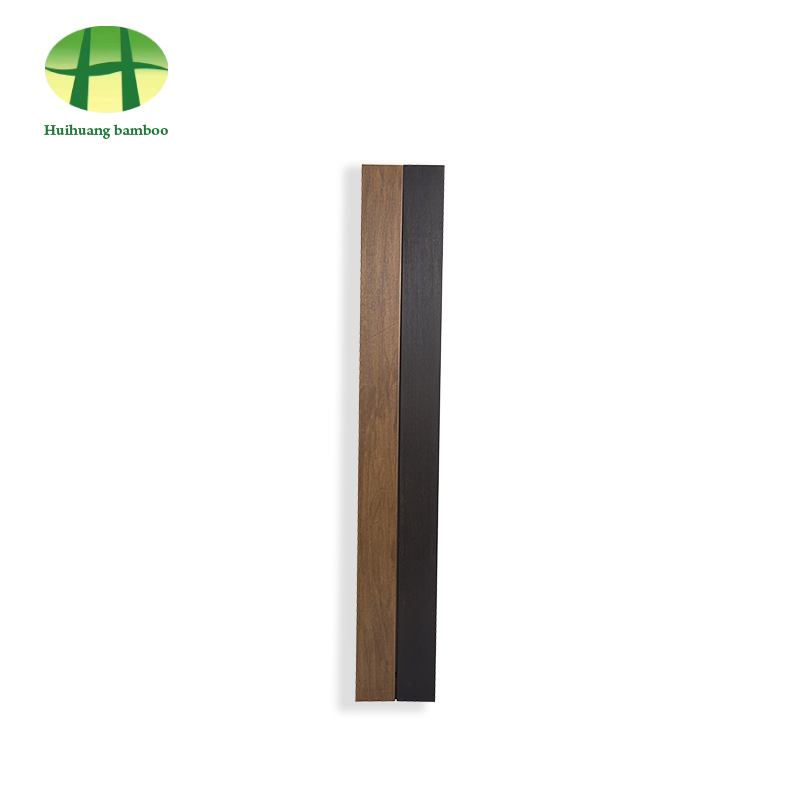
Ningguo Kuntai Bamboo and Wood Co., Ltd., which markets as Huihuang Bamboo, produces all five patterns in the same dimensional range, so a project can mix grooved and smooth boards while keeping a single joist layout and one coverage calculation. Both profiles are available in carbonized, natural, coffee, and pineapple color treatments.
- Small groove / large groove - linear channels of 2-5 mm that drain water quickly; best for pool edges and wet zones.
- Small wave / large wave - a curved surface profile that adds texture without trapping leaves; suited for garden paths.
- Double stripe - two parallel channels per board create a visual rhythm along long deck runs.
All Huihuang Bamboo strand woven patterns keep a 140 mm working width across the range. That means one substructure layout, one gap calculation, and one set of expansion values regardless of the chosen surface.
Installation Guide for Strand Woven Bamboo Projects
Set joist centers at 300 mm for 18 mm boards and at 300-400 mm for 20 mm boards, leave a 5 mm gap between board faces, and keep a 10-15 mm expansion gap at fixed edges. These three values are the core of a durable strand woven bamboo installation.
Before fixing, boards must acclimate on site for 48-72 hours in dry, ventilated storage. Use stainless steel screws in grade 304 or 316; standard electroplated fasteners corrode quickly at the dense bamboo surface and produce rust staining.
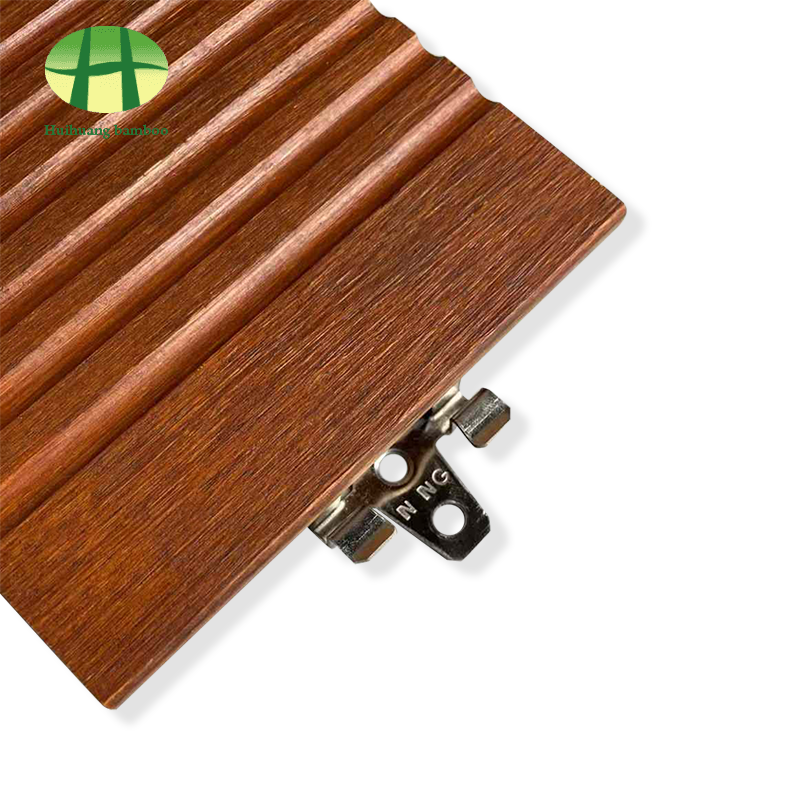 Fastener splicing outdoor heavy strand woven bamboo flooringThe fastener design is used to tightly connect the floor panels. No exposed fasteners are required. It is easy to install, seamlessly spliced, beautiful and neat, remo...View Product →
- Set the substructure - run joists perpendicular to the deck boards at spacing matched to board thickness.
- Pre-drill every fixing - use a pilot bit 1 mm smaller than the screw shank to prevent splitting at board edges.
- Choose the fixing method - face fixing works for stairs and drained zones; fastener-spliced profiles hide the fixing line completely.
- Maintain the drainage gap - a 5 mm joint sheds water and permits airflow that stops algae growing on the board edge.
- Seal all cut ends - apply an end-grain sealer compatible with the factory finish to block moisture ingress where the densified fibers are exposed.
The most common installation failure is over-spaced joists combined with face screws driven too close to the board end. Keep fasteners at least 20 mm from the board end and 15 mm from the edge; otherwise the dense fiber bundle splits along the strand direction.
Quantity Planning and Procurement for Project Buyers
Order 5-8% more linear meters than the net calculated quantity after the board width and gap are fixed. A 220 m2 boardwalk using 140 mm boards at a 5 mm gap needs about 1,517 linear meters net; with 8% waste, the purchase order rises to roughly 1,639 linear meters.
| Board width | Pitch with gap | Linear meters per m2 | Order quantity for 220 m2 + 8% |
| 135 mm | 140 mm | 7.14 | 1,697 m |
| 140 mm | 145 mm | 6.90 | 1,639 m |
| 145 mm | 150 mm | 6.67 | 1,584 m |
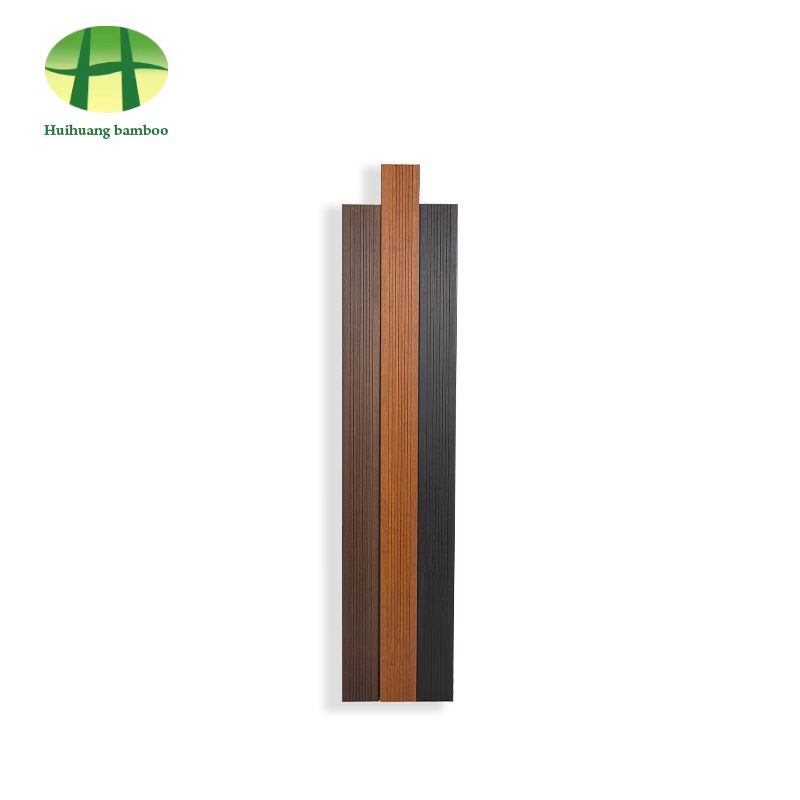
Procurement timing depends on finish and cut. Standard carbonized and natural profiles ship in two to three weeks from stock; mixed patterns or custom widths add seven to fifteen days because the factory schedules a separate run. Always request a pre-production sample of the exact width, thickness, and color before committing to a container order. The full outdoor strand woven bamboo decking range from Huihuang Bamboo lists the pattern and color combinations available in the same dimensional standards.
For project tenders, ask the supplier to confirm billet source, density grade, dimensional tolerance, the recommended stainless steel grade, and the expansion gap for your climate zone. A factory that answers these five points in writing can execute a large order consistently; the documented hardness and durability behavior of strand woven bamboo is one reason it has become a mainstream choice for outdoor engineering.
Frequently Asked Questions
What are the standard widths of strand woven bamboo flooring?
The standard widths are 135 mm, 140 mm, and 145 mm, with a finished thickness of 18 mm or 20 mm. Most outdoor decking projects use 140 mm x 20 mm boards because the profile balances coverage, stiffness, and subframe cost.
What gap should be left between strand woven bamboo boards?
Leave 3-5 mm between smooth boards and up to 5 mm between grooved profiles, depending on pattern depth. The exact value must match the manufacturer expansion recommendation for the local humidity range.
Can strand woven bamboo decking be installed over an existing concrete slab?
Yes. Use a sleepers-on-pedestal system or a pressure-treated joist frame anchored to the slab, keeping the finished surface at least 25 mm above the concrete to guarantee drainage and airflow. Apply the same joist spacing and expansion gaps as on an elevated structure.
Does board width change the total project cost?
Width itself has a small effect because material cost per cubic meter is nearly identical across the range. The bigger cost driver is waste: 145 mm boards cut more efficiently on wide terraces, while 135 mm boards fit short runs and stair stringers with less offcut.
Final advice: every dimension discussed here - width, thickness, gap, and joist spacing - should be validated against the factory written specification for the project climate. Strand woven bamboo rewards precise planning more than any other decking material.
 View More

 +86-572-5215066 5216895
 office@hh-bamboo.com
 East Side of Huanggang RD,Ningdun County, Ningguo ,Xuancheng City,Anhui Province,China.
