


 English
 Deutsch

Content
- 1 What Determines Strand Woven Bamboo Flooring Thickness
- 2 Standard Thickness Ranges and Where Each One Fits
- 3 Indoor and Outdoor Thickness Follow Different Rules
- 4 Thickness Controls Joist Spacing and Load Deflection
- 5 Thickness Stability Depends on Moisture Response
- 6 How to Verify Thickness Before You Order
- 7 Frequently Asked Questions
On a coastal deck project in Qingdao, the structural engineer specified 20 mm strand woven bamboo decking while the contractor pushed for 18 mm to save cost. That 2 mm difference changed the joist spacing, the fastener pull-out resistance, and the material cost per square meter by roughly 12 percent. Strand woven bamboo flooring thickness is not a cosmetic specification: it drives the structural behavior of every board, the layout of the substructure beneath it, and the warranty risk that remains with the building owner for decades.
What Determines Strand Woven Bamboo Flooring Thickness
Strand woven bamboo flooring thickness is the finished board depth, normally 14 to 22 mm, produced by compressing shredded bamboo fibers under high hydraulic pressure into a dense panel with a density of 1100 to 1200 kg/m3.
The process starts with raw bamboo culms harvested at three to four years of age. The culms are crushed into strands, saturated with phenolic resin, and compressed at 600 to 800 tons in hydraulic presses. This is why strand woven boards are roughly 60 percent denser than traditional bamboo strip flooring and comparable to the heaviest tropical hardwoods used in outdoor decking.
Material density comparison for decking products
Density is the first parameter to check: the added section depth of a 20 mm board and the 1100-1200 kg/m3 core jointly govern deflection, fastener holding, and long-term durability under foot traffic.
Standard Thickness Ranges and Where Each One Fits
The standard thickness range for strand woven bamboo flooring is 14 to 22 mm: 14 and 15 mm boards serve interior spaces, 18 mm is the minimum for outdoor exposure, and 20 to 22 mm handles outdoor commercial traffic. Ningguo Kuntai Bamboo and Wood Co., Ltd., the manufacturer behind the Huihuang Bamboo brand, builds its outdoor strand woven decking line around these commercial grades.
| Thickness | Typical use | Density | Substructure rule |
| 14 mm | Indoor residential, floating or glued | 1100 kg/m3 | Full subfloor required |
| 15 mm | Indoor high-traffic residential | 1100 kg/m3 | Full subfloor required |
| 18 mm | Outdoor residential decking | 1180 kg/m3 | Joists at max 400 mm centers |
| 20 mm | Outdoor commercial and public decks | 1180 kg/m3 | Joists at 300-400 mm centers |
| 22 mm | Boardwalks and infrastructure | 1200 kg/m3 | Engineered steel or aluminum frame |
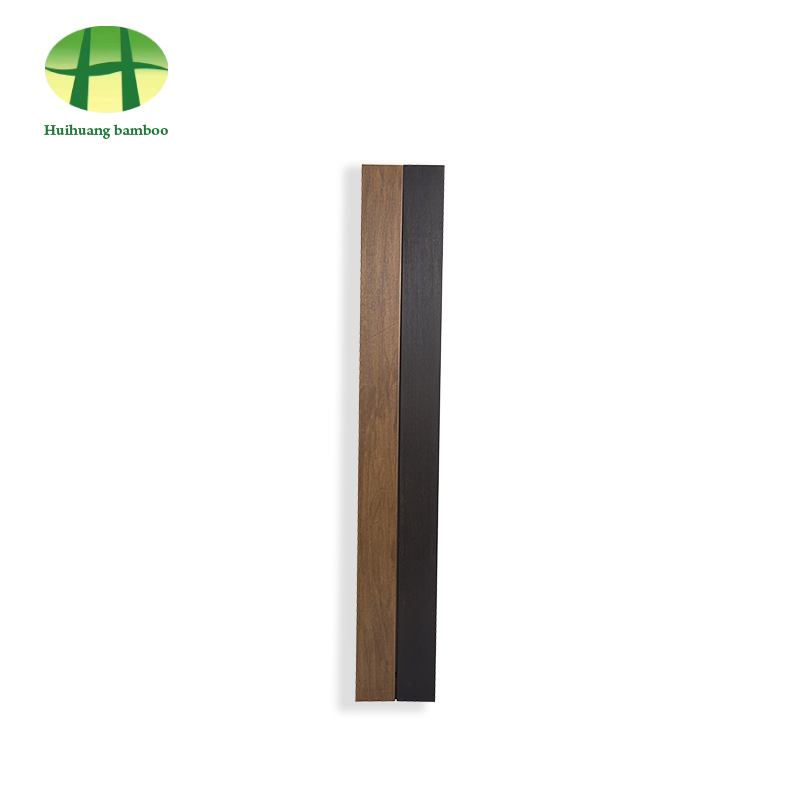
For a typical private terrace, a smooth 20 mm board on 400 mm joist centers gives the best balance of stiffness and material cost. The standard size format keeps the profile consistent across delivery batches, which simplifies procurement, cutting, and installation planning.
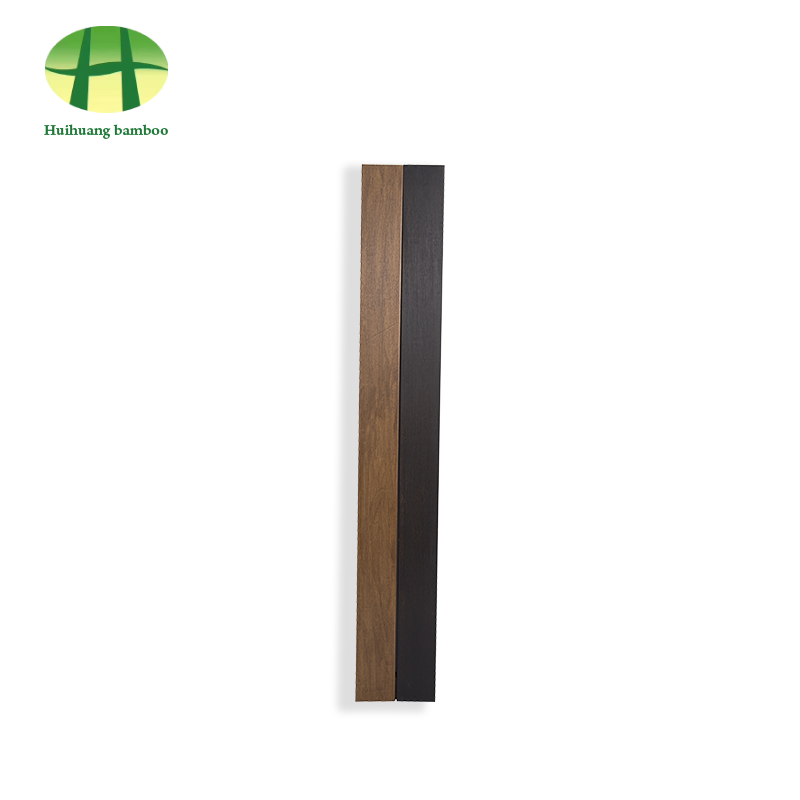 Standard Size 20mm Glossy Heavy Bamboo Decking for Outdoor UseThis glossy bamboo board in a standard 20 mm profile suits private terraces with 400 mm joist centers, offering a balanced stiffness-to-cost ratio and consistent dimensions for straightforward procurement and installation.View Product →
Selection rule: 14 mm boards must sit on a full subfloor. 18 mm is the thinnest product recommended for direct weather exposure, and 20 mm is the safer default for any deck that will host planters, furniture, or gatherings.
Indoor and Outdoor Thickness Follow Different Rules
Indoor and outdoor strand woven bamboo flooring require different thicknesses because the loading and moisture conditions are not comparable: indoor boards are supported by a subfloor, while outdoor boards span open joists and face rain, UV radiation, and daily temperature swings.
Indoor specification
- 14-15 mm finished depth
- Floating, glue-down, or nailed over a full subfloor
- Moisture content 8-12 percent
- No UV stabilizer required
- Deflection governed by the subfloor
Outdoor specification
- 18-20 mm finished depth
- Fastened directly to open joists
- Moisture content below 10 percent
- UV-stable coating required
- Deflection governed by board stiffness
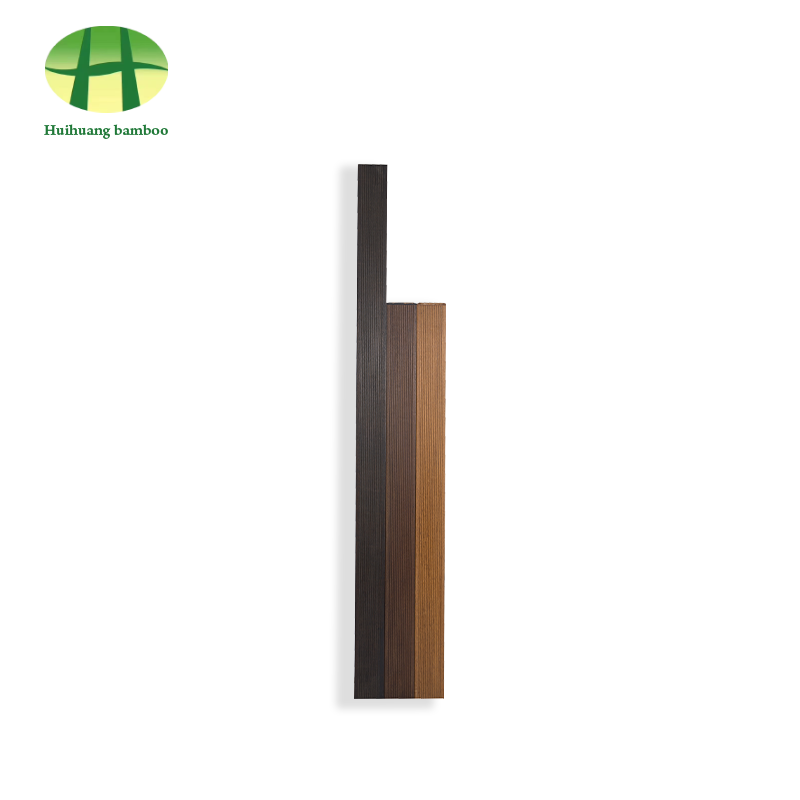
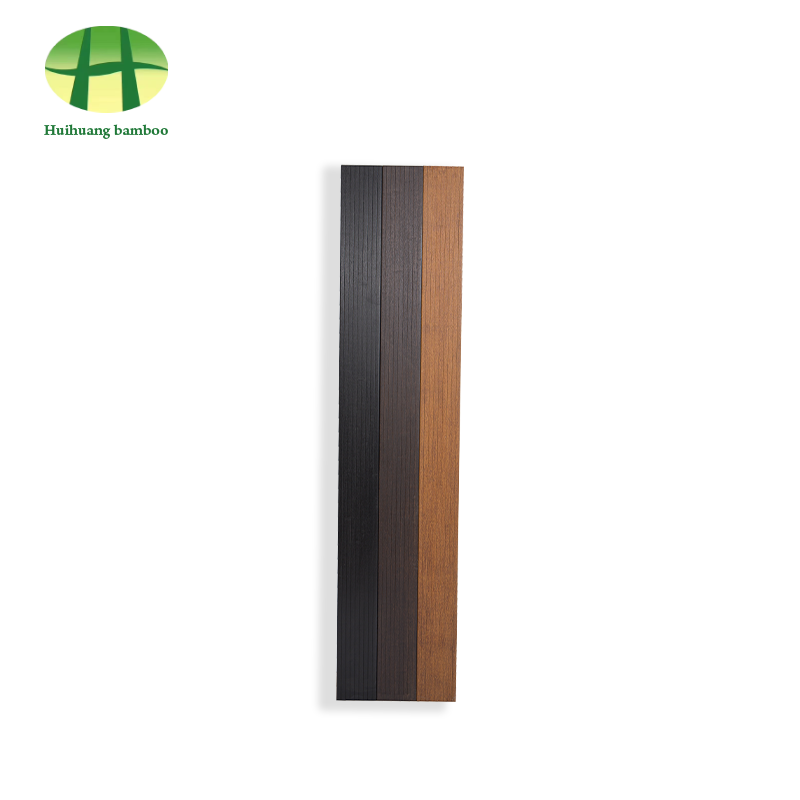
Outdoor boards lose a small amount of effective depth to edge beveling; a nominal 18 mm board with a 2 mm bevel still performs structurally, but the bevel reduces the contact area for fasteners near the plank edge. Carbonized color is a frequent outdoor choice because the heat-treated surface masks visual wear while keeping the same 18 to 20 mm structural core.
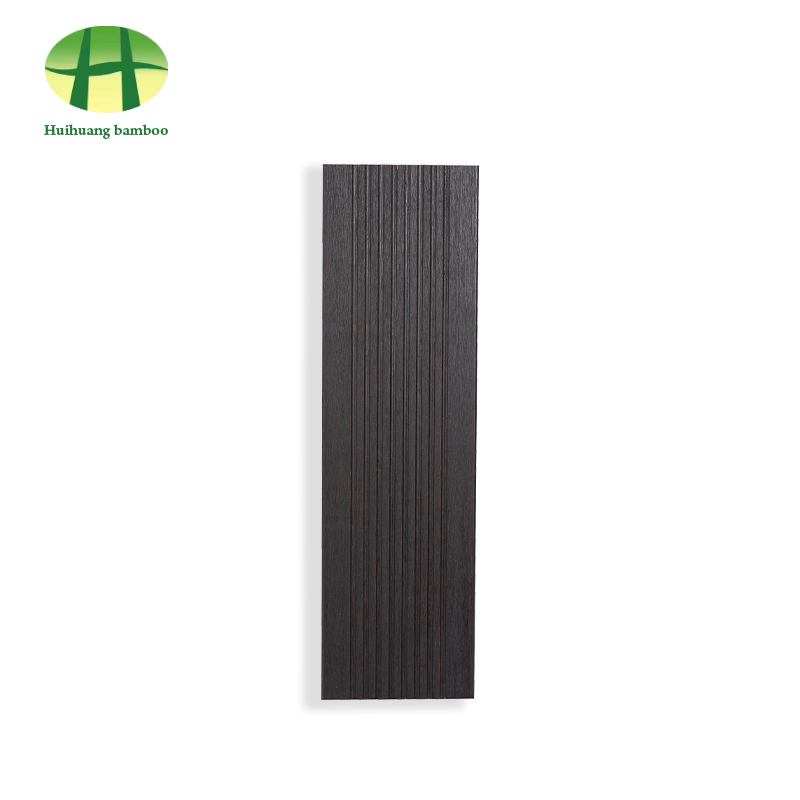 Eco-Friendly Carbonized Bamboo Flooring for Outdoor SpacesCarbonized dark brown bamboo flooring is suited to retro or industrial styles, with a heat-treated surface that masks wear while retaining the 18–20 mm structural core needed for exterior applications.View Product →
14 mm is an interior material. Once a board faces open joists and weather, 18 mm is the absolute floor and 20 mm is the safer default.
Thickness Controls Joist Spacing and Load Deflection
For outdoor strand woven bamboo decking, joist spacing must not exceed 400 mm center-to-center for 18 mm boards, and deflection should stay within L/360 for residential decks and L/480 for commercial pedestrian areas.
This is the rule most installers break when they lay 18 mm boards on 450 or 500 mm centers to save framing material, then see visible spring in the planks. A 20 mm board raises the section modulus by roughly 23 percent relative to 18 mm, which directly improves load distribution across a 400 mm span. For boat docks, marina walkways, and public boardwalks, spacing drops to 300 mm or the design moves to 22 mm boards on an engineered frame. The structural guidance for joist spacing and load deflection applies regardless of the density claim on a product sheet.
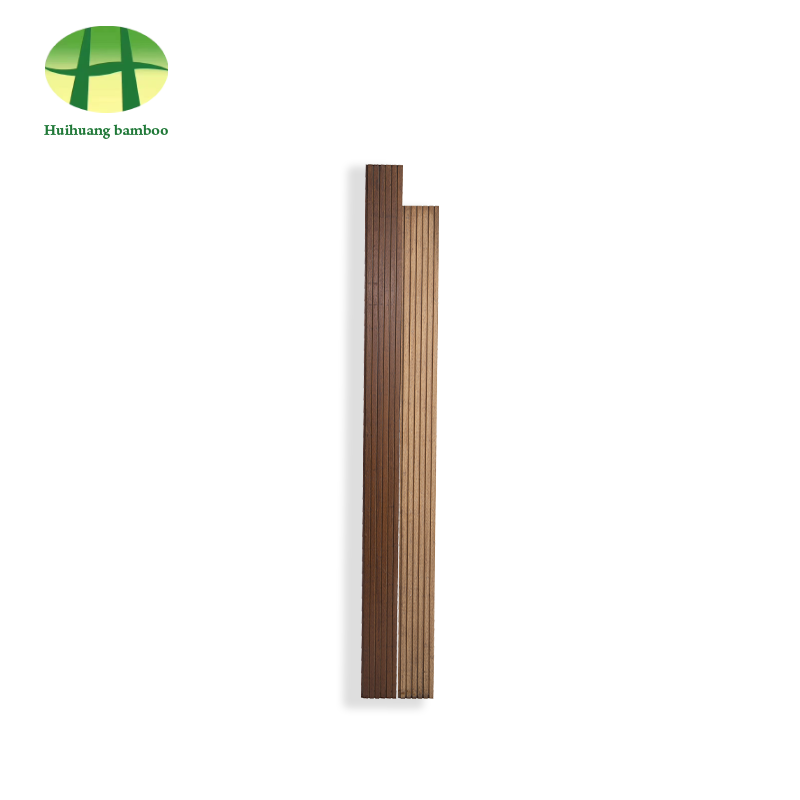
For substructures open to the weather, fastener splicing is the recommended connection method: the tongue-and-groove profile distributes point loads across adjacent boards and hides the fixing on the deck surface.
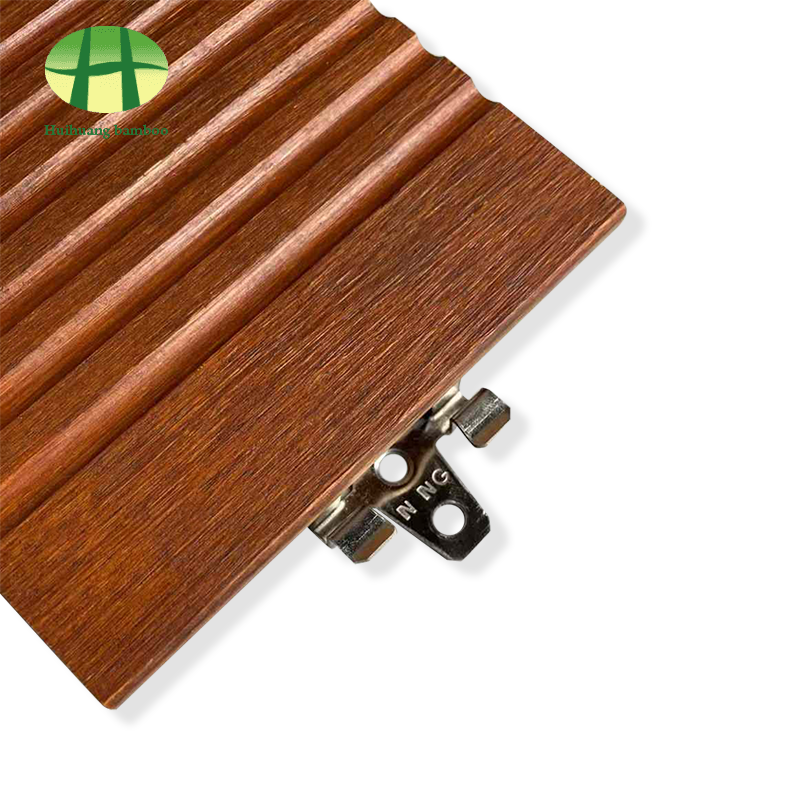 Fastener Splicing Strand Woven Bamboo Flooring for OutdoorsDesigned with a hidden fastener system, this strand woven bamboo flooring connects panels tightly without exposed screws, making installation easy, seamlessly spliced, and suitable for temporary exterior setups.View Product →
Thickness Stability Depends on Moisture Response
Thickness alone does not guarantee stability: the EN 317 thickness-swelling value after 24 hours of water immersion must stay below 8 percent for exterior strand woven bamboo flooring, and most dense boards measure 3 to 6 percent.
Traditional bamboo strip flooring swells 8 to 12 percent in the same test, which is one reason it fails outdoors while strand woven boards survive. At delivery, accept boards with 8 to 12 percent moisture content; never install boards above 12 percent in a heated interior or below 8 percent in an unheated exterior structure.
Core definition: dimensional stability is the ability of a flooring plank to maintain its original thickness, width, and length when temperature and humidity change, reported as a percentage change under EN 317 and EN 1910 test conditions.
How to Verify Thickness Before You Order
Verify thickness with a caliper at four points on each sample board, compare the readings with the declared tolerance of plus/minus 0.5 mm, and request the mill's EN 317 swelling report before signing the order.
- Measure at 100 mm from each end and at the plank center
- Confirm the density certificate shows 1100-1250 kg/m3
- Check whether the declared thickness includes the bevel or excludes it
- Verify tongue-and-groove profile depth, not just total depth
- Request moisture content readings from the actual production batch
| Parameter | Acceptable range | Reference test |
| Thickness tolerance | Plus/minus 0.5 mm | EN 13489, caliper at four points |
| Density | 1100-1250 kg/m3 | ASTM D2394 |
| Thickness swelling | Below 8 percent after 24 hours | EN 317 |
| Moisture content | 8-12 percent | ASTM D4442 |
A batch certificate without a caliper measurement is a marketing document, not an engineering specification. Measure the delivered boards before installation.
Frequently Asked Questions
What is the best thickness for outdoor strand woven bamboo decking?
20 mm is the best outdoor default: it keeps deflection below L/360 on 400 mm joist centers and leaves margin for future refinishing. Use 18 mm only for low-traffic residential decks, and step up to 22 mm for boardwalks, docks, and commercial plazas.
Is 14 mm strand woven bamboo flooring suitable for outdoor use?
No. 14 mm boards are designed for indoor installation over a full subfloor. Outdoors, they would deflect under point loads, lose fastener grip during seasonal swelling, and void most manufacturer warranties.
Does a thicker board always perform better?
All else being equal, thicker means stiffer with better fastener retention, but density, profile geometry, and installation quality matter equally. A 14 mm board at 1200 kg/m3 can outperform a poorly manufactured 18 mm board with voids in the core.
What thickness tolerance should I specify?
Specify plus/minus 0.5 mm against the declared nominal depth. If boards vary by more than 1 mm across a batch, joinery and floor flatness will suffer, and fastener lines or clicking will telegraph through the surface.
 View More

 +86-572-5215066 5216895
 office@hh-bamboo.com
 East Side of Huanggang RD,Ningdun County, Ningguo ,Xuancheng City,Anhui Province,China.
