


 English
 Deutsch
Content
- 1 What is strand woven flooring and how is it different from traditional bamboo flooring?
- 2 What are the main advantages of strand woven flooring?
- 3 What are the common applications of strand woven flooring?
- 4 What performance properties should strand woven flooring provide?
- 5 How is strand woven flooring manufactured?
- 6 How does strand woven flooring compare with hardwood and laminate flooring?
- 7 What are the limitations of strand woven flooring?
- 8 What is the future trend of strand woven flooring in global markets?
- 9 FAQ
Flooring decisions get expensive fast when the wrong material meets the wrong environment. Strand woven flooring has become one of the most requested alternatives to traditional hardwood because it combines exceptional density with a natural wood-like appearance, holding up in residential homes, commercial interiors, and high-traffic public spaces alike. This guide explains what the material is, how it performs, how it is made, and where it fits against hardwood and laminate alternatives.
What is strand woven flooring and how is it different from traditional bamboo flooring?
A strand woven bamboo flooring definition starts with process, not appearance: raw bamboo fiber is shredded into strands, compressed under extreme pressure, and bonded with resin into dense engineered planks. This is fundamentally different from traditional bamboo flooring, which is typically formed from flat or vertically glued bamboo strips without the same fiber compression.
The result is an engineered bamboo flooring structure with a much higher density than conventional bamboo planks. Because the raw fiber is compressed rather than simply laminated, high density bamboo flooring material achieves hardness levels that frequently exceed many hardwood species. This compressed bamboo flooring technology is the core reason the category has grown from a niche product into a mainstream flooring option.
- Raw material: fast-growing bamboo fiber rather than slow-growing hardwood
- Process: fiber shredding, compression, and resin bonding
- Result: a dense plank with wood-like grain and higher surface hardness
In practical terms, what is strand woven flooring used for comes down to any space where a hard, stable, natural-looking floor is needed without relying on old-growth hardwood.
What are the main advantages of strand woven flooring?
The single most cited advantage is hardness: high hardness bamboo flooring is a direct result of the fiber compression process, and a scratch resistant bamboo floor surface holds up noticeably better under foot traffic, furniture movement, and pet claws than many softer wood species.
Because bamboo regenerates far faster than hardwood trees, it is also marketed as an eco-friendly flooring material bamboo option for buyers prioritizing renewable sourcing. The dense fiber flooring durability that results from compression also means the finished plank resists denting and surface wear better than many low-density engineered products, positioning it as a credible natural wood alternative flooring choice.
Whether strand woven bamboo is stronger than hardwood depends on the specific hardwood species being compared, but independent hardness testing generally places well-manufactured strand woven bamboo at or above the hardness of oak, one of the most common hardwood flooring species.
What are the common applications of strand woven flooring?
The material's combination of hardness and stability has pushed it well beyond residential living rooms.
Common in living areas, bedrooms, and hallways where a durable natural look is desired.
Specified in offices and retail buildouts needing a hard-wearing, presentable surface.
Used in corridors and guest areas that see constant foot traffic and rolling luggage.
Chosen for open-plan workspaces where chairs and foot traffic demand surface durability.
Installed in stores where appearance and wear resistance both matter to daily operations.
Strand woven flooring for high traffic areas and bamboo flooring for commercial buildings use both point to the same underlying strength: the material's density holds up where softer flooring options would show wear within a few years.
What performance properties should strand woven flooring provide?
Before specifying any engineered flooring, it helps to check the material against a short list of measurable performance properties.
Wear resistance flooring surface performance is largely determined by the finish coating and the density of the compressed core beneath it. Moisture resistant bamboo flooring grades have improved significantly compared with early bamboo products, though performance still varies by manufacturer and should be confirmed for any application near moisture-prone areas. Dimensional stability flooring material matters most in climates with seasonal humidity swings, since a stable plank will expand and contract less than lower-quality alternatives, contributing to a longer overall long service life flooring outcome when installed correctly.
How is strand woven flooring manufactured?
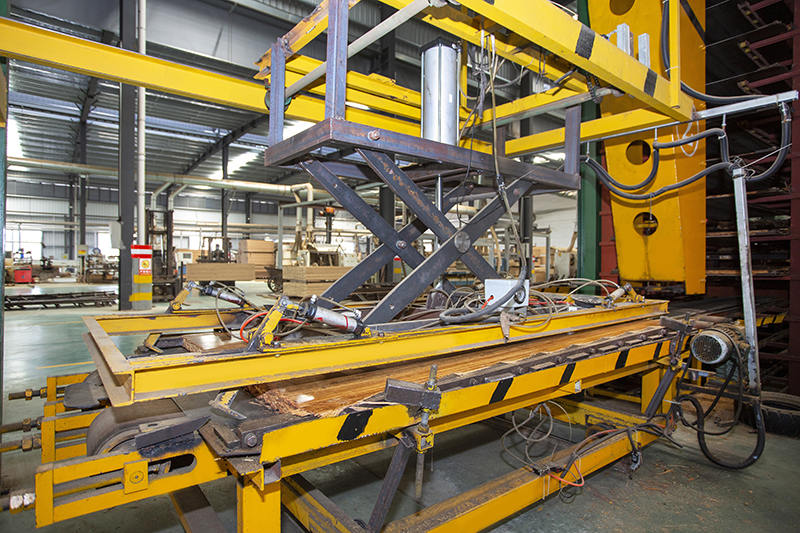
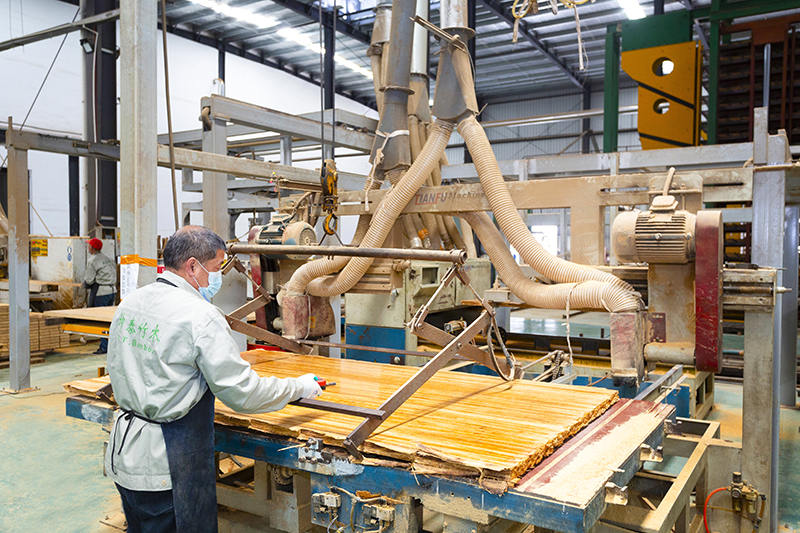
The manufacturing process of compressed bamboo flooring follows a consistent sequence regardless of the final grade or finish.
| Stage | What happens |
| Fiber preparation | Raw bamboo is split and shredded into long strands |
| Carbonization bamboo treatment | Optional heat treatment darkens the fiber color and alters hardness slightly |
| Resin bonding bamboo strips | Strands are coated with resin adhesive |
| High pressure heat pressing flooring | Strands are compressed under extreme pressure and heat into dense blocks |
| Milling and finishing | Blocks are sawn into planks, profiled, and surface-finished |
This bamboo fiber compression process is what separates strand woven products from older bamboo flooring styles, and it explains why the finished plank behaves more like a dense engineered material than a simple glued bamboo strip. How strand woven bamboo flooring is made ultimately determines nearly every performance characteristic that follows, from hardness to how bamboo fibers are turned into flooring panels ready for installation.
How does strand woven flooring compare with hardwood and laminate flooring?
A fair bamboo vs hardwood flooring comparison starts with hardness and renewability: bamboo reaches harvest maturity in a few years versus decades for hardwood trees, while matching or exceeding many hardwood species on surface hardness.
| Material | Typical strength |
| Strand woven bamboo | High density, strong scratch and dent resistance |
| Solid hardwood | Good durability, refinishable multiple times, higher material cost |
| Laminate flooring | Wear-layer protected surface, generally lower moisture tolerance |
| Engineered wood | More dimensionally stable than solid wood, moderate cost |
A laminate vs bamboo flooring comparison usually favors bamboo on core density and refinishing potential, since laminate relies on a printed wear layer rather than a solid, sandable surface. In an engineered wood vs bamboo flooring context, both offer improved dimensional stability over solid wood, making the choice more about grain appearance and budget than raw performance. For an overall flooring material durability comparison, and a cost comparison flooring materials view, strand woven bamboo tends to sit competitively between mid-range laminate and premium solid hardwood.
What are the limitations of strand woven flooring?
No flooring material is free of trade-offs, and understanding the disadvantages of strand woven bamboo flooring helps set realistic expectations.
Humidity sensitivity flooring behavior means bamboo can still expand and contract with significant swings in indoor humidity, so acclimation before installation and stable indoor conditions afterward both matter.
Surface refinishing limitations bamboo depend on the wear layer thickness; some products can be sanded and refinished once, while others have a thinner surface layer that limits future refinishing. Installation requirements bamboo floor systems can also be more particular than standard flooring, often needing acclimation periods and specific adhesive installation flooring system methods rather than simple floating installation. Cost is another factor: higher engineered flooring grades with better moisture resistance and finish quality generally carry a higher price than basic laminate alternatives.
What is the future trend of strand woven flooring in global markets?
Demand for strand woven flooring continues to track the broader shift toward sustainable flooring materials in both residential and commercial construction. As green building flooring solutions become more common in certification programs, eco-friendly bamboo products benefit from bamboo's fast regeneration cycle compared with hardwood forestry timelines.
The renewable flooring industry trend is also being reinforced by low carbon construction materials initiatives, which increasingly factor material sourcing and lifecycle impact into building specifications. As manufacturing quality continues to improve across the sector, strand woven bamboo is positioned to keep gaining share in projects that require both durability and a credible sustainability story.
 |
 |
FAQ
What is strand woven flooring?
It is an engineered bamboo flooring product made by compressing shredded bamboo fiber under heat and pressure, producing a dense plank that is harder than many traditional bamboo or hardwood floors.
Is bamboo flooring durable?
Strand woven bamboo flooring is generally considered highly durable due to its dense, compressed fiber structure, though actual durability still depends on the specific product grade and finish.
Is strand woven bamboo better than hardwood?
It often matches or exceeds many hardwood species on surface hardness and comes from a faster-renewing raw material, though solid hardwood may still be preferred for certain refinishing needs.
Does bamboo flooring scratch easily?
Strand woven bamboo generally resists scratching better than standard bamboo or many softer wood species, though the finish coating still plays a large role in day-to-day scratch resistance.
How long does bamboo flooring last?
With proper installation, acclimation, and maintenance, strand woven bamboo flooring commonly lasts for decades in residential and moderate commercial use.
Is bamboo flooring eco friendly?
Bamboo is widely considered a more renewable raw material than hardwood timber due to its fast growth cycle, making strand woven flooring an attractive option for sustainability-focused projects.
 View More

 +86-572-5215066 5216895
 office@hh-bamboo.com
 East Side of Huanggang RD,Ningdun County, Ningguo ,Xuancheng City,Anhui Province,China.