


 English
 Deutsch
Content
Ningguo Kuntai Bamboo and Wood Co., Ltd., situated in the "Bamboo Village" of Ningguo, Anhui Province, operates a 30,000-square-meter modern manufacturing facility. Since 2002, our legacy under the "Huihuang Bamboo" brand has evolved into a specialized production center for outdoor strand-woven bamboo decking, wall cladding, and industrial bamboo timbers. KUNTAI holds the exclusive US patent for outdoor bamboo decking (No. US11148318) and maintains rigorous compliance with FSC, CE, SGS, ISO9001, and ISO14001 standards. For large-scale architectural projects, the bamboo flooring outdoor decking must be integrated using precise mechanical fastening systems to maintain dimensional stability. Proper site preparation and fastening logic are the primary variables in reducing project overhead and ensuring the long-term performance of the carbonized fiber matrix.
Substructure Calibration and Joist Spacing for Strand-Woven Materials
The load-bearing capacity of bamboo outdoor decking is significantly higher than traditional softwoods, with a density often exceeding 1.1 g/cm3. To minimize bamboo decking material waste, engineers must calculate the joist span based on the board thickness; for a standard 20mm profile, a maximum center-to-center joist spacing of 460mm is required. How to calculate bamboo decking joist span involves analyzing the static load requirements (typically 5kN/m2 for commercial zones). Utilizing a bamboo flooring outdoor decking system with end-matched T&G (Tongue and Groove) joints allows for joints to fall between joists, which effectively reduces off-cut waste in bamboo installation by up to 10 percent. This structural continuity ensures that the tensile strength of strand woven bamboo is distributed evenly across the substructure, preventing localized stress concentrations.
[Technical diagram of T&G end-matching and joist alignment for bamboo decking]
Mechanical Fastening Systems and Labor Cost Reduction
Traditional face-screwing is labor-intensive and compromises the water-resistant surface of the board. Why hidden fasteners are best for bamboo decking relates to both aesthetics and the speed of execution. Using stainless steel clips for bamboo decking allows for a "plug-and-play" workflow, where bamboo decking installation time per square meter is reduced by approximately 30 percent compared to top-down drilling. What is the best gap for bamboo decking expansion? A consistent 4mm to 6mm side-to-side gap must be maintained via the clip system to facilitate drainage and airflow. The US patented bamboo decking technology used by KUNTAI optimizes the side-groove geometry, ensuring that the clamping force of decking clips remains constant even under extreme thermal expansion and contraction cycles in various climates.
Environmental Pre-Conditioning and Moisture Equilibrium Standards
Before the first board is fastened, acclimatizing bamboo flooring outdoor decking on-site for at least 48 to 72 hours is mandatory to reach the Equilibrium Moisture Content (EMC). How moisture affects bamboo decking stability is mitigated through our proprietary high-heat carbonization process, which removes sugars and starches, leaving a hydrophobic fiber structure. Preventing bamboo decking cupping and warping requires a minimum ground clearance of 300mm to ensure adequate cross-ventilation. When installing bamboo decking over concrete, a moisture barrier or sleepers must be used to prevent direct capillary suction. These engineering standards for outdoor bamboo ensure that the Ra surface finish remains smooth and resistant to checking, significantly lowering the maintenance costs of strand-woven bamboo over a 20-year service life.
| Physical Property | Standard Timber (Teak/IPE) | KUNTAI Strand-Woven Bamboo |
| Density (kg/m3) | 600 - 900 | 1100 - 1200 |
| Janka Hardness (N) | 10,000 - 15,000 | > 18,000 |
| Modulus of Elasticity (MPa) | 10,000 - 13,000 | > 15,000 |
| Thickness Swelling Rate (%) | 3.0 - 5.0 | < 1.0 (24h Immersion) |
| Slip Resistance (Dry) | Class B | Class R10 / R11 |
Surface Treatment and End-Sealant Application Protocols
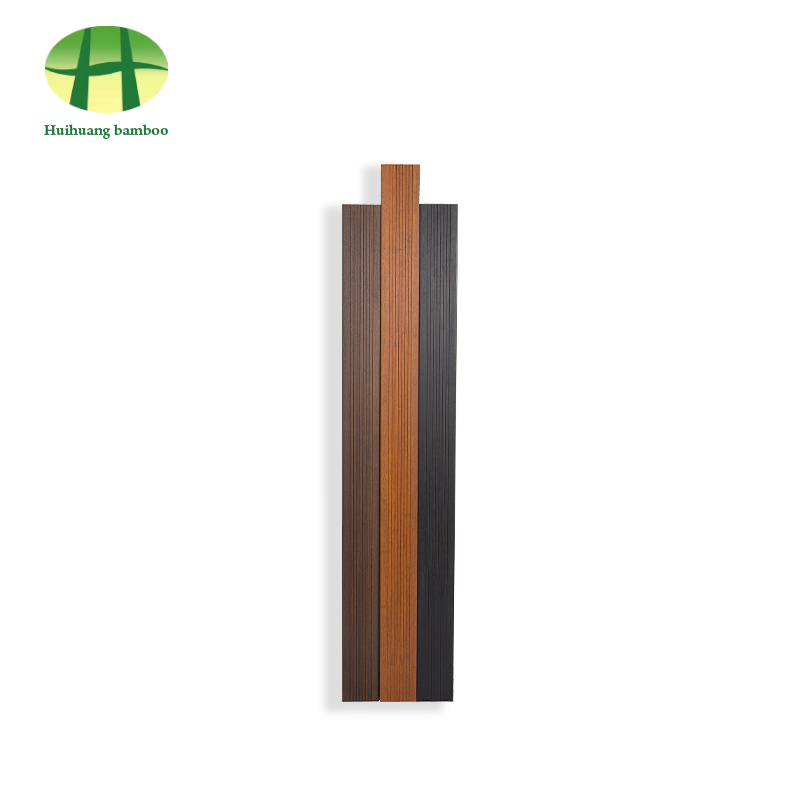
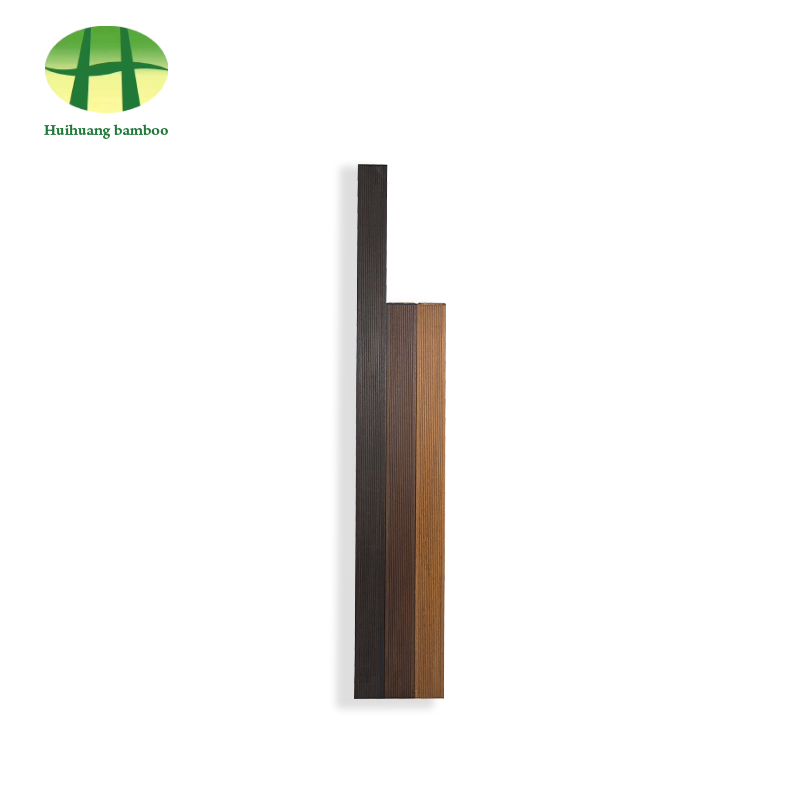
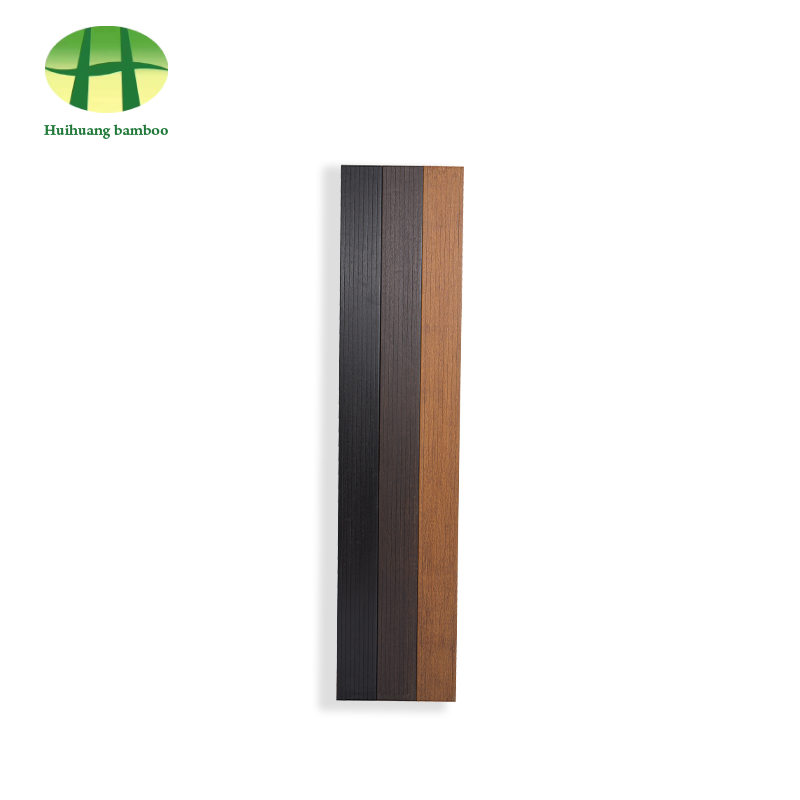
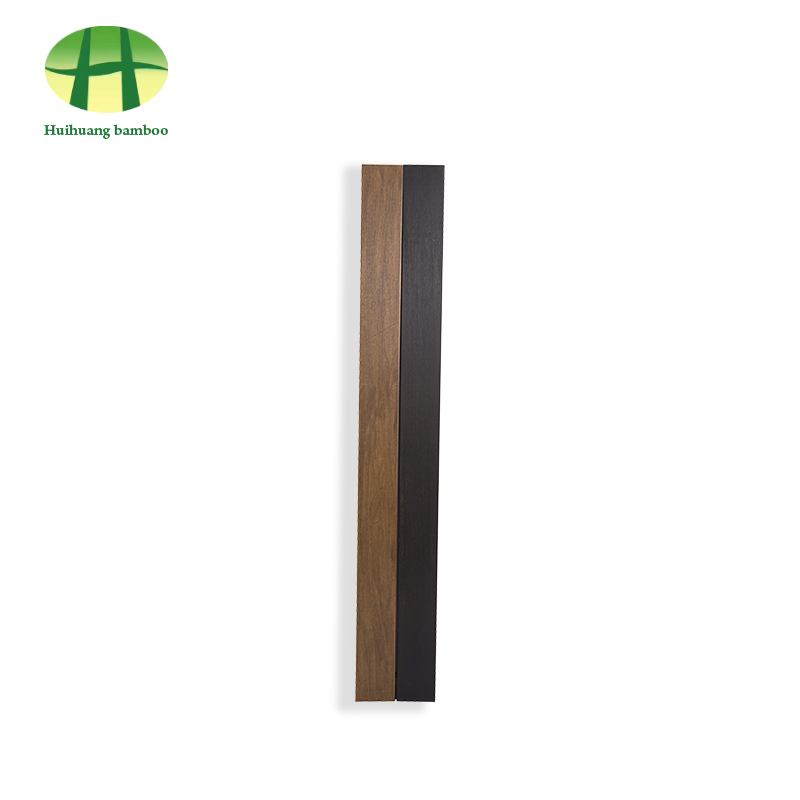
To finalize the efficient installation of bamboo decking, all cross-cut ends must be immediately treated with a wax-based end-sealant. Why sealing bamboo decking ends is critical is to prevent end-checking and "wicking" of moisture into the longitudinal capillaries. What oil is best for outdoor bamboo decking? A high-solids, UV-resistant water-based oil should be applied to maintain the deep "espresso" or "cognac" tones provided by the carbonization process. As a professional manufacturer of bamboo panels and beams, KUNTAI provides pre-oiled boards to further reduce on-site labor for bamboo decking. This holistic approach, from US-patented manufacturing to optimized mechanical fastening, ensures that bamboo flooring outdoor decking serves as a first-class, sustainable solution for modern landscape architecture and garden furniture applications.
Industrial Hardcore FAQ
Q1: Can strand-woven bamboo be used as a structural beam?
A1: Yes, our bamboo timbers and beams are engineered for structural use. However, load-span tables must be consulted, as the high density increases the self-weight of the structure compared to pine or cedar.
Q2: Does the US patent (No. US11148318) apply to the material or the installation?
A2: The patent specifically covers the unique manufacturing process and structural design of the strand-woven outdoor decking, ensuring superior stability and durability compared to non-patented replicas.
Q3: Is bamboo decking truly "termite-proof"?
A3: The carbonization process at 200°C+ removes the nutrients (starch and sugar) that termites and fungi feed on, making the material naturally resistant without the need for toxic chemical pesticides.
Q4: How do I handle "expansion" in very long runs of decking?
A4: While strand-woven bamboo is incredibly stable, for runs exceeding 10 meters, we recommend a 10mm expansion break or a transition board to allow for longitudinal movement.
Q5: Can I install this decking with a nail gun?
A5: No. Due to the extreme hardness (Janka >18,000N), nailing will cause the material to split or the nail to bend. Hidden clips or pre-drilled screws are the only verified methods.
Technical References
- ASTM D1037: Standard Test Methods for Evaluating Properties of Wood-Base Fiber and Particle Panel Materials.
- ISO 9001/14001: Quality and Environmental Management Systems in Bamboo Manufacturing.
- EN 113: Test method for determining the protective effectiveness against wood-destroying basidiomycetes.
 View More

 +86-572-5215066 5216895
 office@hh-bamboo.com
 East Side of Huanggang RD,Ningdun County, Ningguo ,Xuancheng City,Anhui Province,China.